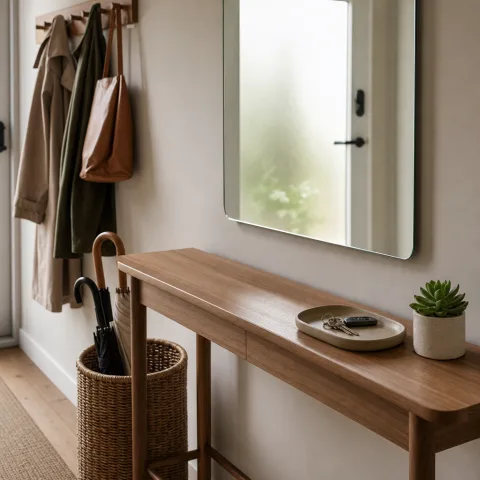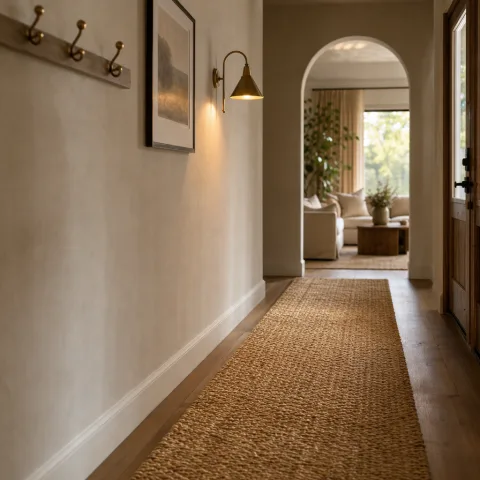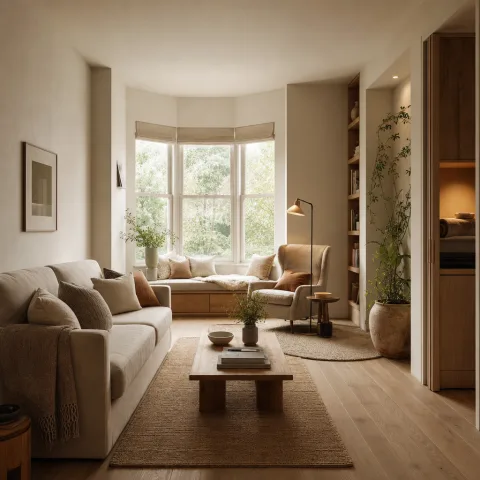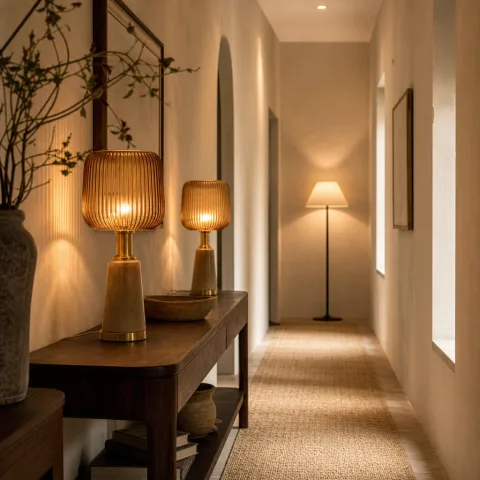
Across a doorway we stand and observe how illumination reframes the mood before any furniture is repositioned. The hallway is long and pale, with plaster that can hold or release warmth depending on how it is kissed by light. We test three lamps side by side, not to crown a favourite but to listen to how each speaks to the wall, the ceiling, and the floor in its own measured voice. Our method is deliberately slow and iterative: we move a lamp a few inches, step back, and measure the glow with a modest lux meter, noting the barely visible shifts in colour and texture. We record measurements as carefully as impressions because the aim is not novelty but a dependable quiet that can travel with daily life. Every adjustment answers a practical question: will this space feel calm at dusk, or will it become a stage for the next arrival? The result should feel inevitable, as if the hall finally recognises its own potential to be lived in and loved. The process invites curiosity without ego, and it frames lighting as a small, daily act of stewardship rather than a single, sweeping gesture.
Hallway proportions and daylight warmth
From the outset we note the hallway's proportion: it is long enough to feel a separate room yet narrow enough to be porous to footfall. The existing daylight streams from overhead, but by late afternoon the plaster takes on a pale, chalky warmth. We place a first lamp against the wall and step back to judge its effect on the ceiling and floor. The aim is not brightness but a sense of gentle boundary, a soft welcome rather than a shout. The exercise invites us to look for relationships rather than fixtures, and to listen for the space's quiet voice rather than its opinions about our taste.
To understand needs we measure the corridor's length, width, and the height of the sconce rail. We count 3.8 metres of usable wall on each side and a total distance of 4.5 metres from door to stair. Architectural features—the shallow cornice, the skirting, the door frame—create subtle planes that catch light differently, offering opportunities for shade and spill. We note any drafty corners and reflections that might inflame glare in evening use. We jot down a few guardrails for what we will test next.
Our mood board for warmth centres on a single idea: a quiet glow that makes routes legible without turning the hall into a showroom. We imagine the lamps as punctuation marks in a pared-down sentence rather than decorative flourishes. We decide to begin with a wall lamp, a small table lamp for the console, and a hidden strip of light to fill gaps. The project is small, but we treat it with the discipline of a slow-living ritual. We sketch scale models with cardboard cutouts to visualise shadow tunes before committing to a single fixture.
Shade materials modulate the glow
 Save
Save
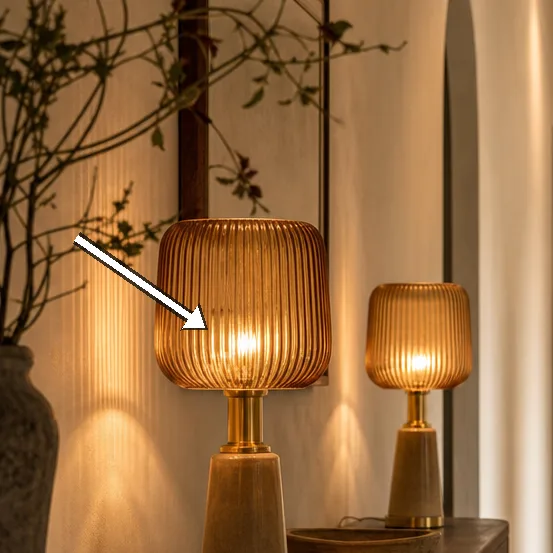
We test colour temperatures around 2700K to 3000K and observe how shade materials change the bloom across plaster, wood, and the faint textures of paint. We note that shade materials change the bloom: a linen shade softens the glow and reduces hot spots. We compare opal glass against fabric, watching how the light wraps the corner with more or less opacity. The goal is to find a balance that feels intimate in the late afternoon without creeping toward gloom. We adjust one sample under a dimmer to see how temperature shifts interact with surrounding colour.
Shade colour and brightness interact with each other as if the wall itself participates in the conversation. The wall lamp casts a halo along the 4.5 metre plane, not a beam that stops at the doorway. The console lamp adds a pocket of warmth at a level that eyes meet when entering the hall. We note that dimming is essential to avoid jeering glare when the staircase is in view. The dialogue between glow and shade becomes a practical rule we carry forward.
We test seeing the space at different moments: after coffee, after sunset, and before bed. Each scenario demands a different balance between task light and ambience. We acknowledge that a hallway is not a room but a transition that deserves careful lighting. The measurement of softness becomes the main objective rather than absolute brightness. We keep records of lumens and perceptual warmth to guide future tweaks.
Lamp anchors the hall's composition
With the wall lamp as anchor, we notice the hall lengthens and the ceiling line grows calmer. The brass's reflex picks up the cream tones of the plaster, inviting us to look upward rather than straight ahead. This lamp becomes the spine of the composition, offering balance when the door opens or closes. We resist the urge to layer more light until the core feeling is clear. It also helps reduce shadows along the stair, making safety part of the design.
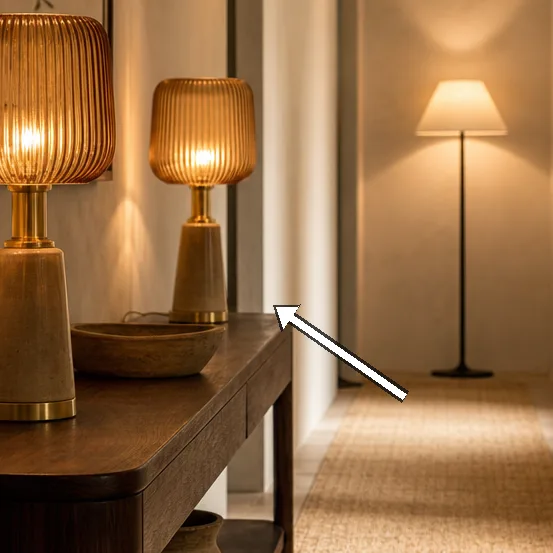
Next, the console-table lamp introduces a more personal warmth. The fabric shade blunts the harsher edges of the wall lamp's glow, creating a gradient that feels tactile rather than clinical. Its height is judged to align with the seated eye level when we pause at the console to switch coats or set down a bag. We learn that the second light's role is to cradle the space without competing with the first. In practice, this means a gentle act of positioning rather than a dramatic feature.
 Save
Save
Finally the hidden strip fills the gaps where the eye wanders. It washes the bottom corners and makes the doorway easier to approach at night. Because it is uninterrupted by a shade, it yields even, low-intensity glow that helps with orientation. The trio works best when each lamp has a distinct job but shares a common warmth. We monitor the strip for warmth uniformity over several evenings.
“The hallway finally breathes again when warmth is measured, not shouted.” — Mira
Offset lighting to create a pause
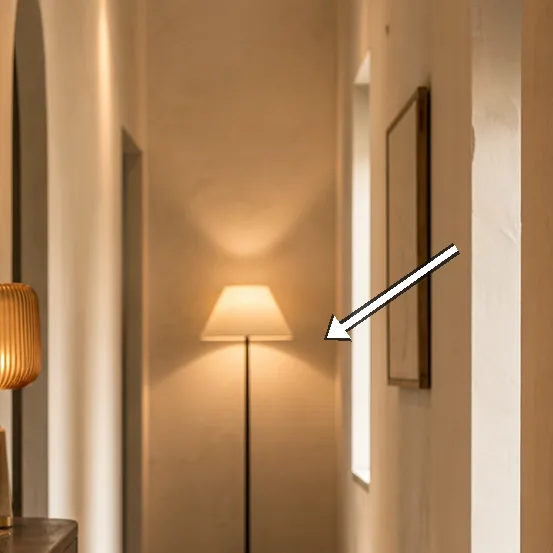
Placement that invites pause begins with the wall lamp offset by a few inches from the cornice. We test offset, height, and distance to the sofa line to see how the glow travels. We observe how the light dapples the opposite wall as it travels down the length. With every adjustment, the feel shifts from clinical to domestic in small, almost invisible ways.
The table lamp sits on a low plinth so the shade does not obscure the wall's texture. We adjust distances, walking the full length, watching how the light meets the plaster's imperfections. To maintain rhythm, we keep a narrow palette of warm white and muted metal. We record the exact height, distance from the wall, and the shade angle. The exercise becomes a choreography rather than a setup.
 Save
Save
We finish with a sweep of textiles as soft as the glow itself. The result feels like a measured embrace rather than a staged moment. Neighbours passing the door stop to smile, not to glare. Even in muted daylight, the corridor seems taller and more generous. We are careful to document the exact placements and the brightness levels for later replication. The notes include a scaled sketch for future rebuilds.
- Anchor the wall lamp a little below eye level to guide the eye.
- Balance table and wall lighting to avoid competing focal points.
- Choose warm, consistent colour temperature across all sources.
- Use dimming to dial mood with the time of day.
- Reserve a small budget to allow for easy future tweaks.
Final checks on lighting performance
Maintenance and final touches begin with a quiet audit of each lamp's colour and temperature. We check that cords are neat, fittings solid, and shades free of dust that dull the glow. We note any flicker at low levels and adjust the dimmer or plug-in module to address it. We also test the plug's compatibility with a small battery backup for power outages. This early check becomes a habit we carry into future upgrades.
Regularly check the dimmer function, switch authenticity, and the alignment of the LED strip. We re-seat a shade if it has slipped and wipe the skirting to keep the light from collecting dust. The space rewards ongoing attention rather than a one-off installation. We create a small maintenance checklist that we leave with readers. We note seasonal changes in colour perception and schedule a quarterly reassessment.
Seasonal changes shift perception of colour and warmth, so we plan a brief revisit in three months to reassess mood and balance. The corridor remains a live subject, capable of modest evolution as our routines shift. We document any tweaks to guide future readers through similar edits. We also adjust material finishes if light changes highlight mismatches. We finish with a quiet reflection on how tiny, patient updates can sustain a room for years.
How to do it
Step 1
Take baseline measurements of corridor length, width, and light levels with a lux meter; note glare hotspots.
Step 2
Install the first lamp on the wall at the measured height, adjust shade to reduce glare, and test at around 2700K.
Step 3
Add the console-table lamp and trial different heights; observe glow on plaster and shade interaction.
Step 4
Finalize brightness and positions, set the dimmer to a comfortable level for evening use, and document for future tweaks.
Common mistakes to avoid
Over-lighting the space
Avoid cluttering the threshold with too many lamps or overly bright sources. We found that row after row of bulbs erodes the calm we seek. Instead, opt for a single focal point and softer secondary light.
Ignoring shade texture
Translucent shades warm the colour of the room differently than metal or bare bulbs. We misjudged this once, resulting in a cold bloom that fought the walls' warmth.
Forgetting scale
A lamp or a strip that is too large for a narrow hallway will feel oppressive. We learn to measure clearance and balance between wall, floor, and ceiling.
Frequently asked
What should be considered when choosing hallway lighting?
How many lamps are ideal for a standard hallway?
Is dimming important in a hallway?
What colour temperature works best for living spaces?
How do you avoid making a hallway feel busy?
Are LED strips reliable in hallways?
What maintenance is needed?
How long did the project take?
In closing
Even as the lamps cool, the hallway keeps a trace of the glow we coaxed from it. We walk the corridor again at dusk and see its colour shift, like a room slowly speaking a softer language. The exercise in restraint has paid off: warmth, simplicity, and a clear path without fuss. We leave noting that small adjustments, documented carefully, can sustain a living space longer than any grand redesign. In slow living, lamps become quiet partners in the daily ritual of arrival.