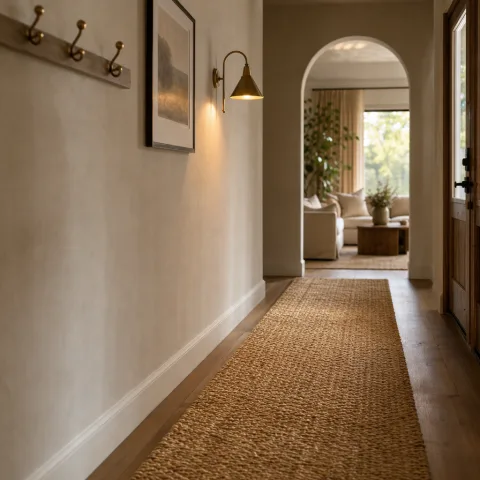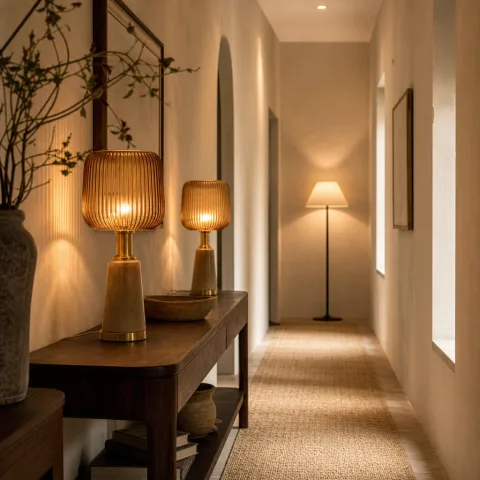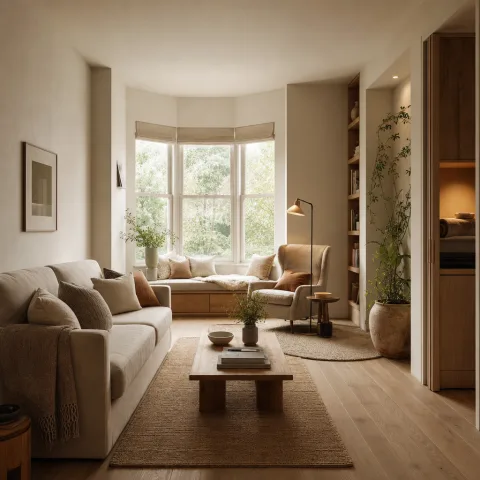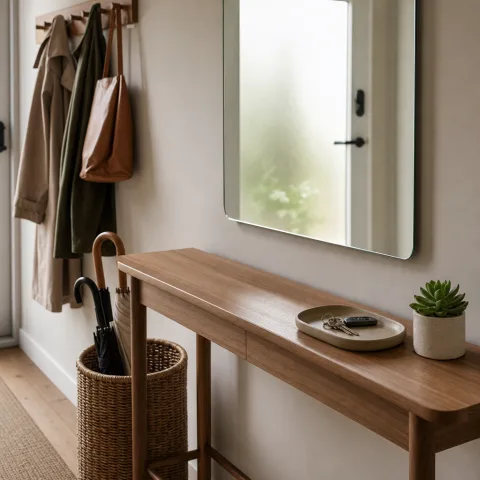
Across a narrow hallway, we measure the corridor depth against the console's footprint, noting the risk of crowding the doorway. We confirm the 90 cm length fits between skirting and the hanging light without forcing a lean. We double-check the available clearance for occasional wheelie bins and shopping bags. We test opening the adjacent door at various angles to avoid a clash. We mark the floor with masking tape to visualise the real footprint. We realise that a slender profile is not enough; the stance must feel anchored when drawers are opened and mail is consulted. Next we assess reach and reachability; the top surface should be comfortable for daily tasks. We simulate setting down a mail pile, a pair of sunglasses, and a plant, noting the height relative to eye level. We prefer a surface height around 72 to 76 cm, depending on sofa height and boot storage nearby. We check the leg spacing to ensure no snag occurs when vacuuming around the base. We note that light reflections on a smooth veneer can brighten a dim hall, but require careful placement of a lamp. We balance ergonomics with the threshold's rhythm, avoiding a top heavy look. Finally we test how the console behaves with everyday traffic. We walk past with coats, bags, and a borrowed child's backpack to simulate real use. We observe that a narrow leg design reduces collision points when passing by. We note the importance of a slight bevel at the edge to stop clothing catching. We conclude the measurement phase supports the idea that scale matters more than surface area.
Measuring for fit and ergonomics
First we measure the corridor depth against the console's footprint, noting the risk of crowding the doorway. We confirm the 90 cm length fits between skirting and the hanging light without forcing a lean. We double-check the available clearance for occasional wheelie bins and shopping bags. We test opening the adjacent door at various angles to avoid a clash. We mark the floor with masking tape to visualise the real footprint. We realise that a slender profile is not enough; the stance must feel anchored when drawers are opened and mail is consulted.
Next we assess reach and reachability; the top surface should be comfortable for daily tasks. We simulate setting down a mail pile, a pair of sunglasses, and a plant, noting the height relative to eye level. We prefer a surface height around 72 to 76 cm, depending on sofa height and boot storage nearby. We check the leg spacing to ensure no snag occurs when vacuuming around the base. We note that light reflections on a smooth veneer can brighten a dim hall, but require careful placement of a lamp. We balance ergonomics with the threshold's rhythm, avoiding a top heavy look.
Finally we test how the console behaves with everyday traffic. We walk past with coats, bags, and a borrowed child's backpack to simulate real use. We observe that a narrow leg design reduces collision points when passing by. We note the importance of a slight bevel at the edge to stop clothing catching. We conclude the measurement phase supports the idea that scale matters more than surface area.
Choosing the right console style
 Save
Save
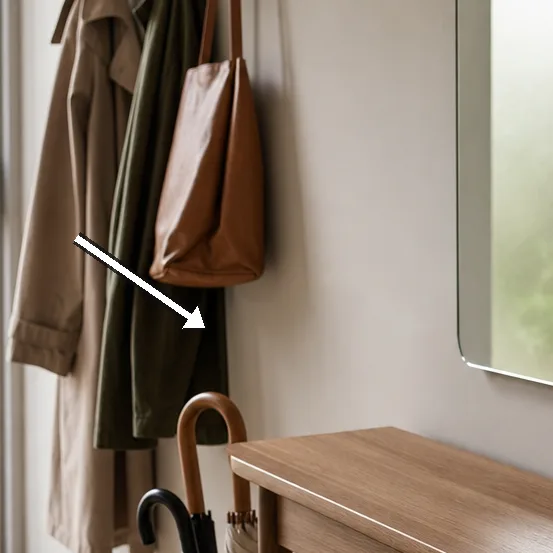
We then align the console's style with the rest of the hallway: lighting, wall colour, and furniture cadence. We compare three finishes: oak, walnut, and painted pale ash. We consider the grain direction to ensure the piece reads as deliberate rather than generic. We check the lines against the door frame to maintain a calm, continuous silhouette. We test a flat plinth against a slender leg for stability and shadow. We note how the material choice influences the perceived width of the space.
We place the piece in a prime position to greet visitors and to collect mail. We evaluate whether a shallow drawer helps with keys and spare batteries or simply adds bulk. We try a wall-mounted option as a comparison, understanding the trade-offs in cost and wiring. We test coordinating colours with adjacent frames and the floor's warmth. We introduce a small ceramic tray to define the landing area and reduce visual clutter. We conclude that proportion and finish trump novelty in a narrow entry.
Finally we weigh practical details against aesthetics. We discuss the idea of a console with a small return on the wall to extend surface area without encroaching into the passage. We assess whether a glass front would read lighter or read as a vulnerability to fingerprints. We experiment with a tall, narrow lamp to create vertical balance without tipping the space. We arrive at a decision that suits the hall's character.
Maximising storage without bulk
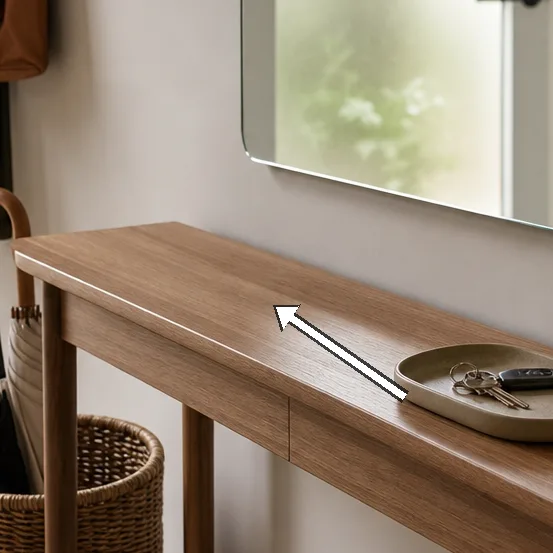
With storage in mind, we explore what truly adds function without bulk. We compare a closed drawer unit to an open shelf, seeking a balance of concealment and accessibility. We highlight the importance of vertical slots and slim baskets to keep items sorted. We test the ease of reaching items from standing height rather than bending. We note that a divided tray keeps small objects together, reducing visual noise. We remind ourselves that concealment can look calm when the surrounding wall colour is chosen thoughtfully.
 Save
Save
We consider the role of lighting for storage visibility: a subtle ambient glow along the edge helps locate keys at night. We place a small LED strip under the lip to illuminate the surface without glare. We evaluate the tolerance for seasonal items like gloves and hats, ensuring the basket system remains accessible. We test whether a single monochrome finish helps the storage read as part of the wall. We conclude storage works best when the division lines are clear and the top remains free for quick tasks.
We test the way the arrangement reads from the doorway, looking for a cohesive rhythm rather than a series of separate modules. We note how mirrored surfaces or pale wood can bounce light and reduce the impression of bulk. We observe that baskets should be shallow and easily accessible for daily items. We conclude that the right combination of drawer, shelf, and tray delivers order without heaviness.
“The console reads calm when ordered and honest in its function.” — Mira
Finishing touches and arrangements
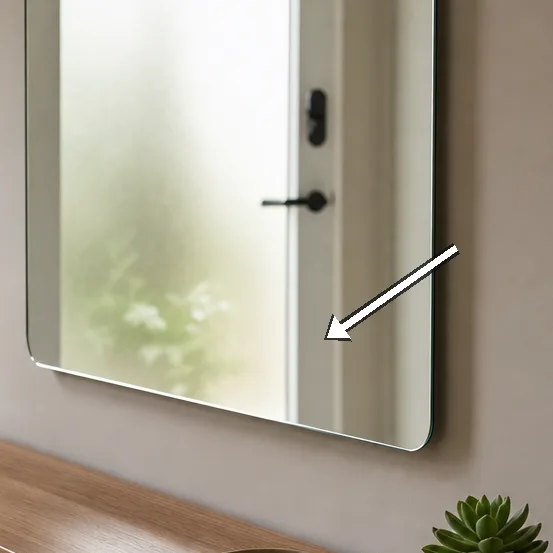
We then curate finishing touches that tie the console to the room's mood. We test small, tactile accessories such as a ceramic bowl, a fabric napkin, and a plant pot that matches the floor tone. We avoid chrome edges in favour of warm brass or copper accents that soften the corridor's edge. We arrange objects in a deliberate diagonal rather than a single line, guiding the eye along the wall. We size each item to stay within a 2-3 cm variance for visual harmony. We record how the light catches the surface curves and how shadows fall on the wall behind.
We reflect on the role of pattern: a rug at the threshold can anchor the console, yet we prefer a minimal pattern to respect the space's quiet. We test a small tray for mail, a bowl for keys, and a single vase for seasonal greenery. We remind ourselves that less is more in narrow spaces where every centimetre matters. We observe the flow of feet around the corner remains unblocked.
 Save
Save
We conclude with a philosophy of restraint: let the furniture breathe and the wall colour do the talking. We check that the console does not overpower the door swing or the view through the hall. We test the durability of the chosen materials as we wipe away fingerprints and dust. We feel satisfied that the arrangement looks intentional, not crowded, and ready for daily life.
- ceramic mail tray
- linen buff coaster
- potted plant in a neutral pot
- small brass lamp
- wicker basket for keys
Placement and daily habits
We finish with practical placement rules that support daily use. We position the console so the top is level with the bottom of the door frame's transom to keep sightlines uninterrupted. We mark a small drop zone on the floor for bags and coats to land. We train ourselves to clear the top each evening, returning items to their homes. We keep a small stepping-stone path for the floor by the front door to ensure we do not step on the edge of the mat. We note that regular tidying habits make the space feel larger and more welcoming.
We describe a weekly reset: wipe the surface, rotate seasonal items, and re-check that cables stay tidy and out of the way. We test whether a single monthly ritual keeps the console looking neat and purposeful. We capture a few quick photographs to remind ourselves what balance looks like. We promise to revisit the arrangement if the hall's lighting changes with the season.
We close with a reflection on restraint and function. The narrow console offers a home for small rituals: keys, mail, a calendar, a plant, and a light touch of art. It invites touch and quiet, rather than noise and clutter. We appreciate how the piece creates a pause before the threshold, a moment of calm amid the rush of daily life. In this way, the entry becomes a friend rather than a hurdle.
How to do it
Assess the space
Take measurements, check doors, note socket positions, and visualise the console in three potential placements before committing.
Select and place the console
Choose a finish and profile that harmonises with surrounding surfaces, then position the piece with a level, ensuring there is at least 60 cm clearance for passing.
Style and test
Add the tray, plant, and small accessories; test daily tasks like dropping keys, sorting mail, and feeding a small plant, adjusting height and angles as needed.
Maintain and adjust
Set a weekly routine to wipe the top, trim plants, rotate items seasonally, and re-check that the cables stay tidy and out of the way.
Common mistakes to avoid
Ignoring clearance
Overestimating the swing of doors or the space beside the console. We tested clearances but left pockets crowded. Plan for movement before installing.
Cable clutter
If outlets are behind a console, cords can trail and become unsightly. We encountered tripping hazards and a visually heavy silhouette.
Overfitting decor
Adding too many ornaments creates clutter rather than order. We found a single tray and a lamp are enough.
Frequently asked
What makes a narrow console suitable for a small entryway?
How should we measure for fit?
What are common mistakes to avoid with entryways?
Which finishes work best in bright or dark halls?
How should I maintain the console to stay tidy?
Can a console accommodate larger items?
How to choose storage options for small items?
What budget is realistic for a good console?
In closing
Looking back, the narrow console has proven that restraint and purpose can shape an entry more effectively than bulk. We have learned to measure carefully, to resist ornate missteps, and to let the space breathe while keeping daily rituals within easy reach. The piece anchors the hallway without asserting dominance, inviting us to pause, set down, and move forward with calm intention. In slow-living terms, there is real value in a well-placed surface that works as hard as we do, without turning the threshold into a cluttered trap.