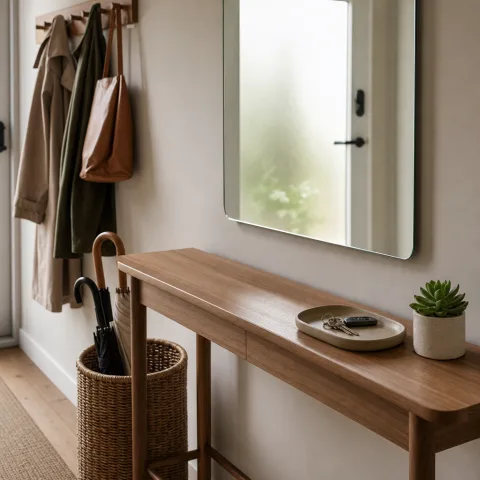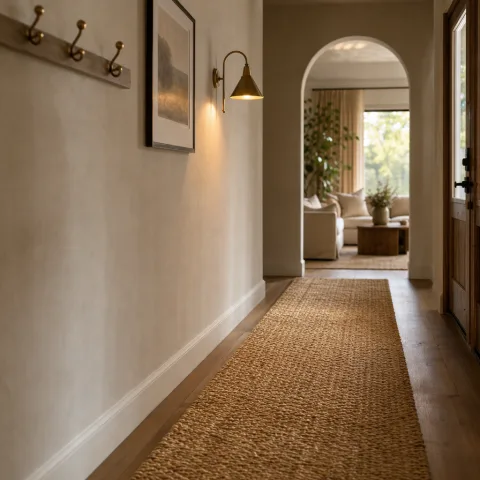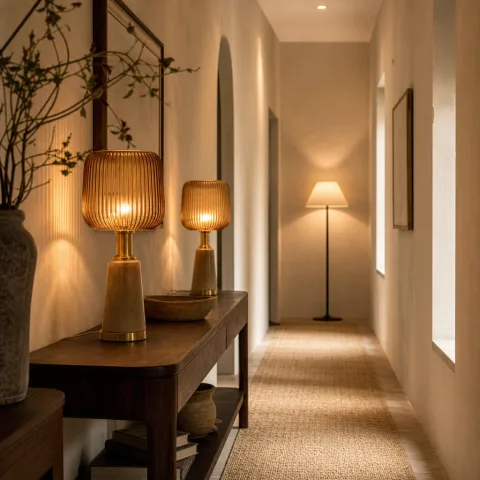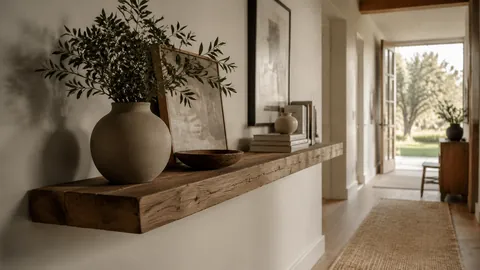
Before we added the shelf, the hallway collected the detritus of daily life: keys, letters, mail, and the occasional parcel. We measured the corridor twice and paused to consider how a single element could reorganise the space without crowding it. Oak felt right: warm, forgiving, and capable of aging gracefully alongside our pine floors and matte white walls. We wanted a fix that read as quiet furniture, not a showpiece, with hidden fixings and rounded edges. The plan was patient: dry-fit the length, confirm clearances, and watch the finish settle into a calm patina. In the end, the hallway looked calmer, more usable, and aligned with our weekly cadence.
Rethinking hallway storage with a single oak shelf
We began with a simple hypothesis that one long plank could anchor the hallway and offer practical surface without crowding the eye. The space between the front door and the coat rack was more than emptiness; it carried daily rhythms and moments of clutter. We wanted the shelf to read as quiet furniture rather than a statement, so we chose concealed fixings and rounded edges. Expectations rested on the grain of reclaimed oak, which would tell the house’s weathering story while remaining approachable. Our plan included a modest display for items we used daily: keys bowl, mail tray, and a small plant. In speaking with the space, we also discussed the feel of light when the sun travels along the wall, and how a simple line could invite pause rather than activity.
We scanned the walls for studs and mapped a line to keep the shelf level as the house shifts with time. The board needed to be sturdy yet forgiving, able to tolerate the occasional bump without conspicuous marks. We sourced oak with a warm honey tone to harmonise with pine floors and matte walls. The finish would stay matte to preserve soft light and avoid glare in morning sun. Finally, we outlined a display strategy to place items with intention rather than impulse. We rehearsed the display in our minds, imagining a daily routine that already existed before the tool and plank were in place.
Install required care and patience, not haste; hidden fixings would give the illusion of a true float. Hands moved deliberately, checking alignment, plumb, and level as we worked along the length. We used a chalk line and a small spirit level to keep consistency across the shelf. The weight of daily items was planned for, with room for a small vase, book, and bowl. Throughout the process we wiped dust and watched the line settle into quiet confidence. By the end of the day, the room accepted the line as part of its own calm.
 Save
Save
Choosing reclaimed oak and matching to the scheme
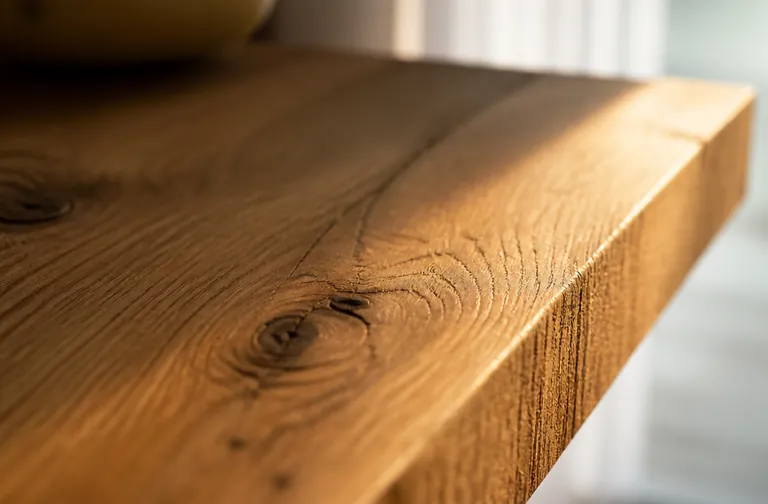
With material in mind, we evaluated candidates until we found reclaimed oak with a honey glow that harmonised with the hallway. We visited a small timber yard, ran our fingers along the edges, and pressed boards to our cheek to assess how they would patina with age. We compared several finishes in sample panels and watched how the grain drank oil and light differently. A few boards carried small character marks—tiny healing scars—that reminded us of the house’s history without shouting. A hidden-fixing approach kept the shelf floating and free of visibly heavy brackets. We tested a swatch against the wall to confirm warmth, depth, and daylight response.
Having selected boards, we marked a straight line and located studs to secure safely. We dry-fitted the shelf along its length, adjusting distance from skirting to avoid contact with footwear. Fixings were inset so the top appeared seamless, not bolted on. We tested light loads to refine depth for a bowl, a vase, and a small book. The finish and alignment were checked daily during the first week to confirm reliability. This early check-in helped us adjust the plan before any permanent fixes.
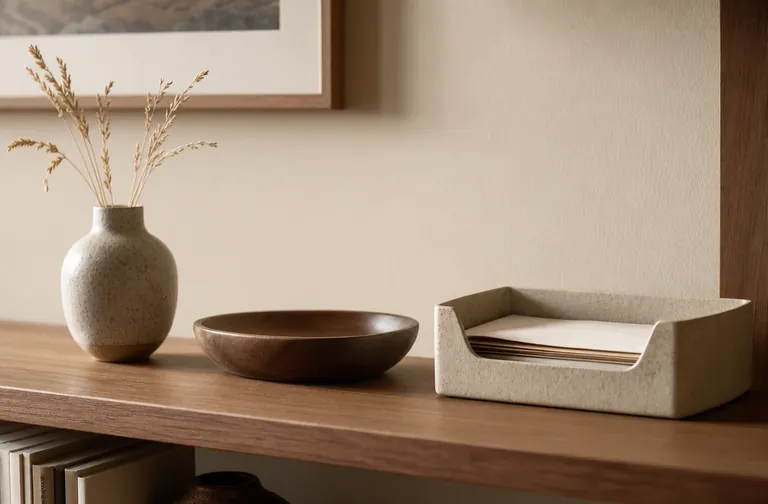
We began with a matte oil, allowing the grain to drink in the colour slowly. Each thin coat added depth without increasing reflectivity, keeping the room calm. Negative space emerged as a design ally, guiding the eye along the line rather than the hardware. We learned to pause before placing objects, letting balance determine the display order. The shelf finally merged into the corridor, a quiet boundary between furniture and wall. We compared the feel of the edge against the skirting board and adjusted the sheen where the wall could breathe.
 Save
Save
“The hallway feels calmer now, a room that welcomes rather than stores.” — Mira
Fitting brackets, finish, and the art of negative space
Finishing required a steady eye for texture and light; we chose a simple matte oil that deepened the oak without gloss. Thin coats were applied and wiped away to keep the surface serene rather than saturated. Each layer added a quiet depth that encouraged slower inspection from the eye rather than touch. The installation emphasised negative space, keeping hardware out of sight and guiding attention to the line. We learned to listen to the room, letting the wood lead the balance with silence. We compared the feel of the edge against the skirting board and adjusted the sheen where the wall could breathe.
Testing real-day use with keys, a notebook, and a small planner showed how tension distributed along the length. Concealed fixings proved essential to the float effect, leaving the top edge uninterrupted by screws. We adjusted the shelf’s depth to avoid snagging clothes or bags at the hallway threshold. The final moment of alignment felt almost tactile, inviting a light touch rather than a grab. In short, restraint created a true sense of durability and quiet honesty. We also checked how greeting light shifted along the wood as the day moved toward evening.
The shelf now anchors the corridor in a way a blueprint cannot capture. Lighting shifts across the oak, warming the grain in late afternoon and cooling in morning rays. Regularly emptying the surface keeps the display purposeful rather than decorative. We rotate a few items to maintain balance as items change with the seasons. Finish maintenance remains light—dust weekly, reapply a thin coat every few years if wear becomes evident. That cadence keeps the piece honest and responsive to daily rhythms.
 Save
Save
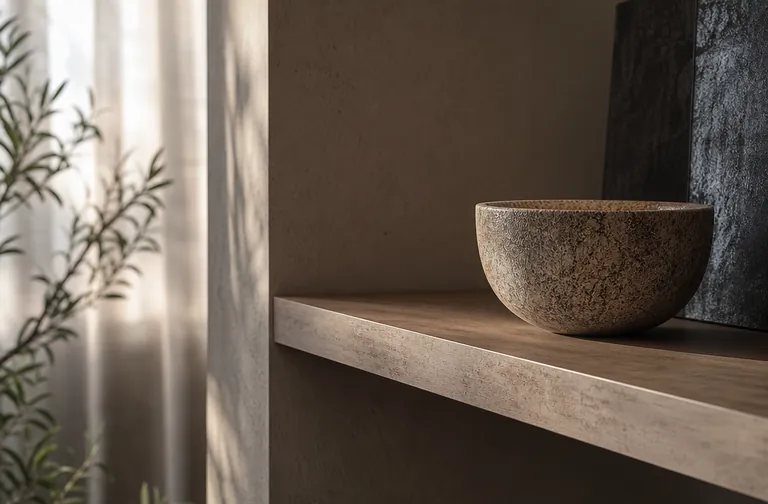
- Hidden fixings behind the oak create a clean top edge
- Spacers ensure level across length
- Mild oil finish keeps the surface near-matte
- A small tray concentrates items without crowding
Long-term care and reflections after six months
Six months in, the shelf shows its age softly, with grain deepening and the finish mellowing in daylight. The surface wears a more intimate patina as days pass, and we notice how the warm glow changes with the season's light. Small scuffs from occasional bumps tell a narrative of constant use without breaking the calm. We find ourselves rearranging items not out of need but curiosity, testing whether weight or form changes the balance. Even so, the line remains steady, the fixings invisible, the edge unchanged.
We rotate display objects to keep cohesion, mindful of colour, texture, and weight. A ceramic bowl glazes with autumn sun, a wooden book sits at a slight tilt to catch the eye, and a minimal plant breathes softly at the far end. We notice how different placements affect perceived depth and flow through the hallway. The act of rebalancing becomes a small ritual, not a chore. The result is a shelf that feels alive rather than fixed.
Keys, mail, and a tiny dish still live on the top, but with a stricter routine to avoid clutter. We now clear the surface at dusk, returning every item to its designated niche and taking a mental inventory of what belongs there. The dish catches spare change and occasional loose coins, reminding us of daily life that travels through the home. We keep a small calendar and a weekly note stack, shifting them between the tray and a higher shelf that waits in the background. The hallway retains its spirit of calm, even as daily life continues to move through it.
How to do it
Plan and measure
We measured the hallway from door edge to the skirting board, allowing 20 cm clearance and 2 cm tolerance. We calculated the required length as 120 cm and marked two reference points to line up with existing features. We considered how the shelf would coexist with the coat hook and light switch, avoiding interference. The plan also included door clearance checks to ensure smooth use.
Source and acquire
We sourced reclaimed oak from a local mill, selecting a plank with a rich grain and warm tone. We compared two finishes, choosing a matte oil that would not reflect strong light. We confirmed the fixings would be concealed and compatible with stud anchors. We prepared the area, cleared dust, and verified tools were sharp and ready.
Prepare the oak
We sanded the board to 180 grit before any staining, removing rough patches and small knots. We applied a light stain to even tone without darkening the grain, then wiped excess. After the stain cured for 24 hours, we sealed with two thin coats of matt finish. We let each coat dry in a quiet room away from drafts and dust.
Install and secure
We located wall studs and marked the fixing points at equal intervals along the length. We predrilled holes, inserted wall plugs, and drilled in the concealed screws. We checked level repeatedly during mounting, adjusting as necessary to avoid tilt. We finally placed the shelf, pressed it gently to settle, and set aside for a final 24 hours before loading.
Frequently asked
What is the shelf made of?
How long did installation take?
How much weight can it hold?
How do you care for the finish?
Did it change how you use the hallway?
Would this work in rental properties?
What would you do differently next time?
In closing
The project proved that thoughtful restraint can transform a space without turning it into a showroom. By selecting reclaimed oak and planning for hidden, floating fixings, we created a hallway that reads calmer and works harder. The shelf’s surface invites touch and keeps daily necessities within reach, but never overwhelms the eye. Looking back, the measuring, testing, and waiting for finish to cure felt as important as the final look. It’s a quiet reminder that slow-living is not about reduction for its own sake, but about making room for what matters and letting time do the rest.