We began this field report with an intention to observe how a single woven runner could alter the mood of a long hallway. The corridor in question is wide enough for a generous stride yet narrow enough that walls, skirtings and door frames compete for visual rhythm. Our approach was process-led rather than impulse-driven: measure, test, compare, and then commit to a tone that would endure. We considered three factors that determine success: scale, tactility and restraint. Scale ensures the eye travels smoothly rather than bumping against boundaries. Tactility brings warmth underfoot without creating a noisy foreground. Restraint ensures the runner complements the architecture rather than competing with it. In the end, the choice was as much about quiet as it was about colour or pattern, and our notes reflect that balance.
Choosing a woven runner for a long hallway
When we began, the aim was not to claim the hallway with a bold rug, but to signal its length with a soft, repeating weave. We tested three options in a room-lighting context that resembled the corridor’s daily life, then measured how each option read from the doorway. The mid-pile wool blend stood out for its ability to capture both day and evening light without appearing flat or static. We considered width in relation to the wall geometry; a little more than half the corridor’s width felt proportionate while still allowing generous floor exposure. The mood we sought was calm, not conquest, a simple invitation to walk with intention rather than hurry along.
Pattern direction mattered, but only as a supporting actor. A uniform, straight grain reinforced the corridor’s linearity, whereas a diagonal or chevron could risk creating visual tension with the doors and fittings. We spoke with the supplier about colour fidelity under artificial light and natural daylight, ensuring that the chosen yarn’s hue would read as a warm neutral rather than a colour accent that fought with the walls. A small swatch confirmed that the fibre would pill minimally with weekly vacuuming, a key factor given the hall’s foot traffic. The decision was guided by long-term maintenance as much as immediate impact.
Before placing an order, we validated the sample against the hall’s thresholds and corners. The footprint needed to consider whether the rug would ever clash with a shoe-mate, coat hook, or the top rail of a stair door near the entry. The final choice balanced softness, resilience and visual continuity; in other words, it felt like a natural extension of the hallway rather than a garment laid over it. With the agreement in place, we prepared the installation plan to follow a measured, repeatable workflow that readers could replicate in their own homes. The aim was to preserve the hall’s architecture while weaving in a human scale and a gentle sense of seasonality.
Sizing and placement: where the runner sits
 Save
Save
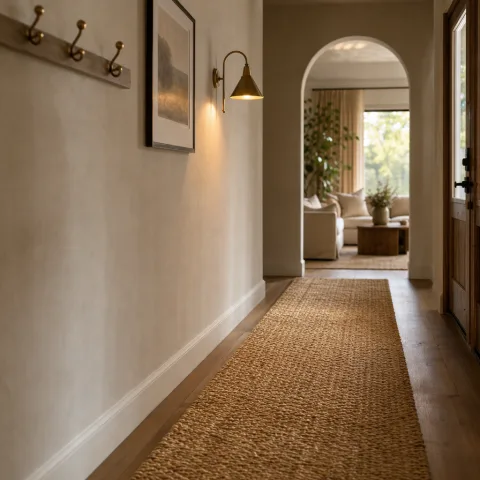
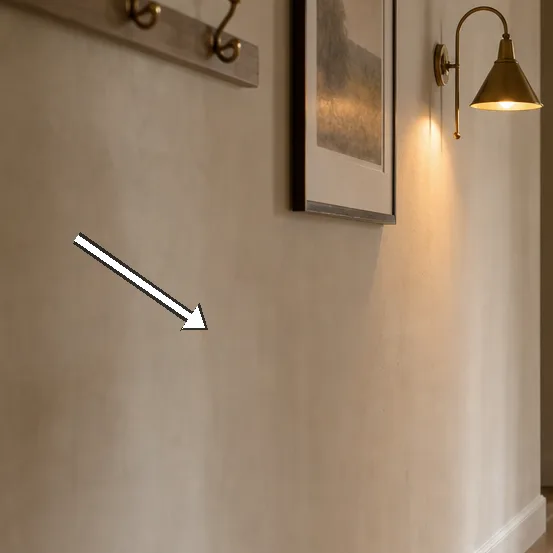
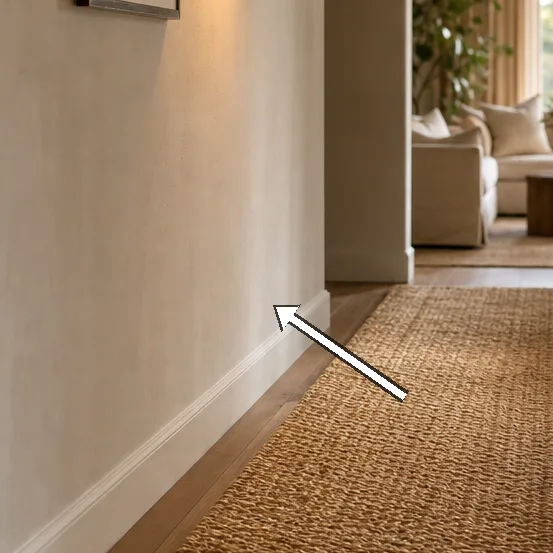
We moved to configuring the runner with a strict but friendly discipline: margins of 6 to 7 cm from each wall, chosen to frame the wall depth without crowding the baseboard. For a hallway that catches afternoon light, this margin helps the eye glide along the surface, avoiding harsh edges that could interrupt the field of view. We marked the length in stepwise segments to anticipate how surface traffic would traverse the space, noting door swing clearance and vent locations. In practical terms, width and margins dictated the pattern’s relationship to the wall lines, a balance that is visible but not loud. The aim was to establish a quiet, reliable spine for daily movement.
We then addressed the underlay as a critical companion to placement. A dense felt layer reduces movement and contributes a unifying base that allows the weave to sit evenly across the joists and floor boards. We aligned the underlay with the hall’s natural grain and attached a simple chalk-guided seam, ensuring the edge of the runner would track true from threshold to threshold. The section near the front door required a careful rounding to avoid a bulky corner that might catch on shoes. After final alignment, we ran a slow walk the length of the hall to test for any pull or slip under load.
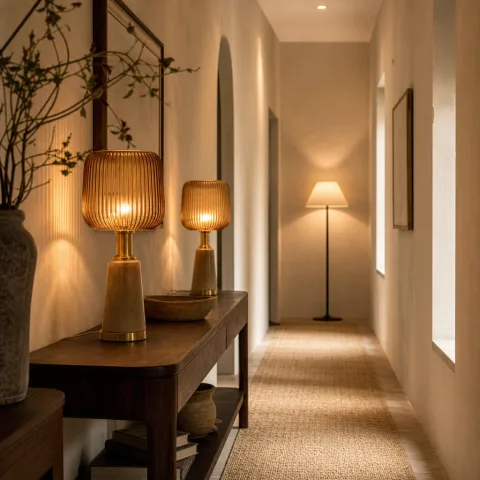
Finally, we checked lighting interactions: we paused at mid-span to view the weave under both daylight and artificial light. A two-point evaluation—sun-based and lamp-based—showed how the fibre shifts subtly from warm to cool tones, a dynamic that the room could embrace without losing coherence. We ensured that the entry and exit points preserved sensible clearance for doors and furniture, while the rug’s edges aligned with the skirting boards so the eye could travel uninterrupted. The completed plan felt efficient and humane: enough surface to walk without impediments, and enough air around the rug to breathe within the space.
Textures, colours and daylight: how it feels
Texture becomes a language in a long hall, and this runner speaks softly. With daylight sliding along the fibre, the surface reveals a delicate interplay of shadow and highlight, a conversation between wool and loom that stays legible without shouting. In late afternoon, the weave takes on a warmer, almost earthier tone that complements the timber floors and muted wall colour. By contrast, morning light renders the same fibre cooler and calmer, reducing any sense of colour drift across the length. The result is a space that reads as one continuous surface rather than a sequence of distinct spaces.
Colour is a co-star rather than the lead. The chosen palette anchors the hall with a whisper of warmth, allowing art and furniture at the far end to maintain their visual prominence without competing with the corridor’s own texture. The underfoot feel contributes a soft cushion underfoot, which makes a daily walk through the hallway a more contemplative practice than a hurried dash. We observed how the fibre’s surface remains forgiving of foot traffic; tiny scuffs and marks silence quickly under care rather than drawing the eye. In short, the hall gains depth without becoming busy.
 Save
Save
Light and fibres shape a subtle choreography along the run. When daylight fades, the rug still carries a sense of order, thanks to the yarn’s natural luster and the weave’s regularity. The hall’s corners and door frames act as punctuation marks, and the runner’s line provides a continuous breath between them. We noted that the texture invites touch but does not compel it, a practical virtue for a high-use zone. Most importantly, the space feels calmer: the eye rests on a fabric that gently communicates comfort rather than the rigidity of an unadorned corridor.
“This hallway finally breathes with soft woven light.” — Mira
Installation rhythm: laying the runner with care
The installation rhythm is a defined sequence rather than a burst of activity. We began with a light, measured lay of the underlay, ensuring there were no wrinkles or bubbles that could migrate into seams. Then we aligned the runner with a central axis, checking that the grain and the edge lines echoed the room’s walls and door openings. The next step involved slow, deliberate placement—no rushing through sections, no improvisation at the last minute. The goal was to establish a state of calm in which every action felt purposeful and transparent to a reader attempting a similar project.
As the weave settled, we tested door clearance and edge alignment again, adjusting with a steady hand. We avoided forcing the material to bend at corners, instead letting the underlay follow the floor’s contours. Trims near thresholds were made with careful, straight cuts to maintain a crisp, professional finish. Finally, we performed a light pass with the vacuum to set the fibres and reveal any low spots. The exercise reinforced a truth: a good installation honours the space’s architecture and your own tempo.
 Save
Save
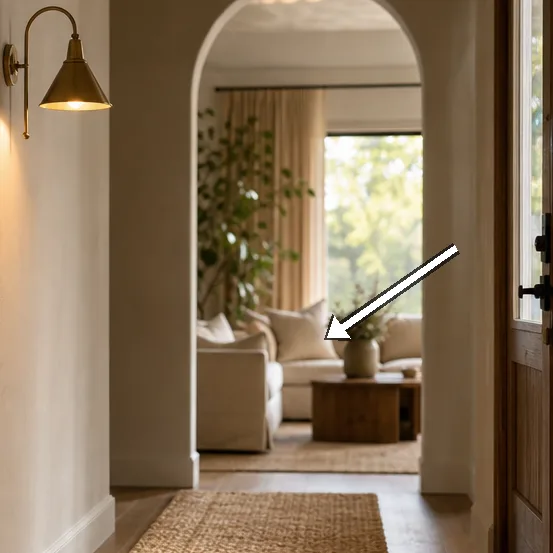
The third pass centred on longevity: we looked for consistent tension along the entire run, checked for air pockets, and confirmed that no seam was visible from a normal walking distance. We documented the measurements at the start and end of the run to ensure the rug would not shift with routine cleaning or footfall. The process demanded patience, but the outcome was a surface that holds its line while remaining generous to the feet. With the walls, lighting, and furniture in alignment, the hallway presents a quiet, legible route rather than a cluttered corridor.
- Check underlay grip at every threshold
- Match width to visible floor edge by 5–7 cm
- Align pattern with doorframes for continuity
- Avoid heavy underlay near vents or skirting
- Test movement with foot traffic before final commitment
Care, cleaning and long-term performance
Care over time becomes the most revealing judge of a hallway runner. Vacuuming remains the routine backbone, but we also recommend a gentle approach to occasional deep cleans that respects the fibre’s natural oils. The plan is to avoid aggressive solvents or high heat that could compromise the wool blend’s structure, instead favouring a wool-safe cleaner and a soft brush for lift and renewal. We also suggest lifting the rug for a seasonal check of the underlay and edges, ensuring the seams remain discreet and the surface remains evenly settled. The small rituals accumulate into a longer life for the material and a calmer corridor.
Seasonal checks are practical: test the carpet’s edge for lift, ensure the seams stay flat, and refresh the patina of colour with a careful vacuum pass. We recommend rotating lightly when possible to distribute wear across the entire width, especially in high-traffic seasons or when families return home after holidays. Avoid over-wetting or soaking the fibres; damp conditions can invite mould growth and alter the surface’s texture. Our aim is to preserve the runner’s warmth, softness and tonal integrity, so the space remains welcoming through shifts in light, traffic and mood.
Finally, we emphasise a sustainable habit: monitor the weave for any loose threads and trim them cleanly before they escalate into longer repairs. The hallway’s long line rewards consistent maintenance rather than dramatic fix-ups. A well-cared-for runner offers a reliable, silent patina—one that keeps pace with daily life without becoming stale. The conclusion of our report is not a spectacle but a practice: care reduces wear, and care extends the life of both space and fabric. The hall remains a quiet stage for the small rituals of everyday living.
How to do it
Measure the hallway
Use a metre tape to confirm length, width and door clearance; record at least three reference points.
Choose the runner and underlay
Select a wool blend with a medium pile and pair it with a dense felt underlay for grip and stability.
Position and trim
Lay the underlay, align the runner along a central axis, then trim edges precisely at thresholds.
Secure and maintain
Vacuum regularly, check edges seasonally, and refresh alignment if movement is detected.
Common mistakes to avoid
Picking a length that disrupts door swing
We see many misfires when runners extend past door frames, creating a visual tug-of-war and a practical tripping hazard. The goal is continuity, not interruption. Measure twice, cut once, and test clearance with the doors open and closed.
Overlooking underlay performance
A poor underlay invites creeping, bunching and uneven edges that ruin the weave’s crisp line. Even cheap felt layers can transform how the fibre sits, so test movement with foot traffic before fixing. Do not skip this step.
Ignoring pattern alignment
If the weave edges don’t align with wall lines or door frames, the eye travels too aggressively across the space. Take time to set a central axis and follow it with every edge and seam. Small misalignments accumulate into a perceived imbalance.
Frequently asked
What width should the runner be for a long hallway?
Is a non-slip underlay essential?
How often should I vacuum a woven runner?
Can I cut a runner to fit odd lengths?
Will a woven runner muffle footfall?
How do I treat stains on wool runners?
Does pattern direction matter?
What maintenance after installation?
In closing
In the end, the hallway presents a quiet, human scale that respects the architecture while inviting a slower pace. The woven runner acts as a gentle guide, weaving light, texture and warmth into daily rituals rather than commanding attention. Our field notes emphasise patience, precise measurement and careful alignment as the trinity of success. By choosing material, underlay, and placement with care, we create a corridor that feels almost immediately familiar and endlessly comfortable. This is how small decisions compound into lasting calm in a lived-in space.