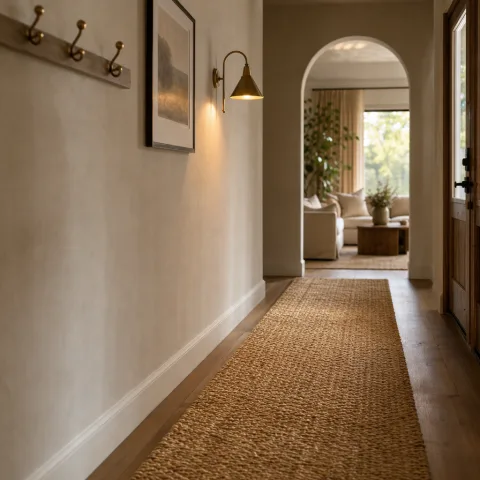
Rentals come with plastic switch plates the way coffee comes with stirrers. They are the cheapest part of the flat, the most replaceable, and the most universally ignored. We started counting ours one Friday — twelve plates, twelve plastic, all the same dimpled white — and by Saturday lunchtime they were gone. In their place: twelve aged-brass plates, three euros each, off a wholesaler in Porto. The flat stopped looking like a rental in the time it took to twist twelve screws.
Why no one notices and everyone notices
Switch plates are below the threshold of conscious attention. Nobody walks into a room and thinks the plate is nice. They walk in and feel the room is nice, and twenty minutes later, leaning against a wall, the plate enters peripheral vision and fits. White plastic does not fit any wall worth a wall. Aged brass fits everything that is not chrome.
 Save
Save
There is also a small permanence effect. The plastic plate is light, hollow, the screws sometimes spin in their plastic threads. The brass plate has weight and metal threads. Pressing a switch with the brass plate behind feels like pressing a thing. Pressing the same switch with the plastic plate feels like pressing a void.
Aged versus polished
Polished brass looks correct in the catalogue and bossy on the wall. Aged brass — sometimes called living brass, antique brass, or brushed satin — has been hand-rubbed or chemically aged so the highlights are warm and the recesses are dark. It reads as old. In a flat with character, this works. In a flat without character, it adds some. Polished brass adds none and detracts.
 Save
Save
“Polished brass looks correct in the catalogue and bossy on the wall.” — Mira
- Buy from a brass wholesaler, not an interiors shop. The price doubles for the same plate.
- Aged brass over polished. Polished brass dates a room to the year you bought it.
- Replace every plate, not some. A single brass plate among eleven plastic ones reads as accident.
- Keep the plastic ones in a box. Move-out day comes faster than you think.
How to do it
Turn the breaker off, not just the switch.
Trip the circuit at the consumer unit. Plate the switches, not the wiring. Wiring is for electricians.

Unscrew the plastic plate.
Two screws, hand-tight. The plate lifts off, the switch mechanism stays. Do not unscrew the switch itself unless you know what you are doing.
Hold the brass plate and screw it on.
The brass screws supplied with quality plates are matching aged brass. Use those, not the silver ones from the plastic plates. Snug, not crushed — brass dents.
Buff with a soft cloth.
A microfibre and one minute of buffing brings the patina up. No polish, no Brasso — that strips the aging.
Frequently asked
Can I do this in a rental?
Are these the same size as my plates?
What about outlets and dimmers?
Do brass plates tarnish over time?
In closing
Three euros a plate is the smallest renovation budget I have ever spent and the one that has paid the most in compliments. Nobody knows why our flat looks composed; they just feel it does. The plates are most of the answer, and the plates were a Saturday afternoon.