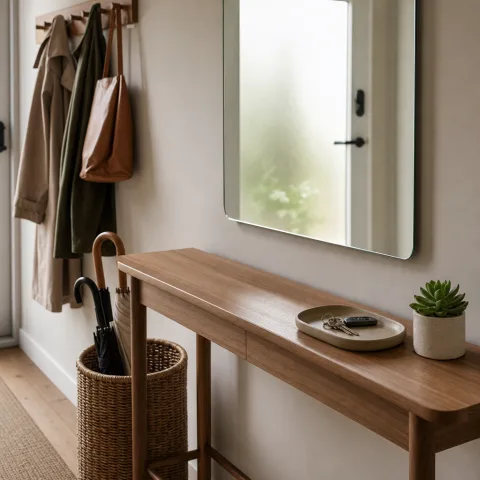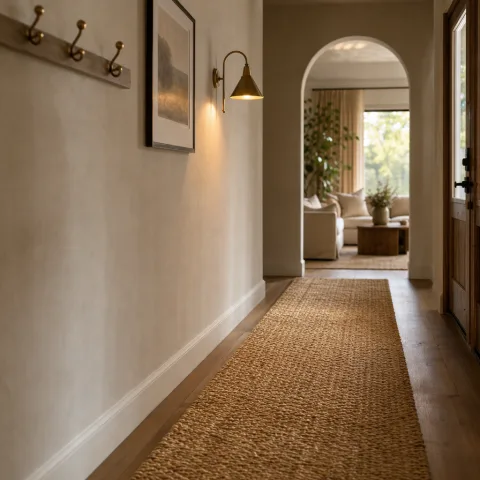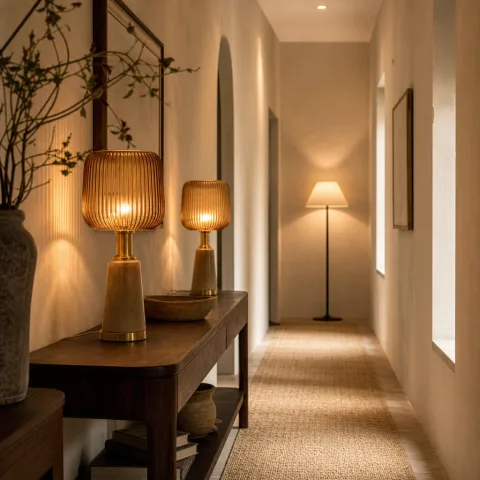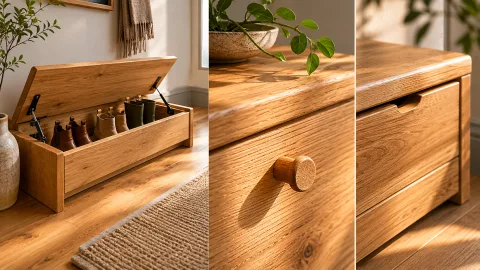
From the outset we kept the project deliberately modest in ambition: to create a bench that honours a narrow corridor, rather than overwhelm it with ornament. The hallway, by its nature, demands a piece that reads as uninterrupted wall and furniture alike, so each decision had to serve both function and visual calm. We measured the available depth, assessed door swing arcs, and tested possible seating heights against a habitual morning routine. The oak choice was pivotal: a timber with restrained grain that would age gracefully and pick up light without becoming visually loud. We planned the concealed storage as a practical solution to boot clutter, not a flamboyant feature. Our process treated the bench as a small cabinet that happens to carry a seat, with hinges and runners chosen for reliability rather than showmanship. We documented the build in careful steps, anticipating how situational nuances—dust from sanding, humidity changes, and traffic patterns—would interact with every joint. In short, the goal was a calm, durable daily tool that respects the hall’s proportion and breathes with the space.
the-compact-hallway-brief
Width constraints dictated the bench’s scale, so we defined a maximum depth of 420 mm and set a seating height that aligns with standard chair dimensions while remaining comfortable for short pauses. We tested several subtle front-edge profiles, favouring a gentle bow that softens the silhouette without introducing hazard near clothing or door frames. Our early drawings aimed for a front that remains visually flush with the wall plane even when the drawer is closed, preserving a single, uninterrupted line through the hallway. We validated proportions with full-scale templates placed in situ to confirm that foot traffic, coats, and pets could traverse the space without obstruction. We also opted for a restrained palette: oak, wax, and a natural oil that respects the hall’s existing finishes and lighting shifts.
Ergonomics guided the seating height to a practical 460 mm, with a front edge subtly rounded to avoid sharp contact with knees or sleeves as we sit and stand. The hidden boot drawer required a front face that aligns perfectly with the seating plane, creating a seamless overall form when closed. Full-extension runners were chosen to maximise access to the drawer content while maintaining a low profile that does not threaten legroom. We designed the interior cavity to be dividable with a simple, user-friendly layout so that seasonal footwear can be stored without bulk. Finally, we planned tolerances so that the grain continues uninterrupted along the length, reinforcing a calm, cohesive appearance across the bench.
The build approach treated the bench as a low cabinet with a seating surface, so every joint needed to be precise, stable, and easy to service. We prioritised a clamping sequence that kept the frame square during glue-up and ensured the drawer cavity stayed true to width while remaining easy to clean. Our considered workflow included a dry-fit phase to catch any misalignment before glue was applied, and a final test of seat comfort with varied footwear. We checked that the drawer front disappeared beneath a tiny bevel line from the top surface to avoid any snagging of trouser hems. The overarching intention was to deliver a quiet piece that complements the hall rather than competing with it, while still meeting daily practical demands.
planning-the-boot-drawer
 Save
Save
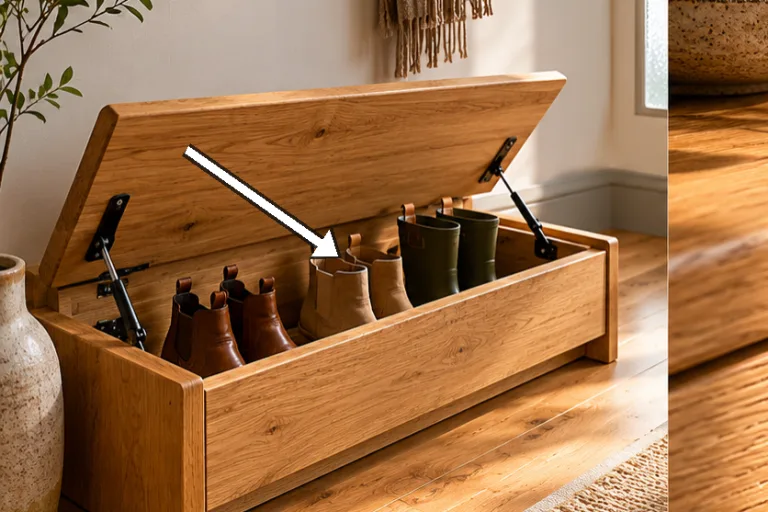
Boot storage demanded a shallow, carefully shaped cavity; we set the drawer depth to 260 mm and the cross-section to 1050 mm, balancing capacity with line-of-sight in a narrow space. We drafted a front façade that mirrors a drawer front but remains visually integrated with the seat, achieving a subtle visual trick that keeps the gaze uninterrupted along the wall. The back and sides were designed to be as lightweight as possible while maintaining sufficient rigidity to resist edge lifts during frequent use. We partitioned the interior to create three zones for common footwear, guaranteeing easy access and clear separation between sizes. The overall objective remained a discreet mechanism that delivers reliable performance without drawing attention.
Hardware selection followed a philosophy of silent operation and durability under daily wear. We chose 600 mm full-extension soft-close runners to cope with heavy boots and damp winter footwear, ensuring a smooth glide with minimal effort. The lid stays are slender stainless steel elements, chosen to vanish from sight when the drawer is closed but to perform reliably after repeated cycles. The drawer front was engineered to sit almost flush with the top surface to preserve a continuous line, an effect achieved through precise routing and careful adjustments during assembly. We documented mounting points with exact templates to safeguard alignment through repeated use and potential seasonal shifts in humidity.
During the build we maintained a strong focus on edge quality, aiming to eliminate any visible gaps at the interface between seat, drawer front, and frame. We tested the drawer with a range of footwear, from bulky winter boots to lean trainers, to ensure consistent clearance and reliable operation under real-world conditions. We introduced small debris channels along the runner path to prevent dust buildup and potential binding, a step that paid dividends during long-term use. We revised the back panel to a lighter plywood version to ease overall weight while preserving structural integrity. Finally we rehearsed full extension and reclosing sequences to guarantee that the front line remained true and visually balanced as the furniture settled.
timber-selection-and-surface
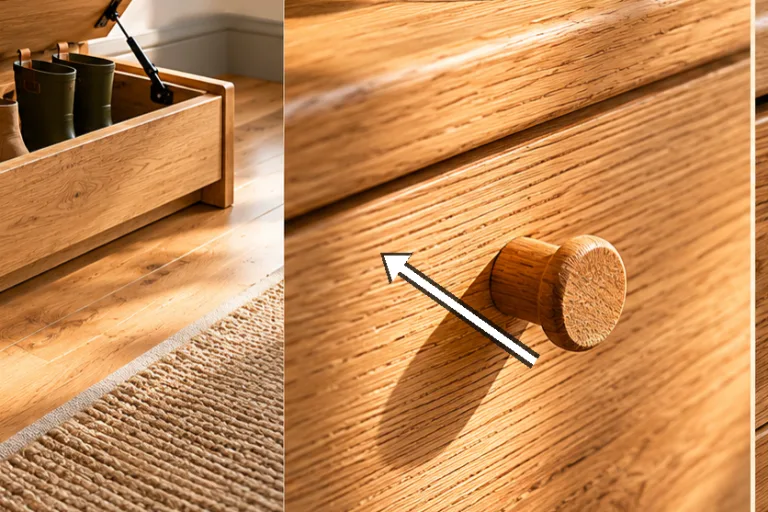
Timber selection began with a quiet insistence on stability, grain, and long-term readability in a busy hallway. We sought oak with a straight, even grain that would age gracefully and resist the high traffic of coats, bags, and boots without showing abrupt variation. We avoided boards that carried knots or figure that might interrupt the hallway’s calm, preferring a consistent tone across the bench. The wood would face inevitable scuffs and moisture exposure, so we planned a finish that accepts minute marks and can be maintained without deep refinishing. We examined expected seasonal movements and chose a stock thickness that would minimise warping while keeping the silhouette slender.
 Save
Save
Surface preparation followed a disciplined sequence: jointing to establish true faces, planing to remove surface irregularities, and a staged sanding regime from 120 to 220 grit to eliminate all potential scratches. We tested the finish on a control sample to observe how the oil would permeate the timber and how the wax would leave a protective, tactile layer without forming a glossy film. The selected finish was a tung oil plus wax blend, chosen for its natural appearance and ease of maintenance, which allows the grain to breathe while providing resistance to occasional spills. We applied several thin coats to build a durable, even tone that would deepen with age rather than darken abruptly. The final appearance emphasised a warm amber that remains legible and quiet under varied lighting.
Grain continuity across the front face was a critical concern; we planned the layout so the line would run consistently from edge to edge, strengthening the perception of length and calm. The outer edges would be sealed to resist minor moisture from damp shoes, while the drawer interior would receive a similar treatment for uniformity of performance. Maintenance was designed into the finish: wipe with a dry cloth, re-oil every six to twelve months, and wax as required to retain tactility. We simulated daylight and lamp illumination to verify that the finish would not glare or look muddy at different times of day. The intent remained to preserve a surface that feels robust yet approachable, with a finish that improves subtly as it ages.
hardware-and-assembly-log
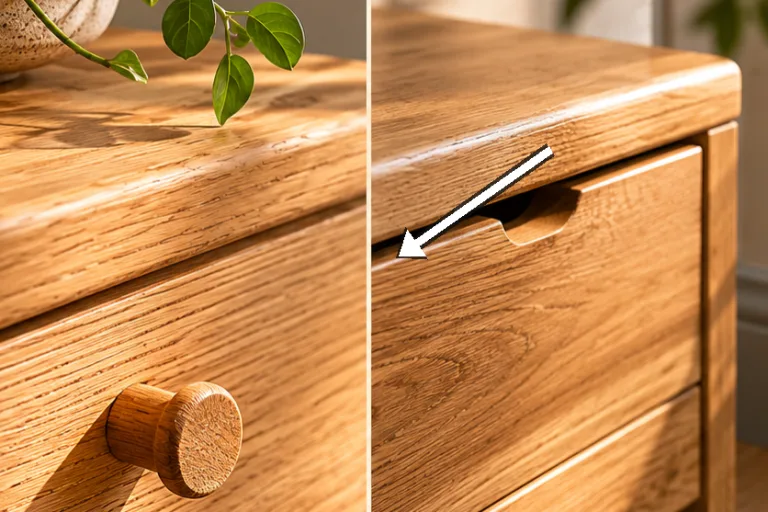
Hardware planning focused on concealment and longevity, placing a premium on components that disappear visually yet perform reliably. We specified a slim front panel that mirrors a drawer face while remaining flush with the seat, a trick that hinges on precise routing and careful setback measurements. The hinge and runner pairings needed to cooperate with the bench’s slim footprint, so we established strict tolerances and a sequence of dry-fits before final assembly. Templates were prepared to guarantee accurate screw points and mounting positions, ensuring repeatable results across future seriation or renovations. We kept a written assembly log to trace decisions and facilitate future maintenance without guesswork.
During assembly we maintained strict checks for squareness at every joint, clamped the main frame, and verified that the seat surface remained level as glue cured. Drawer rails were installed with careful calibration to avoid binding when opened under load, and the front alignment was tested with a simple laser-line tool to guarantee flush presentation. The final stage involved a meticulous hand finish around the joints to preserve a refined transition between seat and drawer, avoiding visible seams that could catch fabric. We rechecked the overall footprint, ensuring the bench remained unobtrusive yet confident within the hall’s proportions.
 Save
Save
In the concluding checks we tested for ongoing performance: does the drawer glide smoothly after repeated openings, do the seat and front align back to the original line, and is there any visible drift as the wood acclimates to room conditions? We revisited screw points, tightened where necessary, and cleaned every surface to remove residues that might affect the finish. The documentation of measurements and assembly steps was updated to reflect real-world results, creating a practical guide for similar projects. The diary of the build became a narrative of care and precision, demonstrating how small, deliberate choices compound into reliability and quiet beauty.
- Keep the drawer front flush with the seating line for a seamless profile
- Ensure sufficient clearance for bulky boots in all seasons
- Choose soft-close hardware to minimise hallway noise
- Document mounting points and templates for future maintenance
- Mask screws with discreet plugs to preserve a clean, uninterrupted grain
finishing-and-final-look
Finalising the finish followed a measured, layered approach: first wipe away dust, then apply a diluted oil to encourage deep penetration, and finally lay down a protective wax layer to elevate the tactile feel. We watched the grain respond to each stroke, confirming a uniform sheen that catches light without creating glare along the bench’s length. The second coat deepened colour evenly, while the wax added a subdued, velvety touch that remains resilient against routine contact and seasonal changes in humidity. We treated all exposed edges with extra care, polishing away any small imperfections and ensuring a consistent experience from front to back. The whole process remained focused on a natural, honest surface that tells the story of the timber without shouting.
We tested the finished surface under a range of lighting conditions: daylight, warm evening lamps, and the reflections from glossy door hardware. The colour shift stayed gentle, moving from pale honey to a richer amber without crossing into orange tones, which would have distracted from the space’s calm aesthetic. The interior drawer surfaces were sanded and finished to a similar standard, ensuring that the boots slide against a smooth, even tone. The lid stays moved with a quiet, controlled action, and the drawer rails maintained perfect alignment even after days of use in a busy hallway. The final look remains understated yet confident, a piece that looks inevitable once installed.
With the finish cured, daily use will hinge on routine care: a light wipe, occasional re-oiling of the surface, and periodic re-waxing to preserve tactile warmth. Boots will be stored in a deliberately arranged way to reduce bulk on the seating edge, while the drawer will accept winter footwear with minimal resistance. The hardware stayed inconspicuous, only becoming apparent when the drawer is opened, which helps preserve the bench’s quiet presence in the hall. We are cautious about environmental exposure and plan for routine checks of the joints and faces to catch any movement early. The final composition—a slim, calm oak bench with a hidden boot drawer—remains a hopeful example of small-space intelligence.
How to do it
cut and prepare timber
Cut boards to width and length; plane, joint, and sand until all faces are flat and true.
assemble bench and drawer
Assemble the frame, secure joints, fit the back and seat, then install the drawer with runners and the front panel.
finish and cure
Apply oil evenly, wipe excess, and allow to cure in a dust-free area for 24 hours between coats.
install and test
Mount the bench to the hall wall or floor as specified, then test seating, drawer operation, and overall footprint clearance.
Common mistakes to avoid
mis-measuring the footprint
We mis calculated the footprint on the floor, creating an imbalance at one end which slightly affected drawer clearance. The lesson is to measure three times and confirm with a full-scale in-situ mock-up before cutting any stock.
choosing-the-wrong-oak-grade
We initially selected a higher-contrast grade that introduced too much variation for a calm hallway in our chosen light. The bench appeared busy beside the walls, so we recalibrated to a more uniform tone and refined the finish to preserve neutrality.
omitting-accessible-cleaning-paths
We did not sufficiently allow for regular cleaning access around the rail and drawer interfaces, which led to dust accumulation over weeks. We revised the run geometry and ensured a clean clearance path for routine maintenance.
Frequently asked
What is the ideal seating height for an entry bench in a hallway?
How deep should a hidden boot drawer be in a compact hallway?
Which finish best suits busy entrances?
What hardware ensures quiet operation?
How should boots be stored when using a hidden drawer?
What grain direction matters most in a narrow hall?
How can maintenance be simplified?
What mistakes commonly occur in small-space benches?
In closing
The slim oak bench we have described embodies a disciplined approach to small-space furniture: it blends function with restraint, exists quietly within the hallway, and remains resilient through seasonal use. The hidden boot drawer resolves a persistent nuisance without adding visual weight, proving that thoughtful proportions and careful joinery can feel inevitable rather than engineered. By treating the bench as a small cabinet that doubles as a seat, we respected flux in the hall’s daily life while preserving its essential light and openness. The grain reads consistently along the front, the finish offers a tactile warmth that improves with time, and the hardware operates with understated reliability. In this project we learned that the most enduring pieces in compact spaces are those that disappear as much as they are noticed. We hope readers recognise the calm that proper planning, precise execution, and honest materials can bring to even the narrowest of halls. Ultimately, this bench stands as a quiet reminder that good design is about enabling daily rituals with grace and dignity.