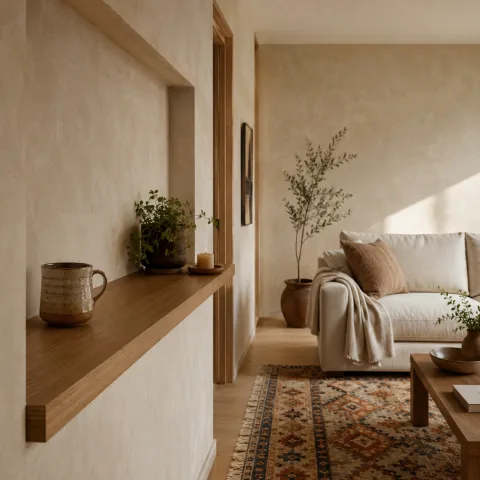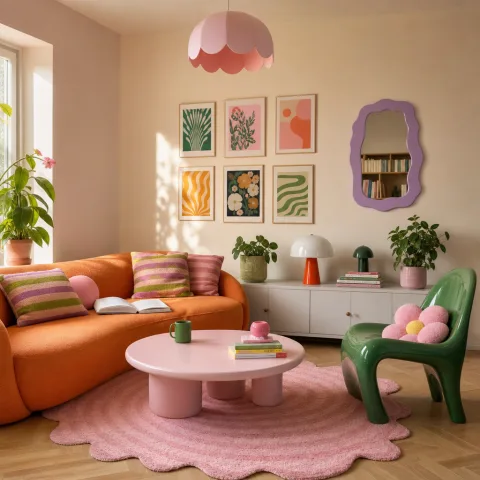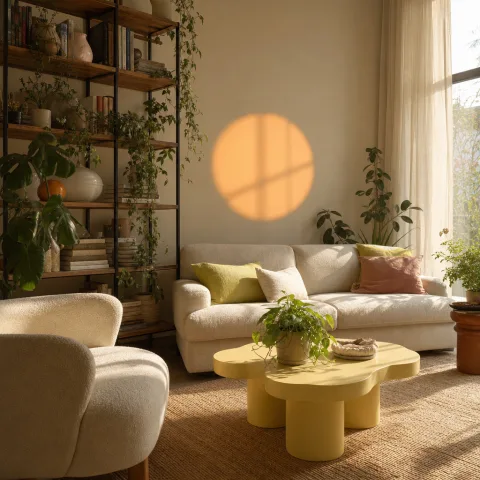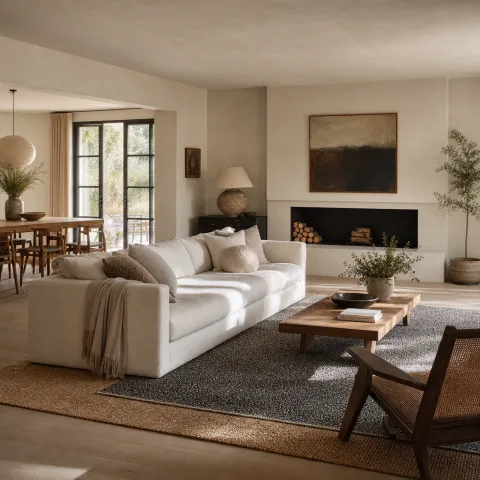
We began with a broad sketch of the open plan, noting how the sofa line angled toward a window and invited the coffee table into a central drift. We measured the floor clearances with care, then laid swatches in the order we expected to layer, watching how shadows lengthen and feet adjust stance. We considered timber floors, white walls, and the way daylight travels across the space from morning to late afternoon. We tested two wool rugs with different pile heights and a cotton flat-weave to see how each invites touch and eye-line. We moved cushions rather than lamps to modulate colour and avoid over-bright hotspots or heavy reflections. We kept doorways in mind and traffic flow, ensuring layers did not crowd the room or block easy passage. By day s end, the texture map felt grounded rather than heavy, with a quiet direction that could guide future adjustments. We noted how different rug heights could shift attention without altering the room s overall silhouette, and how furniture placement might adapt as layers evolve over time.
Choosing the rug palette for a pared-back room
To begin, we assess the rooms palette, noting the warm timber floor, cool-white walls, and the dark leather seating that anchors the sofa line. We test how base tones respond to daylight, shifting subtly from morning through afternoon to evening, and observe how colour under different lamps reads through the glass. We seek a restrained palette that respects the architecture while allowing textiles to speak softly. Our approach starts with one larger rug in a neutral base cream, taupe, or gentle grey that can bear the weight of additional layers without competing with architectural lines. We test swatches alongside cushions and throws to observe how the tones mingle under varying light and across seasons.
Next, we test a secondary mid-tone rug to ground the composition and create subtle pockets of warmth. We grade the luminance so that each piece contributes depth without creating harsh boundaries, and we seek fibres with a gentle sheen or matte texture that catch daylight differently across hours. We close the loop by gathering the layers within a single tonal family, letting minor variations emerge from weave rather than colour alone. The result reads as a layered field that feels curated, not cluttered. The intention remains to preserve air and movement while textures invite touch.
Finally we test a smaller, contrasting fibre to punctuate seating edge without crowding the windows. A soft cotton or jute adds a tonal whisper that guides movement from sofa to table. We ensure the rug edges align with doorways and avoid oversized footprints that swallow the footprint. We check the reflection of rug surfaces in adjacent furniture and lamps, adjusting shade where needed. The palette decision now reads as a coherent skin across the room.
Layering with scale: size, pile, and ground
 Save
Save
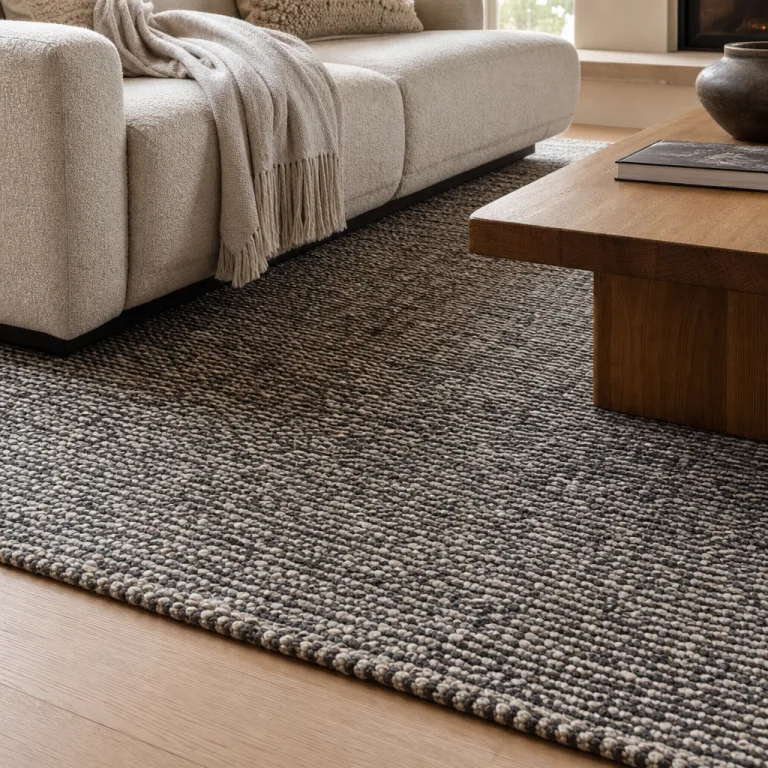
Scale is our second language. We begin with the largest rug occupying the central area and aligning with the sofa's footprint to create a cohesive arrival zone. The underlay stays slim to preserve the rugs natural slope and the rooms breathing space. We observe how a high-pile piece feels under bare feet near the seating and how a flat-weave reads under chairs and legs. We adjust by extending or retreating the rug edges by 10-20 cm to refine the shelter around the coffee table. The balance is to preserve air, movement, and a soft transition between zones.
Mid-layer adds depth and bridges spaces between sofa and armchair, ensuring paths are comfortable and visually continuous. We measure for approximately 60-80 cm of floor in front of each seat to keep traffic clear. Pile height becomes a cue—where the ground rug is low, the accent rug can be slightly taller to avoid a choppy horizontal line. We test a gentle gradient from the large base to the smaller tactile piece. Our aim remains to preserve air and movement while the textures tease the eye.
Finally we examine transitions: the edge finishes between rugs must feel deliberate rather than accidental. We avoid rigid, perfectly matched edges; instead we let soft overlaps and deliberate spacing guide feet. We test chamfers and bound edges to avoid tripping hazards. We observe how the light catches weave differently across the joints, creating subtle rhythm as you walk. The acceptance criteria is simple: the layers should feel intentionally placed, not randomly dropped.
Texture as light: feel and durability
Texture is our third language. We explore plush and flat-weave combinations to see how each fibre catches and holds daylight. A wool base with a cotton secondary layer often yields a gentle, forgiving contrast rather than a stark divide. We watch the way raised loops invite the foot to linger while flat-weave sections keep pace with daily traffic. The goal is tactile balance that remains legible from all angles. We test how different fibres patina over time and respond to seasonal changes.
 Save
Save
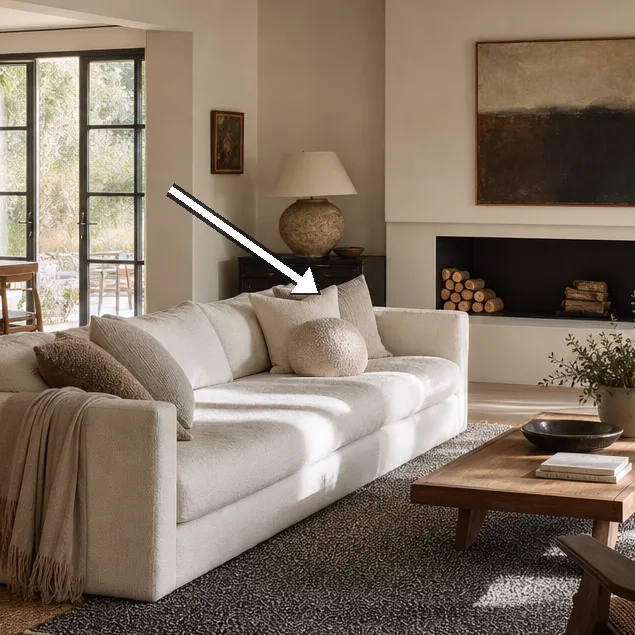
We push a tactile rhythm by varying fibre density without creating a visual storm. The dense fibre under the coffee table helps anchor the seating focus, while the lighter weave near the windows keeps the space breathable. Dust and daylight work together to reveal subtle colour shifts and sheen. We test the expansion of the palette across hours and seasons to confirm durability through use and bounce. In practice, the layering feels intentional and calm, not fussy.
As a further refinement, texture is also a language for movement; a well-placed rug lets feet roll smoothly from sofa to chair. We observe how the eye travels along the surface, then returns to a quiet nucleus at the centre. In the end, the layers read as a designed field rather than a collage, a soft map of where we sit and how we live. The room breathes with a refined cadence as hours pass, adapting to shifts in light and activity. The layering remains legible and welcoming, never heavy.
Underlay, cushions, and doors: practicalities of a shared space
Underlay sets the groundwork for stability and quiet. Practicalities govern purchase and placement in a room that flows through doors and past seating. Underlay must grip the floor without lifting edges, while also remaining quiet under footsteps. We choose a dense felt beneath the largest rug to stabilise the composition and reduce movement, yet keep the overall feel soft and forgiving. Cushions are employed to knit colour and texture between layers, avoiding a flat seam where two carpets meet.
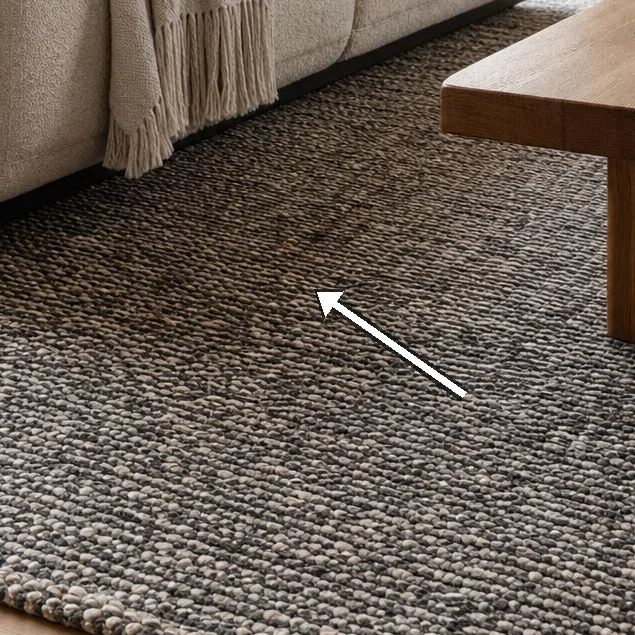
We test how the stacked textiles respond to daily use, from vacuuming routines to chair scoots. The goal remains a calm, practical setup that still reads as deliberately layered. We confirm clearance around the seating area is generous enough for comfortable passage and edge finishes align with furniture legs for visual continuity. The practicalities mature into a restrained, efficient system rather than an over-scored collage. We document wear patterns and smoothing of transitions with each movement.
 Save
Save
Finally, we refine the placement by moving the largest rug slightly to catch the strongest daylight and reduce glare on the TV console. The mid-layer is positioned to bridge the seating plan, with its edges leaving micro-configured gaps that invite the eye to roam. We balance durability with lightness, avoiding overly heavy textures that would feel stubborn in a small room. The result is a shared space where thresholds and surfaces agree instead of compete. The routine becomes practical, repeatable, and forgiving for daily life.
- Underlay is essential for stability and sound dampening.
- Choose a rug that edges smoothly against thresholds to keep traffic flowing.
- Allow for small overlaps to create a gentle transition between layers.
- Schedule rotations to even wear and refresh colour over time.
- Measure spaces carefully before purchasing to avoid crowding.
Conclusion: a room that walks with you
The conclusion section feels like the culmination of careful listening to the room. The layered rug approach now reads more like furniture than decoration, a living framework that grounds movement and softens edges while preserving air. Each layer adds a whispered directive for where to sit, work, or read, without shouting across the room. The rhythm feels both generous and restrained, inviting slow living and easy conversation. In this arrangement, the floor becomes a map that gently guides attention and pace.
Edges and transitions are more forgiving when the rugs share a common pulse, and the eye travels easily from one seating cluster to the next. Deliberate overlaps and subtle gaps create a soft choreography underfoot that slows us down in the best way. The largest base rug anchors the room, while the mid layer creates a warm bridge between the seating and the window wall. A small punctuating piece near the edge of the group keeps corridors from feeling abrupt or cold. With patience, the space invites slower living and quiet conversations.
Looking ahead, we anticipate updates by preserving a calm base and allowing new layers to arrive with intention rather than impulse. If colour shifts with time, we welcome a single new accent rather than a full rethink of the floor map. The layering system should age gracefully, remaining legible as a daily backdrop to life. We also imagine occasional swaps of cushions or a switch of one rug to refresh the scene without rearranging furniture. In short, the room should grow slowly with us, not force a dramatic reconfiguration.
How to do it
Take stock of the room
We begin by listing existing furniture, lighting, and floor tones to guide rug choices.
Select the base rug
We choose a large, neutral base rug to ground the space and define the seating zone.
Add a mid-layer with contrast
We bring in a mid-tone rug to introduce colour, weave, and depth without overpowering the scene.
Tidy edges and test circulation
We adjust sizes and placements so pathways remain clear and transitions feel intentional.
Common mistakes to avoid
Overloading the surface
We avoid piling multiple rugs on top of each other without regard to scale, as excess texture can overwhelm a room s air. Instead, we calibrate size, pile height, and weave to keep movement easy and eyes at rest.
Neglecting underlay
Underlay matters more than it seems; without it, rucks and creases accumulate, and rugs shift with every doorway pass. We test a durable felt layer that both steadies and dampens noise.
Ignoring light and fibre contrast
If the rugs are too similar in colour or sheen, the layers flatten into one surface. We choose contrasts in tone and texture to create depth without dull repetition.
Frequently asked
How many rugs should I layer in one space?
What underlay is best for layered rugs?
How do I choose colours for a layered look?
How can I avoid tripping over rugs?
Can I layer with natural fibres only?
How do I preserve rug beauty over time?
Is professional cleaning necessary?
What if the room is small?
In closing
As we close the file, we pause to acknowledge how the rug layers have altered the room's mood: heavier yet lighter, grounded yet expansive. The balance feels practical and generous, a space that welcomes both quiet reading and lively conversation. We have learned that the right textures and scales do not just fill space; they guide how we inhabit it. In future updates, we will keep the base calm and let new layers arrive with intention, never by accident.