We arrived with a tape measure, a notebook and an open mind, seeking the quiet in a small room that could be anything or nothing at once. The soft-yellow palette drew us in, but the true story stood in the textures and angles that kept the space usable. The brushed oak surfaces, restrained by a matte finish, read as calm rather than showy. Plants acted as living punctuation marks, turning the edges of sofa and table into gentle elevations. We noted how natural light pooled on the wall, turning the room warmer as the day progressed. The furniture arrangement encouraged conversations and lingering, never forcing attention. In every corner, restraint guided our hands more than inspiration did, helping us understand how slow design works in practice.
Soft yellow as a starting point
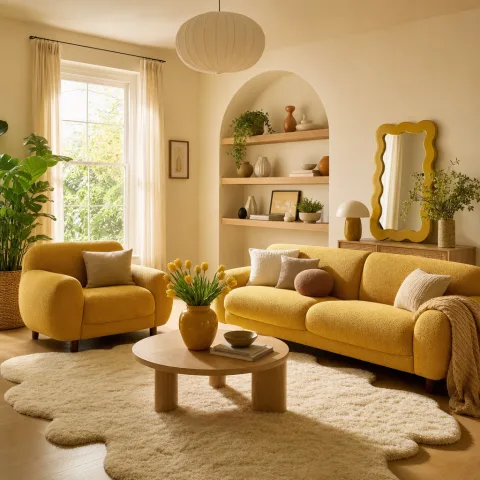
Within the first room we test the soft yellow's warmth as a quiet stage for timber and fabric. The hue is carefully pitched—not pale and clinical, not buttery and loud—so it reads like daylight passing through a soft veil. We sample the paint on a wall panel roughly 1.8 by 2.4 metres, then observe how it shifts tone as the sun travels from east to west, sometimes appearing creamy, other times almost apricot at a low angle. The goal is a cohesive backdrop that invites texture rather than colour to speak loudly, a stage that does not demand attention but rewards careful viewing. The ambition is restraint: this wall should welcome conversation, not steal it. We document the hue's compatibility with cotton, linen and the sofa's wool, noting how the blend remains legible when lit by lamps at night.
We adjust the furniture footprint to protect long sightlines and to ensure the eye moves through the space rather than jumping from edge to edge. The sofa, 2.3 metres long, sits opposite a window where daylight arrives softly and evenly, washing the room in a gentle, constant glow. A low coffee table is placed within a comfortable reach, its brushed oak surface absorbing glare while inviting touch, and the legs are slender enough to avoid visual heaviness. A 1.6 metre rug anchors the seating block, and a pair of cushions in muted tones rest on either end to create visual weight without dominance. We test remote-control zones and reading corners, observing how the space encourages conversation without crowding. We also check clearance around the coffee table so legs and feet can breathe when a reader settles in for a quiet afternoon.
From this starting point we begin to think about daily use: the yellow acts as a warm skin over the wood rather than a design feature shouting for attention. The room must support small rituals—a mug on the table, a book opened by lamplight, a plant watered without drama, a pair of slippers laid by the sofa. We measure reach distances and ensure the cushions align with the sofa arms, so elbows land where comfort meets ease. We test fabric swatches against the wall colour under two lighting conditions, confirming the panel remains legible at dusk just as in bright daylight. The practical test confirms the importance of scale and tone in producing a space that feels prepared for ordinary life, with room to breathe and adjust.
Natural light and warm timber
 Save
Save
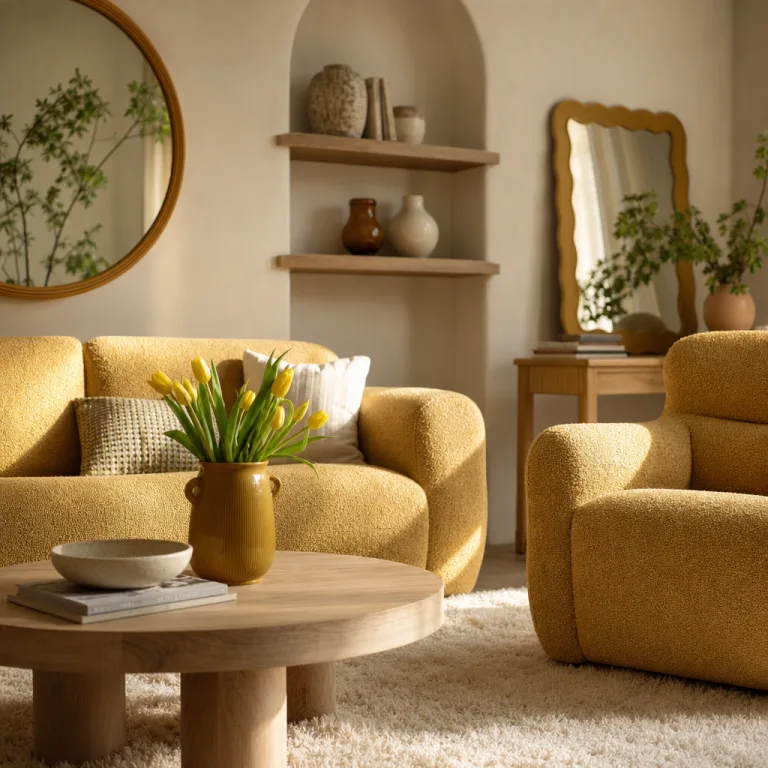
We then explore daylight and timber in tandem, watching how the oak grain catches morning sun and softens in the afternoon, while the brushed finish keeps glare low and the surface pleasant to touch. The lines of the legs and rails echo the wall's gentle tone, creating a single, continuous language across the room. We layer sheer curtains with a light blind to regulate brightness without occluding the room's airiness, and we use a 2.2-metre long edge of timber along the sofa to visually connect seating to the window. The sun in winter and the breeze in summer both remind us that the space should remain legible, not overdefined by light, and that the timber must perform as a warm, durable anchor.
Texture comes into focus as light shifts across fabric and grain. We test a second rug width and observe how the 1.4m by 2.1m pattern keeps the floor visually calm while defining the traffic path. The cushions' wool textures are chosen to play gently with the matt finish of the timber; their two tones mirror the wall hue while avoiding monochrome. We measure distances between seating and plant stands, ensuring air space remains generous enough for foot traffic and perching without bumping knees. The goal is a quiet rhythm in which wood, fabric and daylight collaborate rather than compete, and where the rug's tone supports the yellow's warmth.
We monitor colour stability as the daylight angle changes; the yellow shifts by a few degrees but always remains a soft, edible warmth rather than a jaundiced glare. We test LED lighting at 2700K during evening hours to enhance the room's warmth without creating harsh shadows. The lighting plan remains practical: it supports reading, conversation and the occasional movie night without shouting at the room. We reflect on the way timber grains glow differently with the sun and how that affects the perceived weight of the furniture. The result is a room that feels anchored by wood but opened by light, a balance of robustness and gentleness that suits daily life.
Brushed wood textures
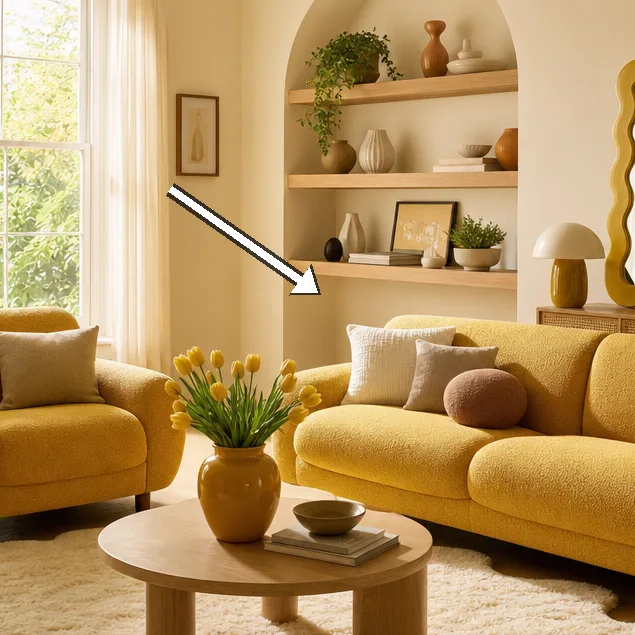
Here we celebrate brushed wood textures as a second language for the room. The oak's brushed finish introduces micro-sculptural variation that catches light and invites touch, a tactile quiet that pairs with the yellow. We keep the surfaces mostly flat with soft edges to maintain the room's calm, while allowing grain to play against the backdrop. The coffee table, a simple slab with rounded corners, becomes the focus for daily rituals: the mug, the keys, the current book, and a small candle that does not dominate the surface.
 Save
Save
Textures are layered with textiles: linen cushions, a wool throw, and a low-pile rug that mutely echoes the wood's warmth. We avoid high-contrast patterns that would compete with the grain; instead we lean toward subtle shading and tactile variation. The texture strategy fuses practicality with comfort, encouraging relaxed seating and easy maintenance. The result is a tactile, welcoming surface that remains easy to care for in daily life.
We evaluate wear and maintenance: waxed finishes on hands-on surfaces, water-based sealants for durability, and careful cleaning with a soft cloth to keep the finish intact. We ensure the table height aligns with the sofa seat so the surface remains convenient for drinks and magazines. The overall texture reads as a quiet language of daily life rather than a staged display. We also test how the finishes resist fingerprints and fingerprints vanish with a damp cloth, keeping the room's tactile character intact.
“We let light, wood and green drive the room's slow rhythm.” — Mira
Greenery as structure
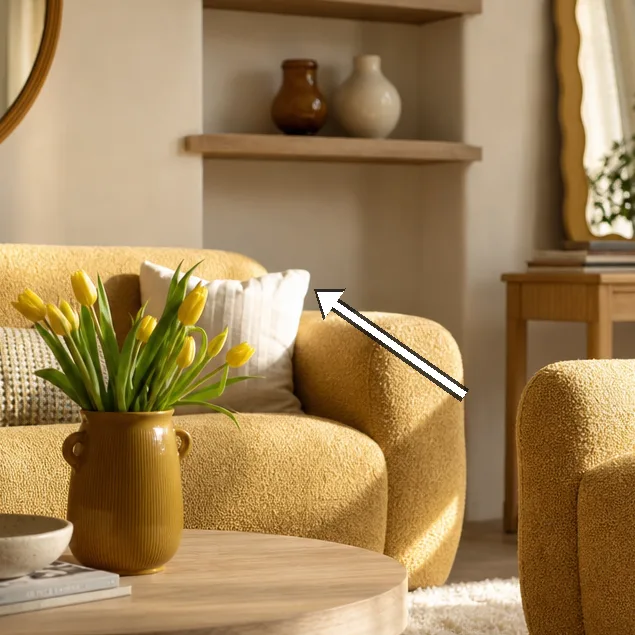
Plants become architectural elements, their heights and leaf shapes shaping movement through the room. We select a mix of pot sizes to create a stair-step rhythm that leads the eye from the window to the seating and back again. The greens provide a living texture that shifts with seasons, while staying deliberately uncluttered. We observe how the verticals catch light differently than the horizontals, and how a spare arrangement can feel expansive in a tight room.
Placement prioritises balance: a tall plant near the window, medium pots on a low shelf beside the sofa, and a few trailing stems that soften the cabinet line. We limit pot numbers to avoid crowding surfaces, letting the plants perform as vertical accents rather than bulky ornaments. Watering routines are quick, discreet, and integrated into daily life.
 Save
Save
Health of the plants guides future arrangements, as a thriving group signals good lighting and careful care. We monitor humidity and avoid overwatering, using a simple moisture meter if needed. The greenery, when well-tended, becomes a confident backbone for the room, quietly boosting both mood and perception of space.
- keep the yellow restrained as a backdrop
- vary plant heights for vertical rhythm
- choose linen over synthetics to maintain texture
- let daylight do most colour work
- avoid busy patterns near the sofa
Finishing touches and daily use
Finishing touches couple restraint with practical comfort: a single textured throw, a wool rug edge, and a minimal tray to corral remotes and small objects. The aim is to keep surfaces tidy without fuss, so a clean plane remains the focus and the eye can travel across the room without interruption.
Textiles rotate seasonally to keep the room feeling fresh while preserving cohesion with the yellow. A lighter throw in summer and a warmer one in winter maintain tactile continuity. Storage remains out of sight to preserve calm and sightlines, so every object appears in its intended place rather than competing for attention.
Every day we return to the layout to ensure the room remains legible and usable for guests and for quiet evenings alone. The plants reward care with vitality, the yellow with warmth, and the timber with consistency. The result is not a trend but a flexible, humane space that can adapt to different routines and moods without losing its centre.
How to do it
Measure layout
Take careful measurements of wall lengths, window offsets and furniture footprints; map primary traffic paths and seating sightlines before selecting colours or furnishings.
Test colour panel
Paint a panel roughly 1.8m by 2.4m in a soft yellow, then observe the hue at different times of day to ensure warmth reads consistently across seasons.
Layer textures
Choose brushed oak, linen and wool; keep edges soft to maintain calm while allowing grain and fibre to speak softly through light.
Position greenery
Place plants to balance light, height and movement around seating; avoid crowding and ensure access to water and air.
Common mistakes to avoid
Overloading with colour
Too many bright accents disrupts calm. We learned to keep the palette restrained and let yellow read as daylight itself. When colour dominates, timber loses its grounded presence.
Neglecting scale
Items that are too large or too small disrupt balance. We found modules that fit sofa length and ceiling height read as a cohesive whole. Proportions govern how space reads at a glance.
Poor lighting layering
Relying on a single light source creates flat shadows. We favour ambient, task and accent lighting to maintain gentle mood and legibility. Layering light is as important as choosing the right colour.
Frequently asked
What is the room's central aesthetic?
How does the design respond to light?
Which furniture anchors the space?
What is considered finishing touches?
How is clutter avoided?
What about seasonal changes?
How do you accommodate guests?
What maintenance is required?
In closing
The Soft Yellow Living Room demonstrates that restraint and care can transform a space into a reliable daily refuge. A soft yellow backdrop, warm brushed timber and living greenery create a layered, breathable environment that supports slow living rather than fast change. Our field notes emphasise the value of scale and proportion; by treating texture and light as co-authors rather than scenery, we allow everyday use to define the room's character. This is not a show of furniture but a practice of living: invites to sit, breathe and stay, in a room that becomes a partner in the day-to-day. We hope readers borrow the approach: measure, test, adjust, and keep the circle of light and leaf life balanced.