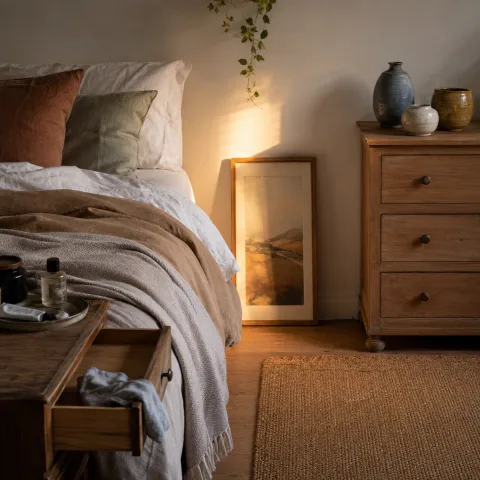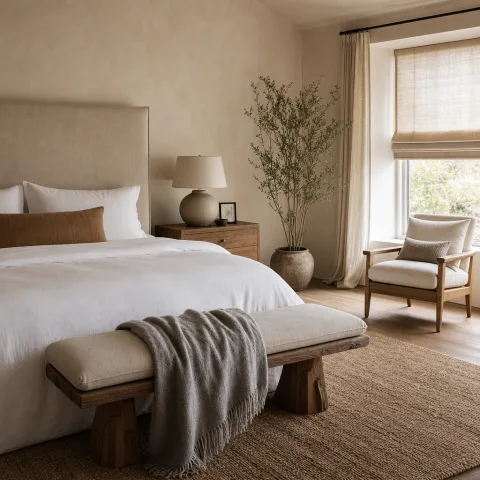
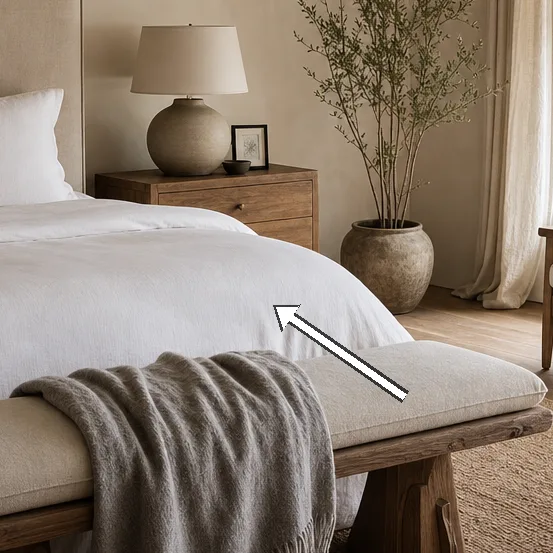
Entering the room, we note how the beige ground casts a gentle warmth across plaster walls and a linen-dusted floor. The palette remains restrained, allowing the eye to rest on texture instead of colour saturation. A simple bed forms the room’s quiet centre, dressed in a flax linen that carries faint natural slub and resilience. We observe how daylight softens the duvet, and how artificial light maintains a stable warmth when darkness falls. Small choices—tight wooden frames, cotton-ribbed cushions, and a single woven throw—contribute to an atmosphere of slow, deliberate living. Movement through the space feels measured, as if each item is chosen for echo and restraint rather than show. The room communicates a philosophy: ease through texture, calm through neutral tone, and honesty through unadorned materials.
Texture and colour balance in a beige bedroom
The room presents a quiet surface where textiles carry the weight of the space without shouting. A beige ground collects light softly, while weave and texture introduce depth through subtle shifts in tone. We observe the linen grain catching the morning sun and refracting slightly, creating a live, breathing calm. The palette remains disciplined, anchored by a warm base that lets individual textures take the stage when needed. Small decisions—where to place cushions or how to align edges—produce a sense of calm that feels almost architectural.
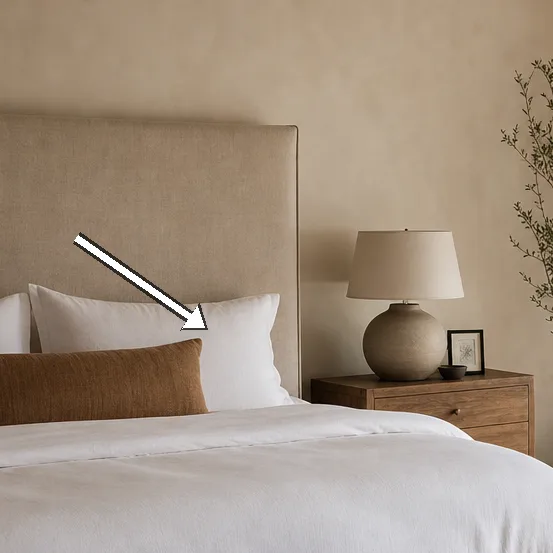
The bed becomes the room’s anchor; every textile there is chosen to support rest rather than display. Duvet and sheets share a flax family, with the duvet covering offering a generous touch against skin. Natural slubs in linen reveal themselves on close inspection, reminding us that the material ages with grace rather than uniformity. Cushions in mixed weaves add quiet rhythm, especially when their seams catch the light at the peripheries. We note how the tonal variations invite the eye to travel gently rather than jump across the field.
Careful measuring of proportion keeps the scene balanced, so the bed feels neither oversized nor understimulated by surrounding volumes. The height of the headboard, the depth of the mattress, and the distance to lamps all cooperate in a single, calm line. Texture acts as the bridge between colour and form, translating warmth through fabric density rather than saturated pigment. When upholstery, timber, and textile finish each other, the room becomes a controlled chorus rather than a single instrument. We finish by acknowledging restraint as an active design principle rather than a limitation of taste.
Light, shadow and the quiet drama of linen
 Save
Save
Daylight plays across linen with a soft, evolving choreography, never harsh, never static. The light here remains tender as it folds around the bed and reflections drift along plaster walls. We note how the weave reveals subtle stripes and the fabric’s breath at the edge of the duvet. Shadow forms sculptural lines that shift as clouds pass, giving the room a quiet drama without overpowering serenity. In this space, texture is the only real colour, and it feels generous rather than clinical.
A layered lighting plan softens the contrast between day and night, avoiding glare and preserving the linen’s natural warmth. A small bedside lamp with a fabric shade provides a gentle halo that heightens tactile perception rather than brightness. We test warm-toned bulbs around 2700-3000K to maintain cohesion with the flax hue. When turned on, light reveals the linen’s grain, heightens the cushion textures, and smooths the room’s silhouette. We prefer dimming controls so the room can transition with the user’s mood and bedtime rituals.
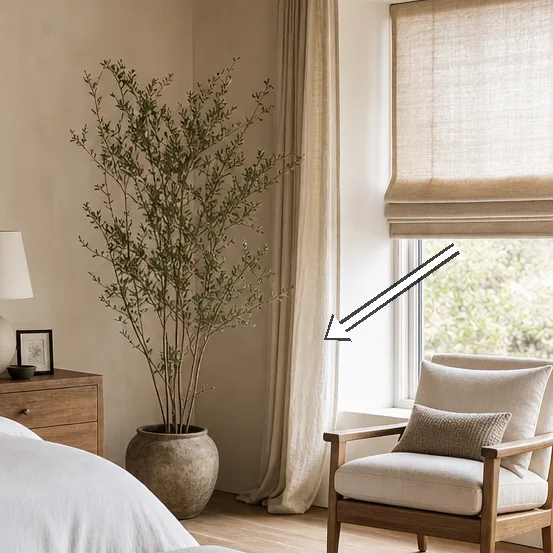
Curtains or blinds are kept minimal and pale to frame rather than block, offering choice without overpowering the scene. We choose a lightweight, uncoated weave that catches air and allows soft shadows to linger. We position the window so the bed remains a sanctuary while daylight glides in from an angle. With such exposure, textiles show wear gradually, proving linen’s durability when treated with patience. A simple rug underfoot completes the tactile circle, grounding the bed and softening footfalls.
Storage and sleep-zone discipline
Storage appears discreet, hidden within the furniture’s silhouette rather than displayed as ornament. Under-bed baskets provide quick access while keeping the surface of the room free of clutter. We test different textures for the storage lids—woven rattan and flat linen—to maintain the same quiet language. The goal is to preserve the room’s calm, not to show off clever organisation. If surfaces collect dust, we treat that as evidence of lived-in rhythm rather than neglect.
 Save
Save
The wardrobe interior mirrors the linen mood with soft light, breathable cotton linings, and neutral hardware. We suggest keeping one season’s clothing within easy reach to reduce rearrangement. Closet doors stay ajar when possible to invite air movement and avoid a stale scent. Baskets can double as seating for a quick outfit change, sustaining the room’s approachable nature. In a quiet room, storage should facilitate ease, not impede the morning routine.
A minimal textile block near the foot of the bed helps anchor the space's geometry. A shallow rug in a warm neutral hue softens the visual transition from floor to bed. We allow the linen to breathe against bare floorboards, reducing friction and preserving sensitivity to touch. The overall effect remains consistent: calm, linear, and purposely unrushed. Every item earns its place, and nothing fights the room’s collective breathing space.
“Linen breathes with you and the room never shouts.” — Mira
Care and longevity of a beige palette
Care is a practice in patience, especially for linen’s natural resilience and its tendency to soften with use. We prefer gentle hand washing or a delicate cycle, avoiding harsh detergents that can strip the fabric’s character. Air drying completes the process, keeping fibres aligned and reducing creases that become traps for dust. A brief iron or press can be reserved for special occasions, never for daily bedsheets. Over time, flax linen gains a certain softness that is visible in its drape and the way light sits on its surface.
Weekly rotation of linen layers creates an even wear pattern and prevents stubborn creasing from forming in one place. We find that pairing a duvet cover with a lighter sheet set produces a gentle tonal shift instead of jarring contrast. Storing damp linens in a humid room can lead to mildew; we recommend dry storage away from heat. Labeling baskets and keeping a simple washing routine reduces decision fatigue during busy weeks. The goal remains clear: longevity without compromising comfort or the room’s understated elegance.
 Save
Save
Over years, experienced flax develops a subtle patina that speaks to lived-in quality rather than pristine showroom perfection. We warn against over-sterilising or bleaching, which can erase the fabric’s natural beauty and character. Durability comes from careful handling, recurring gentle cleaning, and mindful storage out of direct sun. Quality threads in stitching and hems prevent wear at high-stress points, sustaining the product’s life cycle. In this approach, beige becomes more than colour; it is a lived-in stage for daily rituals.
- Rotate linen monthly to even wear
- Wash linen at 40C with mild detergent
- Air dry to preserve softness and avoid stiffness
- Store linen in a breathable bag or cotton container
- Inspect seams and reinforce where needed
Finishing details and daily rituals
Finishing touches live in the spaces around the bed where the linen language can breathe openly. A single woven throw, a pair of muted cushions, and a slim keepsake mirror align with the room’s quiet mood. We choose textures that echo the linen: cotton, wool, or a softly brushed velvet that doesn’t shout. Always the goal is balance, ensuring no surface competes with the bed's calm dominance. Placement takes intention, with a deliberate rhythm that respects the eye’s natural path.
Daily rituals revolve around making and unmaking the bed, tea stirring softly while light shifts through the linen. We schedule weekly linen changes to keep the room smelling clean and feeling fresh, without resorting to heavy scents. The bed becomes a sanctuary not through extravagance but through dependable, quiet routines. The textures themselves encourage breathing and relaxation, not visual noise or clutter. Props are kept to a minimum, reinforcing that restraint is an active habit.
In closing, the beige bedroom shows how simplicity, repeated with care, creates depth through material honesty. Linen textures function as the room’s weather: they shift with the light, season, and how we inhabit the space. When we resist excessive decoration, quiet becomes a practical choice that improves sleep and mood. The calm is not a bland sameness but a curated map for daily living, slowly evolving. We leave with a sense that comfort can be carefully engineered, not merely hoped for.
How to do it
Choose an understated linen palette
Select a flax colour range from warm oatmeal to pale sand; keep to two core tones.
Lay the bed with calm layering
Place the linen duvet flat; add cushions in a balanced, uneven count; ensure edges align.
Create soft, practical lighting
Use warm LEDs; place bedside lamps at arm's length; position indirect uplight for texture.
Maintain clutter-free surfaces
Use closed storage and plain surfaces; wipe down weekly to keep the linen texture honest.
Common mistakes to avoid
Over-warm colour clashes
When the room relies on a single beige anchor, small colour shifts can appear muddy rather than cohesive. Avoid mismatched undertones that create visual fatigue; instead, test layered neutrals until the palette hums.
Over-labouring texture without proportion
Texture should amplify calm, not crowd the eye. Avoid packing every available weave into the bed; instead, let one dominant texture rule and others support with quiet restraint.
Neglecting shade variety within linen
A flat linen can feel clinical; introduce gentle shade variation through weave and wash. Without variation, the room risks feeling dull and lifeless.
Frequently asked
What makes linen textures feel calm?
How should I mix beige with other neutrals?
How often should I wash linen bedding?
Can I keep a beige room feeling warm at night?
What lighting works best with a linen-dominated palette?
Which fabrics pair well with flax linen?
How can I extend the life of a linen duvet cover?
Where should I place storage in a small bedroom?
In closing
Quiet beige invites a patient approach: texture, proportion, and ritual shape the mood as much as colour does. The space teaches us to listen to light, touch, and cadence of daily life rather than chase dramatic change. Linen becomes the upholsterer of quiet, aging gracefully as it wears. In living with such materials, we find that rest is a practice, not an anomaly.