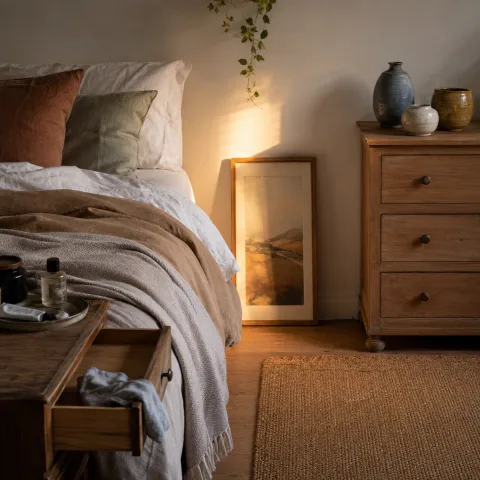
The first morning we slept in the room the light landed on the plaster like a warm coin. It came in angled and unapologetic — the kind of clear desert light that shows flaws, highlights texture, and insists on revealing what objects are really made of. We had moved a thrifted bed up the stair, unfolded a pile of old blankets, and left one window propped open to hear the dry wind. It did not feel like a showroom. It felt like something that could belong to somebody who’d stayed put for a while, someone who knew how to mend a sheet and where to put the coffee. This essay is a careful list of decisions: what we chose, what we returned, and why a small bedroom can feel like a hideaway without pretending to be dramatic or new.
A morning that decided everything
The lesson began with a single hour of light. On moving day the room still smelled faintly of old polish and the building’s stairwell, but the light was honest: it showed the hairline crack in the plaster, the uneven paint on the trim, and the patina on the thrifted headboard. Instead of disguising these small things we leaned into them. The plaster became an asset—texture that reads warm on a camera and warm in person—and the headboard’s scuffs became evidence of use rather than damage. That morning taught us to stop buying things to ‘fix’ the room and start making choices that work with what’s already there: fabrics that settle into the light, lamps that give a small pool of reading light, and plants that tolerate long dry spells.
A hideaway is less about hiding and more about decluttering intent. With a window that faces the pale sky, the room needed fewer decorative choices and clearer ones: textiles that age well, furniture with honest lines, and storage that keeps the clutter out of sight. We left one wall almost empty, which felt risky until we realized that the negative space helped the small room breathe. Negative space, in a rental, is the most subversive luxury — it costs nothing and gives the eye a place to rest. We layered old blankets rather than buying a new duvet, hung a single piece of thrifted art, and found that living with less made the room feel more grown-in, quicker.
The other small, practical lesson of that hour was humidity — or rather the lack of it. The high‑desert feel isn’t only about ochre and wood; it’s about air that’s dry enough to make a sweater feel slightly brittle by noon. That changes material choices. Leather can dry and crack, some houseplants sulk, and curtains that are too heavy won’t billow the way you want. We adapted by choosing linen and open-weave textiles, terracotta and matte-glaze pottery for plants, and a small cool-mist humidifier that doubles as a bedside object rather than a noisy appliance. The point was never to mimic a place exactly, but to choose materials that behave well in the room’s climate and light.
Materials that survive dry heat and make a room feel settled
Choices about materials are the slow investments of a room. We chose materials that would soften under the specific insult of desert sun: limewash and thin clay plaster for the walls instead of glossy paint; oiled rather than lacquered wood for furniture; wool and cotton textiles that bloom a little with use. Limewash is cheap, forgiving, and easy to touch up — in a rental you can often get away with a temporary wash that reads like an intentional finish. The hand-brushed irregularity of limewash looks intentional, and it’s merciful to cheap trim and imperfect plaster. Meanwhile, oiled wood ages by gaining a darker, lived-in tone rather than peeling or cracking the way varnish can under temperature swings.
Cost notes matter here because the trick is to spend where it counts and save where it doesn’t. We invested in a single, solid mattress and a simple platform bed frame made from reclaimed pine (about €250 secondhand, €450 new if you shop locally). We recycled an old dresser and sanded the finish back to a honey color, spending €20 on sandpaper and a tin of oil. Textiles were thrifted—two wool blankets and a faded kilim runner for under €60—because rugs and blankets develop a patina that new textiles never will. Small DIY moves—sanding a thrift table or mixing a custom limewash—save money and give the room work-worn credibility.
Durability isn’t glamorous. It means choosing curtains that can take a sunbeam’s insistence, choosing terracotta planters that won’t discolor under heat, and avoiding delicate metal finishes that will spot. For finishes we used matte options deliberately—matte plaster, unvarnished brass for small fittings, and untreated leather straps on a hanging rack that will only look better with a few scuffs. Those choices are small insurance policies: they make a room that looks as if it has stories, not as if it’s built to be sold next season.
 Save
Save
Layout and furniture: making a small room feel like more than its square metres
A hideaway is about the right things being within reach and everything else out of sight. Our room is narrow, the door opens almost to the bed, and the built-in closet is shallow, so furniture decisions were primarily about footprint. We chose a low bed to keep the visual ceiling higher and kept side furniture narrow: a salvaged bedside table and a ladder shelf instead of a bulky wardrobe. The ladder shelf holds folded sweaters, a small pile of books, and a brass lamp so the bedside surface doesn’t get cluttered. The decision to choose vertical storage over wide low storage saves floor space and encourages a tidy routine.
We also embraced furniture that doubles for two jobs. The thrifted trunk at the foot of the bed is storage and a place to sit when pulling on shoes. A narrow bench beneath the window holds plants by day and a tray of tea by evening. These dual-purpose pieces are especially useful in rentals where you don’t want to anchor the room to a single function or a single layout. When something needs replacing later, pick items with clear secondary functions: a coat rack that becomes a towel rail in summer, a console that shifts into a nightstand.
Little practical choices — the height of the bedside lamp, the width of the rug, the decision to leave a clear path from door to window — mattered more than we expected. We chose a lamp with a wide, soft shade and a dimmer so late-night reading isn’t theatrical. Rugs were layered instead of buying one oversized rug; a small runner under the bed and a squared wool rug by the bedside gives softness where it’s needed and leaves more of the floor visible, which tricks the eye into thinking the room is larger. Those small choices are the difference between a room that looks staged and one you actually live in.
 Save
Save
A few practical DIY moves that changed everything
Myths about DIY in rentals are persistent: people imagine ten nights of sanding, rubble, and annoyed landlords. We found the opposite when we chose small, reversible projects that had high visual impact. A hand-sanded headboard finished with tung oil is a weekend job and cost under €60 in materials; it gave the room a focal point and a smell that reads like wood instead of chemicals. We also mixed a limewash ourselves for the accent wall—limewash sticks to many surfaces and can be washed off later with effort, which made it a tolerable modification for a landlord who trusts tenants who ask rather than tell.
Another small fix—installing felt pads on every piece of furniture and a thin runner under the bed—changed the acoustics. The room felt quieter because the floor stopped amplifying small noises. We also made a simple wooden bracket for a floating bedside shelf out of a leftover plank and two L-brackets; it took an hour and cost less than €10 but gave us clear bedside surface without the visual bulk of a table leg. These tiny, inexpensive moves are the essence of the hideaway: low fuss, big return on the lived-in feeling.
Not every DIY attempt worked. We tried to distress a metal lamp to match a thrifted brass mirror and ended up with uneven spots that looked accidental in the wrong way; the lamp went back to the shop. Learn to stop. The better rule is to try one visible DIY and one hidden technical improvement—repair a drawer slide, add a bracket, touch up a paint scuff—so the room gets both the patina and the practical fixes that make everyday use pleasant. Pride in a handmade detail goes a long way; stubbornness in the wrong project just wastes time and money.
Save
Textiles and color: a high‑desert vocabulary
Our palette arrived by accident and thrift store serendipity: sun‑baked ochre walls, a faded brick kilim, and a few thrown-together earth-toned blankets. The high‑desert palette is forgiving: it’s mostly warm neutrals — ochres, umbers, rosy terracotta — with one cool note like a faded indigo pillow. The trick is contrast in texture rather than color. A wool blanket against a linen sheet creates enough difference to be interesting without fighting the light. We avoided saturated jewel tones; they look false in the desert light and age poorly. Natural dyes, faded textiles, and hand-woven imperfections read as honest.
Why faded and imperfect textiles work better
Textiles with small imperfections—uneven weave, slight moth-nibbles, faded colors—translate in sunlight as history. New, perfect textiles often read as manufactured and loudly contemporary, which clashes with the quiet of a hideaway. We deliberately hunted for blankets that looked like they’d been used on porches and patios; their softened edges and slightly irregular patterning sat down in the room without demanding attention. Practical benefit: faded textiles are cheaper and more forgiving. When the sun continues to fade colors, the blanket simply joins the rest of the room rather than standing out as the newest thing.
Layering: a deliberate kind of sloppiness
Layering is not maximalism; it’s thoughtful sloppiness. A thin linen sheet under a wool blanket, a small kilim runner where your feet land, a lightweight cotton throw folded at the end: these layers add comforting weight in the winter and are easy to shed in summer. We avoided heavy bedskirts and formal piles of cushions because they trap heat and read as decorative theater. Instead, each layer has function: warmth, texture, a place to wipe muddy hands. Layering in a small room also provides visual breaks that make the space feel considered rather than over-stuffed.
Save
Lighting and windows: how to hold the light without being held by it
Lighting in a desert‑adjacent room is a study in restraint. Sunlight can be a generous friend but a tyrant if not managed. We chose linen curtains rather than blackout drapes because the goal was to soften the light, not to deny it. For evening we used a small brass bedside lamp with a warm LED bulb and a fabric shade that produces a soft pool of light for reading without lighting the entire room like a theatre stage. In the city we still wanted the room to feel like a place you can nap in at 4pm and read in at 11pm; task lighting and layered lamps make that possible without fighting the architecture.
Window coverings are often overcomplicated. For privacy we added a simple inside-mounted roller blind in natural cotton for night and kept the linen curtain to filter the daylight. The blind is low profile, inexpensive, and reversible when we leave. We experimented with heavier curtains and discovered they trapped heat and made the room feel smaller. Instead, the linen curtain provides movement and texture; the roller blind gives privacy. Together they are an unobtrusive system that respects the building and the landlord’s rules while giving us the control we need.
A small but crucial detail: add a dimmer to the overhead or use plug-in lamps with multiple brightness settings. Harsh overhead light collapses the room into flatness; dimmable lamps create pockets of comfort. We kept an inexpensive clip lamp with a warm filament bulb as an accent; it casts long, forgiving shadows and costs almost nothing but dramatically changes how the room feels at night. Light is not merely illumination in a hideaway — it is a texture you can adjust, and small controls matter more than expensive fixtures.
Plants, air, and the modest maintenance of a desert room
Plants bring the tiny, stubborn life that makes a room feel inhabited. In a dry bedroom choose plants that prefer less humidity: echeveria, snake plant, and certain sedums. We kept a small rosette of succulents on the windowsill, a snake plant in a terracotta pot on the floor, and a hardy pothos trained up the ladder shelf where evening humidity is slightly higher. Terracotta pots are forgiving because they breathe; plastic pots keep moisture close to roots and rot plants faster in dry homes. The plants we chose are forgiving of occasional neglect and reward a gentle hand with better color and posture.
Air and moisture management matters not only for plants but for textiles and skin. We used a small cool‑mist humidifier on a timer set for an hour in the morning and an hour at night during the cold dry months. It keeps blankets from getting crunchy and helps skin not feel like paper. The humidifier is a design object as much as an appliance — we chose one with a ceramic body and low noise so it sits in the room rather than disappears in a closet. Regular airing out with a short window opening after midday keeps the room fresh without inviting dust.
Maintenance is modest if you design for it. Choose rugs you can shake out, curtains you can launder, and throw blankets that tolerate sun. We scheduled a monthly ritual: dust the windowsill, tip out plant saucers, and oil exposed wood with a rag. The ritual is short and keeps the room from sliding into neglect. The point of maintenance isn’t to polish the apartment; it’s to preserve the feeling that the room is lived-in and cared-for, which is the heart of a hideaway.
“A hideaway isn't an escape from life; it's the place that lets ordinary life be quieter and better-ordered.” — Mira Aslani
- Limewash accent wall — cheap and reversible
- Low wooden platform bed — keeps visual height
- Layered wool and linen textiles — texture over color
- Terracotta pots and hardy succulents
- A quiet, dimmable bedside lamp
How to do it
Decide on the mood first
Spend an afternoon with the light at different times — note which walls the light favors and choose the accent wall and textiles accordingly.
Make one visible DIY
Sand and oil a thrifted headboard or build a simple platform bed; choose a single project that anchors the room’s look.
Layer textiles deliberately
Start with a linen sheet, add a wool blanket, and finish with a small kilim or runner where your feet land.
Add living elements last
Introduce a few hardy plants, test a humidifier on a timer, and schedule simple monthly maintenance.
Frequently asked
Will limewash damage rental walls?
What plants really work in dry bedrooms?
How do I keep textiles from fading in strong sun?
Is a humidifier necessary in a desert-style bedroom?
In closing
If there is a single image to carry from this project, it is the bed at dawn — low, honest wood, a single textured blanket folded wrong, the wall behind it warm and imperfect. That one picture holds the rule: choose things that settle into the light rather than fight it. The rest — the plants that survive dry air, the textiles patched and thrifted, the narrow lamp that makes a page readable without announcing itself — are consequences of choosing restraint over novelty. A hideaway is not a set of effects but a small ecosystem: materials that age kindly, a palette that forgives the sun, and a handful of objects you actually use. Keep that ecosystem simple, and the room will do the quiet, stubborn work of making you rest.