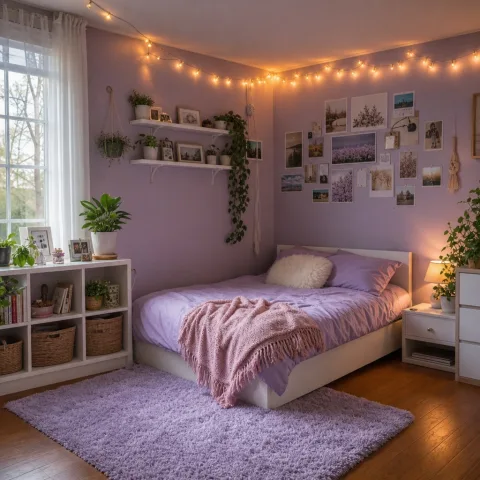
The test began with a misplaced bulb. In late November I pulled a small, yellowed 25W incandescent out of a drawer — a relic I’d kept from a previous life of thrift-store lamps and slow afternoons — and screwed it into the lamp beside our bed. What I wasn’t expecting was how immediately right the room felt: corners softened, the bedside table no longer looked like a product photo, and the paperback on top of the stack seemed more interesting. We’d been living with the equivalent of showroom lighting for two years — crisp, efficient, and somehow flat — and that evening the difference read like a sentence finally completed. Over the next three months we tried five bulbs in rotation: a 2700K LED, a 2200K ‘candlelight’ bulb, a modern dimmable LED, a candle-flicker novelty, and that small 25W incandescent. This diary is not a lab report of lux levels and CRI values alone; it’s the story of what actually mattered at two in the morning when one of us reaches for a glass of water, puts on a book, or forgives a day.
The bulb on the nightstand
The lamp itself is nothing dramatic: an old thrifted base, a drum shade stitched at the edge, the kind of thing that looks better if you light it badly. For two years we had been using a bright, high-CRI LED recommended on some forum — clean, energy-saving, and impartial. It made everything readable and every shadow polite. Yet late-night reading felt like a performance. Pages glared, the ceramic cup on the nightstand was reduced to a white plate, and our faces were suddenly too well lit for private conversation. The small 25W incandescent changed that. It didn’t paint the room in richer color so much as rearrange the modest architecture of objects: the book’s spine, the slight fuzz of the throw, the way the lamp shade held its own shadow.
We noticed the difference at a banal moment: one of us reached over to check a phone, the other watched a page turn, and the room finally looked like a room rather than a product-rendering. The incandescent's light felt slower; it carried softer falloff and gentler contrast. Small dents in the bedside wood and the faint coffee ring on the table became part of the picture instead of evidence that something was missing. That immediate sense of comfort is the quiet metric I kept returning to during the trial: did the light make the room feel like a place you could stay in, unperformative and unpolished?
The five bulbs we tried
Numbers first: 2700K warm white LED (modern, labeled high-CRI), a 2200K ‘candlelight’ LED marketed for bedrooms, a dimmable LED we could shift from 100% to 5%, a candle-flicker novelty LED with a moving element promoted as ‘ambient’, and the small 25W incandescent rescued from a bedside lamp from a previous flat. We rotated them night by night, scribbled notes in a cheap notebook, and took photos with the phone in manual exposure. We also tried them under two shades, a thicker linen one and a thinner parchment-style, because the way a shade scatters color matters as much as the bulb itself.
Why a bedside bulb matters more than you think
A bedside lamp is not primarily about reading speed or energy savings; it’s a small stage manager for rituals. It signals the end of the day, permits low-focus tasks like folding in on oneself with a book, and absorbs the awkwardness of a late apology. Because this is close-range light, small shifts in color temperature and spectrum change what your eyes choose to notice. Warm, lower-temperature light softens skin tones and drapes shadows in a way that preserves privacy. Cooler, cleaner light rewards tasks but also asks for attention. We were trying to reconcile two needs: usefulness and domestic calm.
How we set up the test
There was nothing scientific about the process, and that was deliberate. We wanted to feel the bulbs in use, not record numbers we’d forget. Each bulb lived in the lamp for three nights. We read in the bed, made tea on a cold morning, cleaned a couple of things on the nightstand, and left the lamp on during low-key conversations. Each morning we wrote a short note: sleep when lights off, desire to turn it on at midnight, how the throw looked, how the book’s page texture appeared. When possible we took a phone photo at the same exposure so we could compare tonal falloff — not as absolute measurement, but as a reference for what our eyes were saying.
We also controlled two variables: the shade and the plate on the bedside. The thicker linen shade muted the bulb more and pushed light sideways; the thinner parchment shade allowed the bulb’s character to show more directly. The ceramic plate on the table served as a light reflector: light that hit it bounced back into the lower third of the bed, changing how the duvet read in low light. You’d be surprised how much a small white object alters the softness someone perceives. Small changes can outdo differences of hundreds of kelvin.
 Save
Save
What we recorded each night
Our nightly notes were simple things: Did the light make reading comfortable without a hand on the shade? Did it glare on phone screens? Did the room feel restful afterward? We also scored adjectives — ‘crisp’, ‘hushed’, ‘theatrical’ — to translate feeling into words. Some nights the candle-flicker bulb scored high on ‘atmosphere’ and low on ‘useful’. The dimmable LED performed well as a task light but rarely earned ‘hushed’. Those subjective tags mattered because the bedside lamp’s primary work is not efficiency but atmosphere.
A note on measurement versus experience
This is not a rejection of lumens or CRI values; those numbers are useful. But numbers alone won’t tell you whether a light makes a worn tabletop feel held rather than exposed. A 2200K LED and a 25W incandescent can occupy similar perceived warmth but differ wildly in shadow texture. The incandescent’s continuous spectrum renders midtones in a way LED phosphor conversions sometimes don’t. In short: if you are deciding for a personal space, use measurements as a starting point, not the final arbiter.
2700K and the familiar glow
The 2700K LED is what most people imagine as 'warm' in modern lighting. It’s been the compromise in so many rental flats because it reads as comfortable on paper: warm enough, energy-efficient, and often sold as high-CRI. In real use it was our baseline. It does a generous job with color and is efficient, but after a few nights the lamp's behavior felt a little flat. The light produced clean shadows but they were too evenly distributed; the room looked well-made but not lived-in. For task reading it was perfectly fine; for late-night conversations it was polite in the wrong way.
Strengths of 2700K
The advantages were obvious: readable pages without needing a second light, accurate enough skin tones for quick mirror checks, and almost no perceptible flicker. It behaved predictably across shades and showed materials clearly. If you prize technical performance over mood — if you need the bedside lamp also to be the task lamp for stitching, note-taking, or small repairs — 2700K is a sensible choice. Additionally, modern 2700K LEDs are cheap, last long, and fit almost any lamp without fuss.
Where 2700K fell short
Its flaw was not a technical failure but a temperament mismatch. The light insisted on clarity at the expense of intimacy. It rendered everything as if asking to be noticed. For people who want the bedside lamp to coax the room toward gentleness, the 2700K felt like a manager with a clipboard. The shadows were tidy, but tidy is not always hospitable. That difference became more notable when we sat in bed and talked — faces read exceptionally well, but the space around them felt thin.
2200K: candlelight without the wax
The 2200K bulb promised to be the bridge between modern efficiency and the physiological comfort of candlelight. It looked the part: warmer, a touch more orange, and on paper more inviting. In practice it did what you’d expect in very small rooms: it concentrated light into warmer midtones and softened highlights. It made wood feel richer and skin tones pleasantly dull. Because of its lower correlated color temperature it also produced a sensation of dimmer space even at the same lumen output, which is useful when your brain wants to wind down.
 Save
Save
Where 2200K excelled
On quiet nights the 2200K came closest to replicating what we wanted: it dimmed the room in a way that invited slow reading and subdued conversation. It made small marks on the bedside table readable without declaring them. The light felt forgiving around faces and held reflections gently. If your bedside lamp’s job is to produce an ‘evening state’ — that softening that tells your body it’s time to shift toward sleep — 2200K helps. It’s easy to understate how restorative that atmospherics can be in a compact apartment.
Its limits and surprises
The surprise with the 2200K was how quickly it could feel theatrical. Too much orange can flatten certain colors and make paper pages appear more like tan than white. On nights when we needed to find a pill or check a label, the 2200K’s charm became a liability. It also highlighted that low temperature alone doesn’t recreate incandescent shadow texture; the spectrum matters. In other words, 2200K can be very pleasant, but it isn’t a full stand-in for the incandescent experience.
Dimmable LED: convenience versus character
The dimmable LED was the most flexible bulb in our test. With a flick of the lamp dimmer it could be a bright task light or a near-candle soft wash. That flexibility earns practical points if the bedside lamp doubles as a workstation. The issue was that in moving between extremes its character felt unstable; at low settings the spectrum shifted in ways that made the lamp seem bleached of color. Dimming LEDs is technically achieved by reducing drive current or using pulse-width modulation; either approach can change the light's perceived quality. The result was a tool that solved multiple needs but rarely felt wholly right for the single purpose we prized: slow evening calm.
Practical benefits
For a multi-use bedside lamp the dimmable LED is hard to beat: you can switch from focused reading to a soft glow when someone enters the room, and you can set a low nightlight level for midnight tea without getting fully awake. It’s also energy smart and often compatible with the dimmers built into rental switches. If you need one bulb to do everything and your tolerance for subtle shifts is high, the dimmable LED is a worthwhile compromise.
Why it never felt like the winner
The dimmable LED’s failing was subtle: versatility diluted character. On the dimmer nights it lacked the incandescent’s tactile shadow; at brighter settings it read too serious. It felt managed. The bedside lamp for us is for unwinding, and the small ritual of sitting into a consistent soft light matters more than the option to crank it to task levels. That said, we kept the dimmable LED in the rotation for times when sewing or mending demanded clearer light — it’s not a bad lamp partner, just not the best for quiet endings.
The candle-flicker LED experiment
We had low expectations for the candle-flicker LED: novelty bulbs rarely survive a week in the rotation. Still, it performed better than we assumed in quick-use scenarios. It delivered movement in the light that made the lamp read as alive rather than staged. On a night when one of us was restless, the tiny variations gave the room a breathing quality that made rest easier. But novelty wears thin; after several nights the effect seemed performative and, worse, made reading difficult because motion in the light competes with small text edges.
 Save
Save
The appeal and the problem
The candle-flicker bulb is excellent for moments when the lamp is background theater: watching a short film, saying a few words, or pretending you’re in a cottage. But it’s poor company for reading or for those small, repeated gestures at night — it interrupts visual comfort. The flicker also makes phone screens and watch faces read oddly, and one partner found the motion slightly unsettling rather than calming. It’s a very specific mood device; we rescued it for the occasional weekend candle replacement, not nightly use.
The secret 25W incandescent
The 25W incandescent was an accident. It had been in a drawer for years, kept out of habit rather than need, and when I screwed it in the lamp something quietly recalibrated. The light it produced was warm in the way of older bulbs: smooth, continuous spectrum, and with shadow edges that fell away gently. Instead of flattening, contrast was revealed in a manner that made textures legible but forgiving — the weave of the throw, the deckled edge of a paperback, the little nick in the nightstand. It didn’t shout; it reassured.
Incandescents aren’t efficient by modern standards, and in large or multiple-lamp setups they’re a poor choice. But for a single bedside lamp that operates a few hours each evening, the small energy cost felt like a reasonable trade for the comfort returned. We discovered that the incandescent’s slow shadow gradient was more important than absolute warmth. It made the room feel held rather than clarified; that holding is what allowed us to relax into the rituals that matter most before sleep.
Why the incandescent won
The incandescent won because it solved the key living problem: it matched the small scale of activity around the bed. It didn’t ask to be noticed; it made noticing easier. Its spectral continuity meant midtones were warm and pleasant without the odd color shifts LEDs can introduce. More importantly, its gentle falloff made the room’s edges keep company rather than retreat. When we compared photos, the incandescent’s grain and shadow had a quiet texture that read as more human. Night after night our notes converged toward the same phrase: 'feels like home.'
The night we noticed the room had been lit wrong
It was late January. The house smelled faintly of lemon and laundry; snow, or at least the thought of it, lived in the city’s distant forecasts. One evening I switched the incandescent in and sat with a book while Mira made tea. The room delivered a small, private surprise: it wasn’t that the light was objectively better so much as that the space began to keep secrets again. The LED, for all its virtues, had been asking us to perform. That night we realized we'd been living with the wrong temperament in the lamp for two years.
 Save
Save
What changed after that night
We stopped treating bedside lighting as an afterthought. The lamp became an intentional choice: one bulb for slow nights, another kept for tasks, and one reserved for the occasional theatrical moment. We began to appreciate the furniture’s small imperfections because the light did too. Friends who stayed overnight commented on the ‘homey’ feel, and one even asked if the place had been redecorated. Small changes — switching a bulb, choosing the right shade, leaving a little white plate on the table — altered the way the apartment received us.
“Good light doesn’t announce itself; it encourages the room to be used slowly.” — Mira
Practical rules for choosing bedside light
If you want one quick, defensible rule for bedside bulbs, here it is: prioritize shadow quality over measured warmth. That sounds vague until you test it. Bring a bulb home, screw it in, and compare how shadows fall across the bedside table. Does the light make small dents and threads legible without flattening them? Does it keep reflections gentle on a glass of water? If it does, you are close. If it weaponizes details — suddenly everything has an edge — stick the bulb in the drawer and try another.
- Test each bulb in your own shade and with the objects that live on your nightstand.
- Consider a low-watt incandescent or a high-quality warm LED with excellent spectrum.
- Keep a small white object on the table to help the lamp bounce light pleasantly.
- Reserve novelty or flicker bulbs for occasional use rather than nightly rituals.
How to do it
Gather three bulbs to test
Choose a warm-incandescent or warm-LED, a lower-temperature bulb (2200–2700K), and a dimmable LED if you have one. Keep each fitted with the shade you use at home.
Rotate bulbs for three nights each
Live with each bulb for at least three evenings, using the lamp for reading, settling, and small tasks to get a sense of its everyday temperament.
Record short impressions each morning
Note 'reads like' adjectives: hush, crisp, theatrical, forgiving. Take one phone photo at fixed exposure for reference.
Decide based on ritual, not spec sheets
Choose the bulb that supports your bedtime routine — not the brightest, cleanest, or cheapest one. Keep alternatives for occasional tasks.
Frequently asked
Is a 2200K LED as good as an incandescent for bedside use?
Will using an incandescent night after night raise my electricity bill significantly?
Can dimmable LEDs replace incandescent bulbs for a bedside lamp?
How much does the lampshade affect the bulb’s character?
In closing
The small rule I now live by is this: when a lamp’s job is to make a corner feel like a place to be, choose the light that brings down the room’s volume rather than one that sharpens its edges. The 25W incandescent won not because it was nostalgic, but because it made small things readable without throwing your face into relief; it carried shadows like a good chair carries weight. If you have to pick one rule for bedside lighting, let it be this image: a pool of warm, forgiving light that invites pause. It’s a small mercy and an easy fix — not flashy, not trendy — but it will change how your days begin and end. Keep a modest bulb in a drawer for testing. Some of the best comforts are the ones you rediscover.