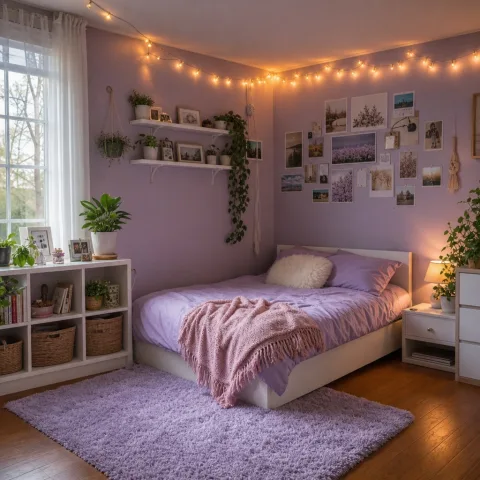
Over the course of several weeks we have lived with this lavender bedroom as a quiet experiment in restraint, not a decorative flourish. The lilac walls catch the low winter light and hold it, turning ordinary mornings into a pale forgiving glow. We observe how the space reveals its character not through loud contrasts but through measured repetition: a white bed frame, a natural timber floor, linen textiles that arrive soft and slightly imperfect, each element echoing the hue on the walls. We move slowly, as if walking through a gallery of calm where every object earns its place, and in such a room routine becomes part of the decor. The textures vary subtly: the linen has a gentle sheen when sun threads through the curtains; the wool rug absorbs footsteps with a muffled sound; the ceramic lamp emits a constant, comfortable warmth. By choosing only small shifts in fabric weight and opacity, the room remains legible year-round while offering new tactile sensations, teaching us that calm is a practice not a purchase.
Calm as a design principle
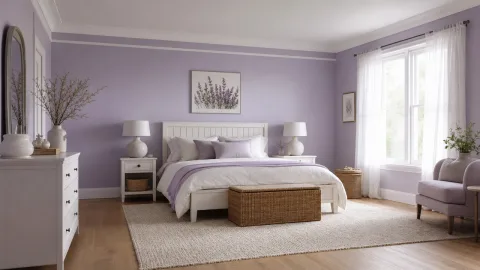
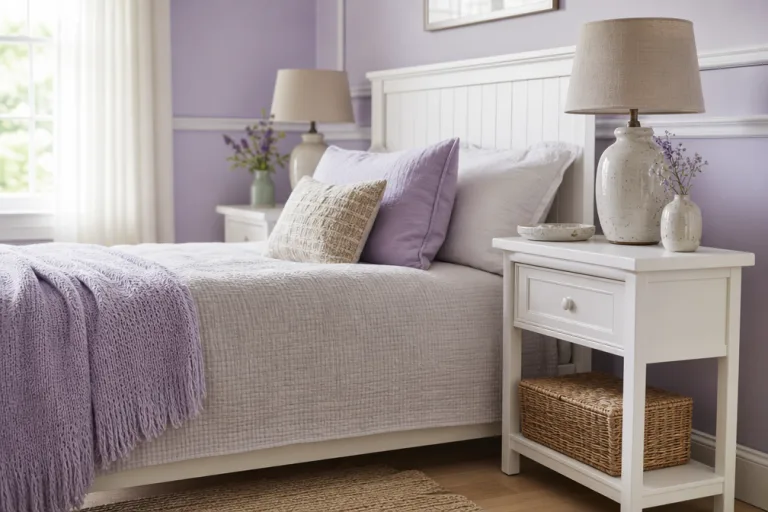
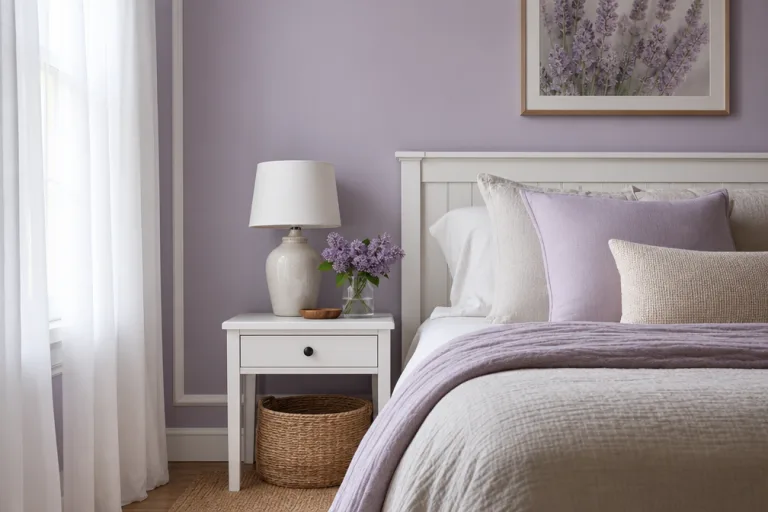
Calm begins with proportion. The bed is anchored by a white pine headboard, its surface unfinished enough to reveal grain that softens under candlelight. The linen duvet is natural in colour with a faint lilac undertone that shifts as daylight travels across the room. Pillows form a trio: two standard shams in a slightly denser weave and a single larger cushion that leans against the headboard, inviting a relaxed sit rather than a formal arrangement. The mattress feels soft but responsive, and the surrounding air bears a barely perceptible scent of lavender cooling in the late afternoon. On either side, slim nightstands cradle a bulbous ceramic lamp and a small vase of dried stems, creating symmetry without rigidity.
This is a design principle that tolerates age and tiny imperfections. The quilted throw at the foot of the bed has a knitted texture that reads differently at every angle, while the sheets beneath stay cool and breathable, inviting a sense of ease rather than cling. The floor is pale oak with a clear finish that catches the lamp's glow and releases a soft, amber wink in the late hours. A circular wool rug sits beneath the bed, its ivory fibres muffling footsteps and drawing the eye toward the centre of the room. In such a setting, extra ornament feels loud; every item must justify its quiet presence by function and tactility.
 Save
Save
Texture and light as sculptors
Texture and light act as the room's sculptors. The window is tall and narrow, its sash painting a slender line against lilac walls, while sheer curtains diffuse the incoming sun into a soft, even glow that softens the edge of furniture. The duvet's linen surface catches daylight in a way that shows faint creases and a gentle grain, while the wool rug below absorbs the morning footsteps into a quiet hush. The throw's knit pattern creates a second skin of texture that shifts with the angle of the light, inviting a tactile pause before any movement is made.
Hand and eye work together here; the lamp's ceramic base rounds a warm pool of light while the shade smooths the brightness, and the curtains pull just enough to frame the window like a portrait. The palette—soft lilac, warm white, and natural timber—holds a restrained, timeless charge. With daylight, the room feels more expansive; in the evening, it gathers around the lamp and a quiet scent of lavender, sharpening the sense that time slows when we enter this space.
“Calm is a design decision, not a mood you borrow.” — Mira
 Save
Save
Practical rhythms for everyday living
Rhythm is the unseen spine of the room. Surfaces stay clean enough to reflect light but never sterile, and storage is shallow enough to keep the visual field uncluttered. A white tray on the dresser gathers keys, a watch, and the small pleasures of the day, while a single vase holds a modest sprig of lavender that changes with the season. The bed is never pulled away from the wall; instead, alignment is adjusted with intention to preserve a calm corridor of space around it. We move through the room with slower steps, always choosing function over the newest trend.
The seasonal discipline is gentle and pragmatic: textiles change with the calendar, curtains remain long and generous, and the room keeps its core proportions. We avoid temple-like perfection by welcoming minor, deliberate shifts—the tilt of a lampshade, a different height on a plant, or a subtle difference in pillow alignment. The aim is to reduce cognitive load while preserving a sense of delight in small, everyday rituals.
Even closets are treated with care. Storage is shallow and organised so that the visual field remains calm; the bed always has enough space to breathe; surfaces are cleared weekly to remove any accumulation of papers or small objects. The overall effect is a quiet stillness that supports concentration and restorative sleep, a design language based on restraint and repetition rather than novelty.
 Save
Save
- Use a single natural fibre duvet
- Keep surfaces clear and wipe down weekly
- Rotate cushions with the seasons
- Choose a statement plant and a compact vase
Seasonal updates without changing the core
Seasonal updates without changing the core. In spring, lighter weaves emerge, and the lilac tone softens to something almost cloud-like; in winter the room tightens, wool adds bulk, and curtains gather more shadow. The bed remains central, the same bed frame, same proportions, same window where light is measured, yet perception shifts with fabric weight and warmth.
Art and accessories are kept sparing; a single framed botanical print or a small vase on the dresser can carry the mood forward without overpowering the room. We keep the foundation constant: white timber, pale oak, and the lilac present in textiles rather than painted surfaces. The result is a room that ages gracefully, not by trend, but by the patient logic of proportion, texture and light.
Ultimately this lavender bedroom teaches that calm is a practice of repetition and restraint. By slowing the pace of change and letting light, material, and proportion do the talking, a small room can sustain long, quiet years. It rewards patience, routine, and trust in the subtle bonds between colour, texture, and form.
How to do it
Measure and plan
Before any swap, measure window width and wall height to confirm curtain reach and bed spacing.
Select textiles
Choose textures in the lavender family, with varying textures to create depth.
Layer lighting
Place lamps and overhead lighting to achieve layered, soft illumination.
Maintain quiet storage
Keep surfaces uncluttered; rotate seasonal items to preserve calm.
Frequently asked
What makes this lavender bedroom feel calm?
Which fabrics are best for a slow-living space?
How can you incorporate plants without clutter?
What order should you place art?
How do you maintain colour harmony through the year?
What role does light play in mood?
How often should you refresh decor in this room?
In closing
Field notes close with a reminder that decor is a practice, not a trend. The lavender bedroom remains a refuge because its design invites restraint, not scarcity. Each object exists with intention: a throw that invites touch, a lamp that softens the hour, a curtain that governs brightness. We have learned that calm grows where attention is deliberately placed and where light is allowed to move gently across surfaces. In slow living, the room teaches us to listen for subtle shifts in mood and to treat space as a companion, not a container. The result is not a showroom of shade but a lived environment that holds memory, routine, and the quiet joy of returning home. We leave with the sense that this room will keep offering new readings of itself as the seasons turn and our days unfold with the same deliberate pace.