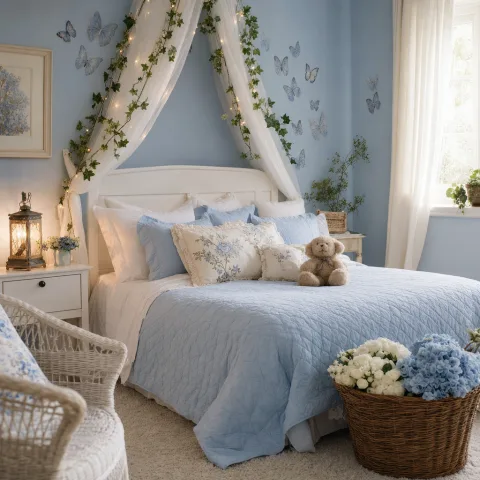
Inside the room we move with intention, tracing how air moves under the canopy and how light travels from the edges toward the sleeping surface. The bed sits at the heart of the scene, anchored by a wall that speaks in soft blue while the canopy rises like a quiet sculpture overhead. We record measurements not to posture a showroom, but to understand how proportion supports daily use. The canopy frame adds height without crowding the window or the radiator, and the strings of lights sit just within reach of the pillow so the mood feels intimate but controllable. We test fabric drapes in several configurations, watching how folds catch the air and how the weave catches reflections from the lamps. Our approach is practical and patient: observe, adjust, observe again, and document what works for mornings and nights alike. In this room we seek a balance between shelter and openness, between colour memory and the slow, even light that characterises a room meant to welcome rest.
Blue as a moodboard
We begin with the room’s basic geometry, noting how the bed aligns with the window and how the canopy frame introduces a vertical rhythm. The navy canopy reads as a soft ceiling sculpture; its shadow play shifts with the sun and with the lamp. The cornflower echoes whisper along cushions and a ceramic vase, pulling the palette through the fabric layers. We test several swatches against the wall to judge depth, saturation, and how the blue holds under artificial light. Our notebook captures both measurements and impressions, because memory alone won’t sustain this mood. The aim is to create a cocoon rather than a flat picture, a space that invites slow entry. In short, the moodboard becomes an instruction for everyday living.
We measure distance from ceiling to headboard and test how the canopy’s curve affects the perceived height. The bed’s placement is deliberate to keep mornings readable and evenings soft. The light from the window interacts with the blue walls to produce a gentle aurora effect. We observe how textiles under the canopy catch both natural and artificial light, and how folds create depth without bulk. The goal is a balance between airiness and fullness so the canopy never feels decorative rather than functional. We record this as a rule: light should defuse, never dominate.
To ensure the mood remains cohesive over time, we compare fabric weights and drapability with practical needs such as washing and wear. We note how the linen and cotton handles heat on sunlit afternoons and how the dye settles in the weave as evenings settle in. The blue palette is treated as a living system, shifting gently with humidity and traffic. We test the way the textiles interact with the canopy’s frame, ensuring the edges stay smooth and the fall remains generous. The result is a controlled drama: enough colour to feel deep, but never so loud as to banish restorative quiet.
We solar-test the wall colour by placing swatches at different distances from the window to observe the colour’s edge and how it softens at dusk. The wall remains the room’s quiet backbone, with the canopy acting as a hinge between ceiling and bed. We record every slight variation in tone as a guide for future lighting choices and textile updates. The overall effect should be steady and reassuring, a room that promises rest rather than spectacle. Above all, we want the participant in the room—the sleeper—to feel secure and gently cradled by the blue environment.
In planning terms, blue is kept as a single family with complementary neutrals, so the space remains flexible for different seasons or preferences. We avoid aggressive contrast and favour composite tones that can evolve with wear and cleaning. The canopy’s fabric choice remains central, because its drape governs how light falls and how the eye moves around the bed. We consider how furniture placement can allow the canopy to breathe, avoiding any claustrophobic feel. The moodboard thus becomes a tactile playbook rather than a static image, ready to be implemented or revised as needed.
 Save
Save
Canopy as ceiling sculpture
For the canopy we select navy cotton canvas with a lighter inner panel to introduce depth without heaviness. We fix a simple steel ring into the ceiling using a wooden batten and two screws, allowing a smooth, adjustable hang and a slight arc that follows the bed’s silhouette. The fabric is cut with generous overhang so it pools softly at the sides, avoiding a boxy frame and creating a gentle, sculpture-like outline against the wall. The result reads as a light piece of architecture rather than a dense curtain, helping the eye glide from window to bed with ease. We test tension and evenness by walking around the bed and checking reflections on the underside of the fabric. The canopy’s line should stay parallel to the top edge of the headboard, maintaining visual calm from every seat in the room.
We test the drape by pulling a corner and watching how the fabric catches air as a draft moves through the room. The canopy height sits about 5cm above the headboard, which keeps the bed visually grounded and prevents a sense of surrender to vertical space. We set the edge length so that the canopy does not brush the lamp or the window when someone sits up, preserving access and avoiding fabric flutter. A small tie at the side helps maintain a gentle wave rather than a straight hang, which keeps the whole installation human and approachable. We consider the canopy’s maintenance, preparing for occasional washing and a quick starch-free press to maintain the soft-edged silhouette. The frame becomes a quiet central feature that supports daily rituals rather than competing with them.
We review clearance around the mirror and dresser to prevent snagging on the fabric when the room is in use for dressing. The canopy reads as a frame for the eye, so we maintain symmetry with the other textiles in the space and avoid any lopsided hanging that could distract the sleeping surface. We test different lighting angles to see how the fabric catches highlights and shadows, ensuring the canopy remains warm rather than harsh at night. The process is steady and iterative, with adjustments noted in our field notebook for future refinements. The overall effect should be an elevated, serene crown over the bed that still permits ease of movement and daily chores.
Fairy-light choreography
 Save
Save
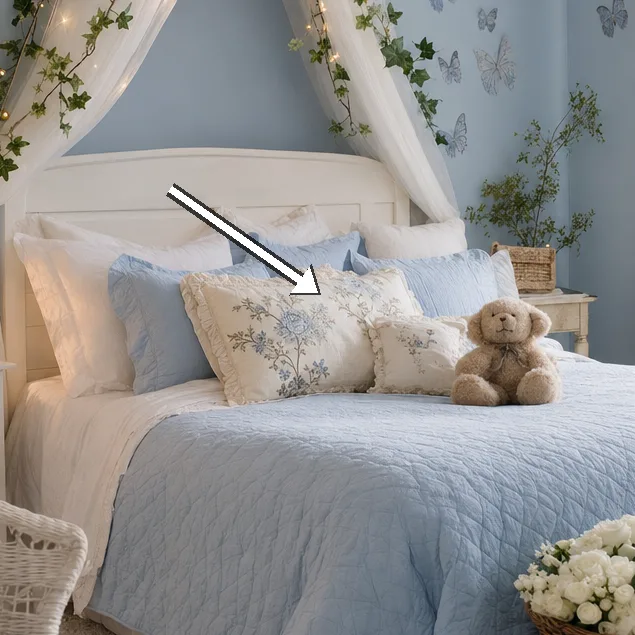
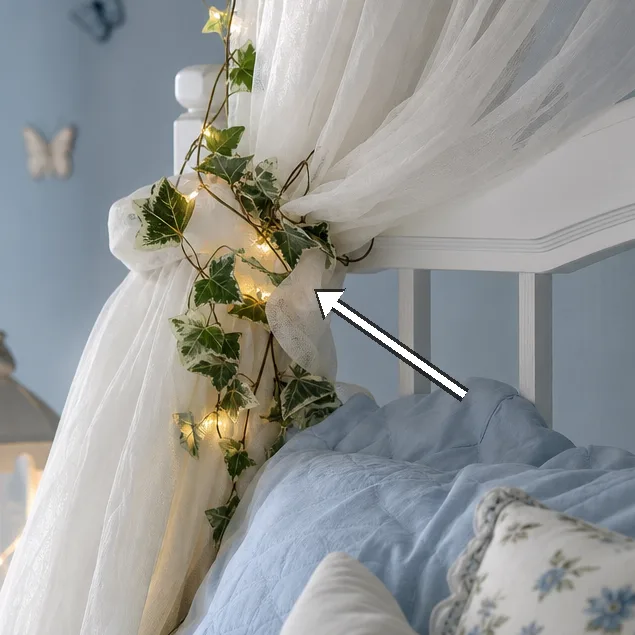
We arrange warm white fairy lights around the canopy frame and along the bed edge to create a soft halo that feels almost nautical in its restraint. The grid of tiny bulbs diffuses through the navy fabric, giving a glow that remains gentle rather than glaring, like light seen through frosted glass. By placing strands at different radii we craft layered brightness that reads as depth rather than a single bright point. We keep the power supply hidden behind the headboard for a clean line that won’t interrupt the material’s fall or the bed’s silhouette. The lights are tested at dusk and in complete darkness to ensure the glow remains a supportive mood rather than a competing feature.
We add a second line along the lower edge to lift the space above the mattress without flooding the room. The orbit of light interacts with the blue walls, pulling the colour cooler under the lamp and warmer near the pillow; this subtle shift makes the bed feel both distant and intimate at once. We test the switch and the dimmer, aiming for a range that accommodates movie nights, early reading, and slow mornings. When the room is dimmed, the fairy lights should still shape shadows on the canopy and wall to preserve texture. The sequence of glow should feel continuous, a quiet rhythm that invites bedtime without demanding attention.
We compare the fairy-light effect with a small-table lamp to maintain balance; a single source would flatten the canopy’s volume, while multiple, layered sources preserve texture across the sleep zone. We intentionally avoid a bright moonlight look in favour of a comforting, human-scale glow. We keep the strands slightly apart from the pillow so that if someone sits up, the light remains soft and enveloping. We ensure the lighting plan remains reversible, in case future occupants prefer more minimal illumination. The overall aim is to establish a ritual: switch on the warm glow, settle in, and feel the day’s bustle ease away.
“The canopy makes the room feel like a harbour for slow evenings.” — Mira
Textiles, texture and grounding
Textiles enter the scene in layers, each chosen for its tactility and its contribution to a cohesive blue range. A pale blue cotton sheet anchors the bed to the palette, followed by a linen coverlet with a soft, irregular weave and a wool throw that invites the touch of a hand. We select a low-pile rug in a blue-grey to ground the bed and provide warm contact under bare feet in the early morning. We mix finishes—matte wood, soft cotton, and a subtly brushed metal lamp—to avoid a flat, overly uniform look. Spacing between cushions and around the bed is deliberate, preserving breathing room and allowing the canopy to frame the zenith without crowding the mattress. Maintenance considerations thread through the choice: fabrics that tolerate gentle washing, air-drying, and occasional refreshers.
 Save
Save
Cushions in varying textures and sizes add what we might call a tactile chorus: a small proportion of velvet here, a smooth satin there, and a knit that invites fingers to linger. The aim is depth without visual noise, so we resist too many competing patterns or bold peacocks of colour. We test light diffusion by draping a wool throw near the window to see how the natural and artificial light mingles through the textile surfaces rather than reflecting harshly. Diligent staging keeps a calm rhythm across the room, with soft edges and clean lines that the eye can rest on. The result feels comfortable for lounging and supportive of restful sleep alike.
We align textiles with the wall colour rather than competing with it, ensuring the blue remains the quiet hero rather than a loud statement. The rug’s size is matched to the bed so that a narrow border of timber remains visible on all sides, offering a sense of grounded width. We consider care requirements and how the fabrics perform with daily handling and seasonal changes in temperature and humidity. The aim is a cohesive touch across the room that still supports change when desired. The end effect is a space that looks together and feels welcoming to touch, sight, and breath.
- soft-blue linen for canopy
- warm-white fairy-light string
- low-pile blue-grey rug
- pale timber bed frame
- matte ceramic lamp on the bedside table
Organisation and care in a small room
We approach organisation with a practical, three-zone idea: sleeping zone, dressing zone, and storage zone. The bed sits against the wall where a shallow drawer under the frame provides quick access to the day’s essentials, while a slim wall wardrobe and a narrow floating shelf store out-of-sight items that would otherwise intrude on the room’s calm. The aim is to keep floor space clear so the canopy can breathe, and so the room remains easy to navigate in the dark or after waking. We test the arrangement by walking the perimeter and simulating morning routines to confirm that everything required in the first hour is within reach. Our notes include weekly upkeep tasks to sustain the space’s balance, from fabric care to cord management.
Cords, power strips and lights are tucked or hidden; we label switches so daily use remains intuitive and uncluttered. We consider the best path from bed to wardrobe, ensuring the canopy does not snag on any edge or curtain rail. Routine checks for dust, fabric wear, and brightness levels help maintain the room’s mood over seasons. We also plan for small changes, such as swapping cushions or adjusting the rug edge, to refresh the space without compromising its core calm. The final layout supports both restorative sleep and practical daytime use, offering a small sanctum that adapts as life changes.
We finish with a compact environmental check: ventilation, temperature, and humidity are stable enough to prevent mould or fabric stiffening. We ensure the canopy fabric never sits directly on heat sources and that air can circulate freely around the bed. We leave clear notes for future tweaks so the space can evolve without losing its heart. The room now feels like a long-term retreat rather than a single makeover, a place where one can slow down and breathe. Overall, the organisation plan makes the bedroom resilient, adaptable and quietly luxurious in its restraint.
How to do it
Take baseline measurements
Record bed width, ceiling height and the distance to doors and windows to guide canopy scale and placement.
Choose canopy size and fabric
Select navy canvas plus a lighter inner panel; ensure fabric is drapable and easy to maintain.
Install canopy anchors
Fix four secure points near the ceiling; level the ring and test for slight sway.
Style and test lighting
Arrange fairy lights with a dimming option; test brightness in daylight and at dusk.
Common mistakes to avoid
Ignoring scale of the canopy
If the canopy is too small for the bed, it reads as an afterthought. Measure bed width, ceiling height and the distance to adjacent walls to ensure the fabric drapes evenly and the frame doesn’t overwhelm. Keep weight even to avoid droop.
Poor wire management
Cables left exposed create visual clutter that cancels the soft mood. We recommend hidden runs or cable channels, and keeping power strips out of sight without compromising accessibility.
Not testing lighting at night
An effect that looks good in daylight can feel stark after dark. Always test the glow with the room dimmed, so shadows and highlights remain comforting rather than stark.
Frequently asked
What is the first step to create a blue themed bedroom?
How do you ensure canopy fabric hangs evenly?
Which lights are best for a bedroom canopy?
How to balance textiles without clutter?
What maintenance is required?
What are budget considerations?
How long does setup take?
How to care for fairy lights?
In closing
We leave the room with a sense of order restored and a soft boundary between day and night. The canopy holds the light like a conversation piece that has learned restraint, while the textiles anchor the space in touch and memory. It is a calm, repeatable ritual to maintain, not a one-off transformation. In slow-living terms, this small, thoughtful arrangement supports recovery, attention and welcome stillness at the end of a busy day.