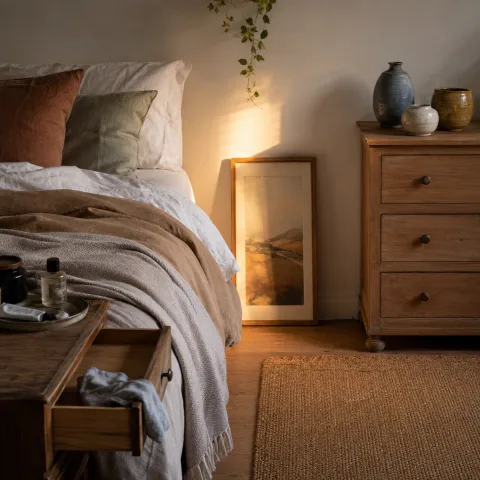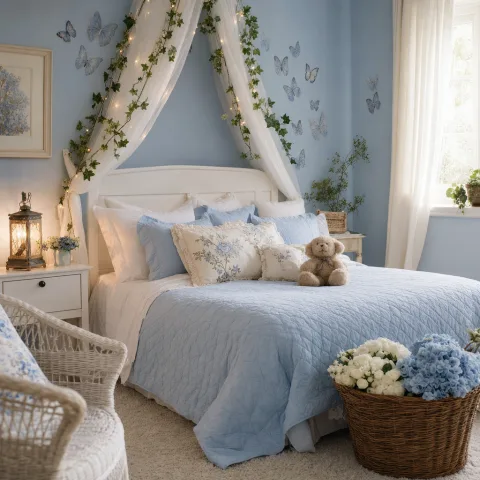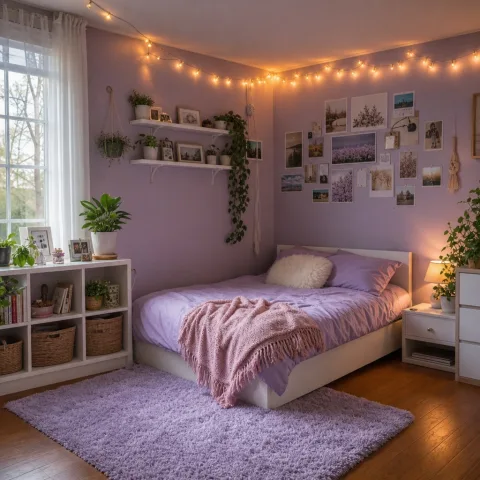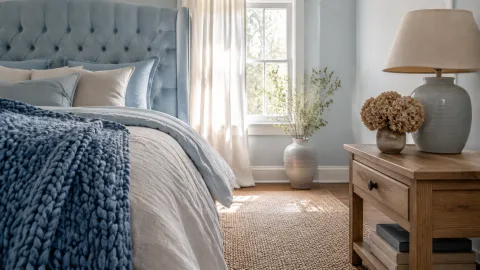
We begin with a reading of the room's skeleton: four walls painted in a dusty blue, a ceiling softly lighter, timber floor warmed by wool underfoot. The bed sits central without overwhelming; a slim nightstand on either side keeps symmetry without stiffness. The window is the room's organ, giving coastal daylight that shifts with the hour and the weather. We observe how textiles behave here, not as mere decoration but as a tactile climate control. The palette is deliberate: blues range from pale linen to deeper indigo, with neutrals in flax and oak ready to surface. We test the feel of linen against velvet, wool against cotton, and note how the changes alter the perceived temperature. In practice, we seek quiet corners rather than showy focal points, so the space unpacks slowly when we enter.
Soft blue as a calm anchor
Soft blue acts as a calm anchor rather than a loud statement, letting light travel through the room without glare. The pigment is diluted with white as if the sea itself lightens the air. Satin sheens are avoided in favour of matte or low-lustre finishes to reduce glare and create softness. We note that the ceiling is lighter than the walls to push the eye upward, widening the sense of space. The larger surfaces stay restrained, allowing textiles to do the talking. We observe how the bed linen and cushions sit on a base of pale timber, which prevents the blue from feeling clinical.
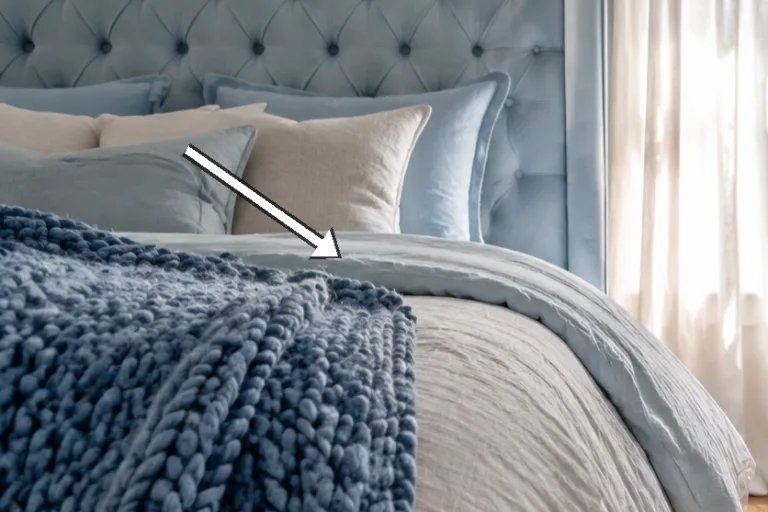
Layering is the bedrock here: a light quilt, several cushions, a throw at the foot and a cotton sheet that peeks from the duvet edge. Each layer has a distinct texture—linen, bouclé, wool, and a smooth cotton—that catches daylight differently. The colours repeat in a small range, letting the eye wander without jumping. The result is a quiet rhythm rather than a punch of colour. We prefer subtle tonal shifts to strong contrast, so the room remains a sanctuary. The layer hierarchy is read from top to bottom: ceiling, drapery, cushions, and carpet.
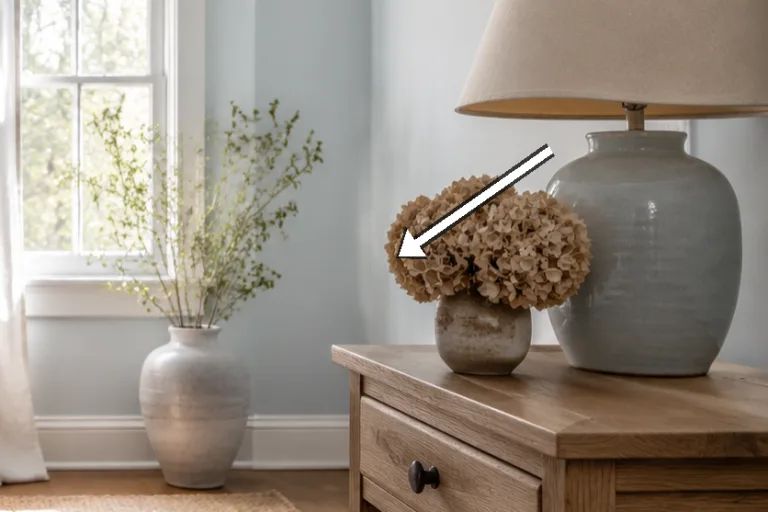
Lighting is treated as a soft architecture rather than a feature. We install a light-feel incandescent in the ceiling as a warm morning glow, while bedside lamps provide adjustable pools of warmth. Drapery is sheer enough to reveal the daylight's texture but dense enough to blur street activity. The curtains frame the window like a painting, releasing later afternoon light to pool on the rug. Even with furniture close to the edges, negative space remains for breathing. The layout encourages a generous path around the bed, inviting a moment of pause before sleep.
 Save
Save
Layered textiles above and underfoot
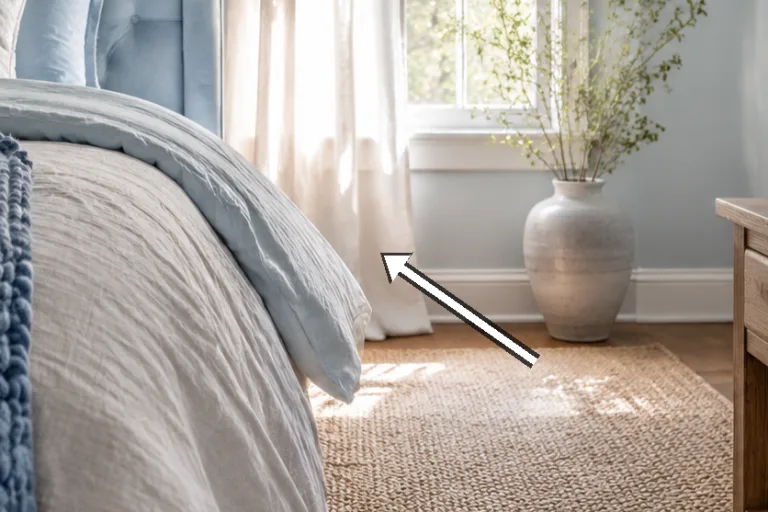
Textiles become the architecture of the room, shaping mood as much as structure. We begin with the drapery: a pair of long, light curtains that disappear when open and gently soften when closed. A second fabric layer on the bed adds depth without catching dust or glare. The rug is layered underfoot to mute footsteps and anchor colour in the floor plane. Cushions in velvet and bouclé offer tactile points that invite fingers to linger. We calibrate density and sheen so light can pass through without losing presence. In this arrangement, textiles do the slow work of the room's tempo.
When the bed is dressed, we balance cushions by size, texture and tone. A long bolster creates a horizon line that aligns with the headboard; smaller square cushions sit within reach for reading. We avoid perfect symmetry in favour of a natural, intentional irregularity. The mix of fabrics—velvet, boucle and cotton—creates subtle sheen that catches the coast light at different angles. The cushions are not simply decorative; they mingle warmth and invitation. With care, the textiles become a living map of the room's quiet energy.
Rug layering softens the transition between bed and floor and helps define quiet zones. A slim jute runner along the bed frame adds tactile contrast and durability. The main rug is a wool-blend with a gentle weave that reads like sand underfoot. The textures interact with the linen drapery to diffuse daylight across the room's plane. We test pairings by walking across the space in socks and bare feet, noting how warmth and grip change with the hour. This ritual confirms the layering strategy remains practical and serene.
 Save
Save
- Keep sightlines open to the window
- Balance cushions with varied textures
- Choose fabrics that feel calm to touch
- Layer light and dark neutrals for depth
- Ensure storage remains discreet
Textiles become the architecture of the room, shaping mood as much as structure. We begin with the drapery: a pair of long, light curtains that disappear when open and gently soften when closed. A second fabric layer on the bed adds depth without catching dust or glare. The rug is layered underfoot to mute footsteps and anchor colour in the floor plane. Cushions in velvet and bouclé offer tactile points that invite fingers to linger. We calibrate density and sheen so light can pass through without losing presence. In this arrangement, textiles do the slow work of the room's tempo.
When the bed is dressed, we balance cushions by size, texture and tone. A long bolster creates a horizon line that aligns with the headboard; smaller square cushions sit within reach for reading. We avoid perfect symmetry in favour of a natural, intentional irregularity. The mix of fabrics—velvet, boucle and cotton—creates subtle sheen that catches the coast light at different angles. The cushions are not simply decorative; they mingle warmth and invitation. With care, the textiles become a living map of the room's quiet energy.
Rug layering softens the transition between bed and floor and helps define quiet zones. A slim jute runner along the bed frame adds tactile contrast and durability. The main rug is a wool-blend with a gentle weave that reads like sand underfoot. The textures interact with the linen drapery to diffuse daylight across the room's plane. We test pairings by walking across the space in socks and bare feet, noting how warmth and grip change with the hour. This ritual confirms the layering strategy remains practical and serene.
Textiles become the architecture of the room, shaping mood as much as structure. We begin with the drapery: a pair of long, light curtains that disappear when open and gently soften when closed. A second fabric layer on the bed adds depth without catching dust or glare. The rug is layered underfoot to mute footsteps and anchor colour in the floor plane. Cushions in velvet and bouclé offer tactile points that invite fingers to linger. We calibrate density and sheen so light can pass through without losing presence. In this arrangement, textiles do the slow work of the room's tempo.
When the bed is dressed, we balance cushions by size, texture and tone. A long bolster creates a horizon line that aligns with the headboard; smaller square cushions sit within reach for reading. We avoid perfect symmetry in favour of a natural, intentional irregularity. The mix of fabrics—velvet, boucle and cotton—creates subtle sheen that catches the coast light at different angles. The cushions are not simply decorative; they mingle warmth and invitation. With care, the textiles become a living map of the room's quiet energy.
 Save
Save
Rug layering softens the transition between bed and floor and helps define quiet zones. A slim jute runner along the bed frame adds tactile contrast and durability. The main rug is a wool-blend with a gentle weave that reads like sand underfoot. The textures interact with the linen drapery to diffuse daylight across the room's plane. We test pairings by walking across the space in socks and bare feet, noting how warmth and grip change with the hour. This ritual confirms the layering strategy remains practical and serene.
Textiles become the architecture of the room, shaping mood as much as structure. We begin with the drapery: a pair of long, light curtains that disappear when open and gently soften when closed. A second fabric layer on the bed adds depth without catching dust or glare. The rug is layered underfoot to mute footsteps and anchor colour in the floor plane. Cushions in velvet and bouclé offer tactile points that invite fingers to linger. We calibrate density and sheen so light can pass through without losing presence. In this arrangement, textiles do the slow work of the room's tempo.
When the bed is dressed, we balance cushions by size, texture and tone. A long bolster creates a horizon line that aligns with the headboard; smaller square cushions sit within reach for reading. We avoid perfect symmetry in favour of a natural, intentional irregularity. The mix of fabrics—velvet, boucle and cotton—creates subtle sheen that catches the coast light at different angles. The cushions are not simply decorative; they mingle warmth and invitation. With care, the textiles become a living map of the room's quiet energy.
Rug layering softens the transition between bed and floor and helps define quiet zones. A slim jute runner along the bed frame adds tactile contrast and durability. The main rug is a wool-blend with a gentle weave that reads like sand underfoot. The textures interact with the linen drapery to diffuse daylight across the room's plane. We test pairings by walking across the space in socks and bare feet, noting how warmth and grip change with the hour. This ritual confirms the layering strategy remains practical and serene.
Textiles become the architecture of the room, shaping mood as much as structure. We begin with the drapery: a pair of long, light curtains that disappear when open and gently soften when closed. A second fabric layer on the bed adds depth without catching dust or glare. The rug is layered underfoot to mute footsteps and anchor colour in the floor plane. Cushions in velvet and bouclé offer tactile points that invite fingers to linger. We calibrate density and sheen so light can pass through without losing presence. In this arrangement, textiles do the slow work of the room's tempo.
When the bed is dressed, we balance cushions by size, texture and tone. A long bolster creates a horizon line that aligns with the headboard; smaller square cushions sit within reach for reading. We avoid perfect symmetry in favour of a natural, intentional irregularity. The mix of fabrics—velvet, boucle and cotton—creates subtle sheen that catches the coast light at different angles. The cushions are not simply decorative; they mingle warmth and invitation. With care, the textiles become a living map of the room's quiet energy.
How to do it
Step 1 – assess daylight
We observe the room at different times of day, noting how daylight changes the palette and how textures respond. We adjust curtain layering to achieve a balanced glow throughout the morning.
Step 2 – layer textiles
We add a light quilt, then cushion sets, and finally a throw; we test touch, visibility and warmth from all seating positions. If any layer reads too dominant, we swap cushions or adjust spacing.
Step 3 – tune layout
We verify sightlines to the window and doorway from the bed; we ensure movement is fluid around the space. We adjust furniture positions to keep a 80-100 cm breathing space around the bed.
Step 4 – final check
We review maintenance needs and plan for seasonal changes in daylight; we document care steps for textiles and remember to refresh accents lightly.
Common mistakes to avoid
overloading the palette
We see how adding more blues without variation makes the room feel colder rather than calmer. The danger lies in matching tones too perfectly, which can flatten the space and reduce easement.
ignoring daylight
We notice that heavy curtains block the coastal glow at the wrong times. Keeping sheer layers in front of thicker drapes preserves brightness while preserving privacy.
skimping on textures
Relying on a single fabric can read flat; texture is what invites touch and slows pace. We recommend a deliberate mix of fibre types, surfaces and finishes to maintain warmth and depth.
Frequently asked
What inspired the blue palette?
How do you balance texture and colour?
What role does daylight play?
Which fabrics wear best here?
How do you avoid clutter?
What finishes support calm?
How do you handle maintenance?
Any tips for coastal interiors?
In closing
We leave with a sense that space follows intention rather than trend. The soft blue remains legible in every corner because textiles, daylight and layout behave with quiet consistency. This field experience reinforces that calm interiors are built, not bought, with patience and a few reliable materials. We hope readers take time to observe their own light and touch points, then compose a room that slows time rather than chasing novelty. The coast's habit of simplicity translates well into domestic spaces. Our report ends with a practical invitation: test, record, and iterate.