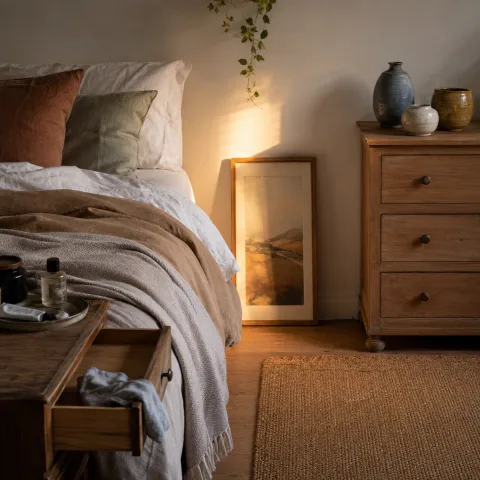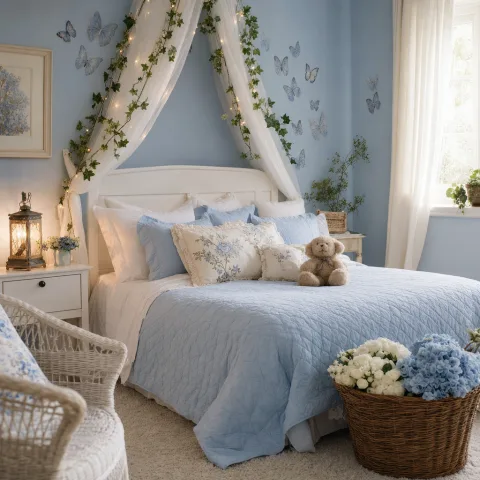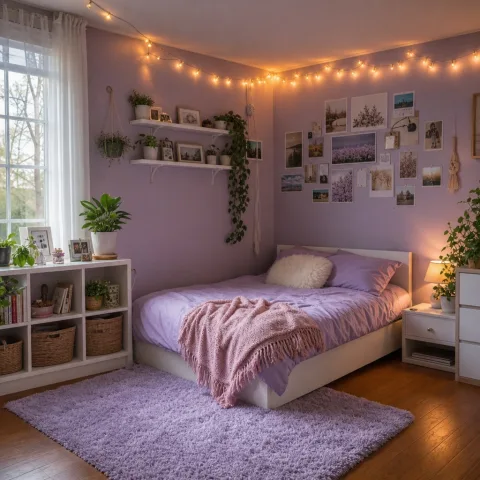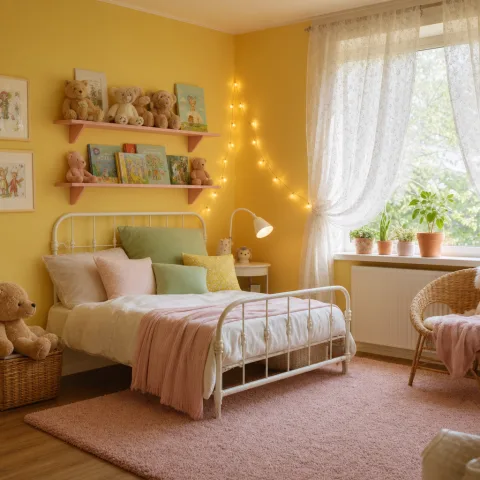
During our visit we observe a child's bedroom transformed by restraint as much as by colour. The pastel palette anchors the space and makes it feel larger than its footprint. Natural materials play a quiet but decisive role, from the jute rug to the linen curtains. We notice how the bed alignment and storage choices reduce visual noise while encouraging a habit of tidy play. Light behaves differently as the day progresses, revealing the room's soft textures. The plants add life without demanding attention, and even the fairy lights fade into the background when needed. We document the small details that keep this room versatile for both study and sleep. The aim is a field report that helps others build calm, flexible spaces for children.
Palette and light: choosing pastels that soothe
We begin by documenting the overall atmosphere, noticing how the mint walls and warm white ceiling soften the room's edges. The low bed is positioned to invite story time and easy access from both sides, avoiding the cramped feeling that can come with a single-entry space. A pale linen duvet sits over a cotton sheet that remains cool in summer and warm in winter, while a muted rug softens footsteps. Curtains diffuse daylight into a steady, even glow, reducing glare on desks and shelves without dulling colour. We note a restrained silhouette of furniture and a careful balance of air around the bed, which helps create space for play and quiet reading.
Texture is layered deliberately, with natural fabrics and matte finishes catching soft light rather than reflecting it. We select a powder-blue duvet cover and linen cushions that invite touch, while the cotton sheets stay smooth against skin. A knitted wool throw at the end of the bed adds depth without clashing with the rest of the palette. The rug, a natural jute, introduces a subtle pattern and a sturdier surface for daily traffic. We keep surfaces uncluttered so textures can run from textile to wood to plant without interruption.
Layout decisions prioritise movement and calm, avoiding noisy corners that interrupt focus during homework or puzzle time. The bed sits away from the doorway to preserve a procession of light and air rather than a threshold that divides the room. A low book shelf is mounted along the wall above the bed, providing access to stories while keeping sightlines open. A small work desk is placed opposite the bed, angled to catch late-afternoon light without glare on screens. We leave clear, open space at the room's centre for pretend play and cozy group reading.
Fairy lights and atmosphere: tiny sparks of magic
 Save
Save
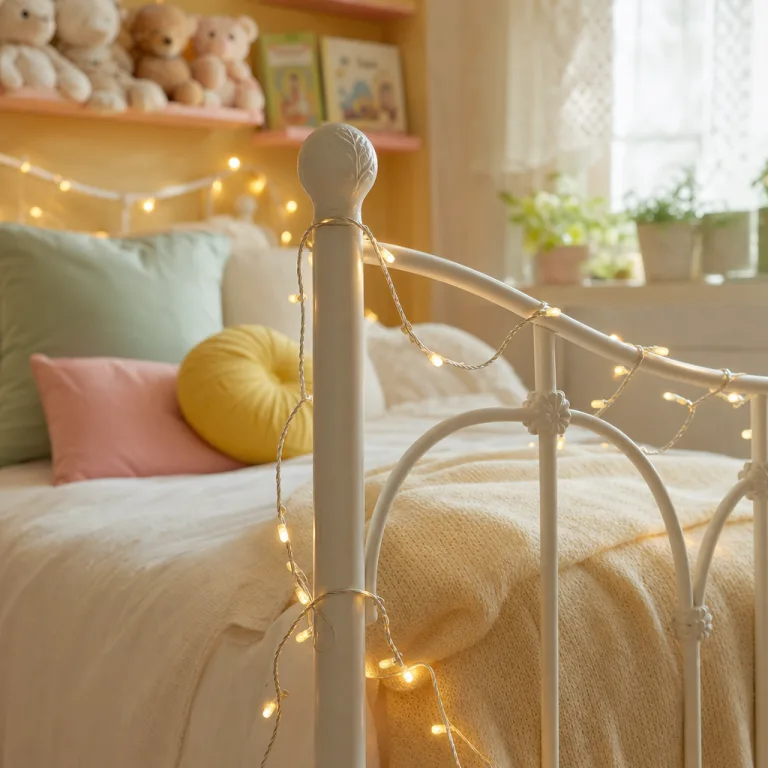
Fairy lights form a soft halo above the headboard, adding a sense of magic without overwhelming the eye. We choose warm LEDs in the 2700-3000K range to maintain warmth and avoid a blue cast. The string is arranged in a gentle arc, tucked behind a slim cornice so the bulbs read as a glow rather than a feature. A dimmer allows the mood to shift between bright prep time and quiet wind-down, with light levels carefully tested beside the plants. In the evening the glow doubles as a night-light for small readers and a gentle cue for bedtime.
Daylight playing with the pale palette softens the space further and makes the room feel larger than its footprint. We test fabrics near the window to see how natural light alters tone and texture across hours. We note how the light wraps around shelves, bouncing off the matte wood and highlighting the plant leaves. The fairy lights remain in the background, ready to drift up in brightness when the child wants a moodier scene. Careful planning of movement around the desk ensures light does not cast harsh shadows on writing tasks.
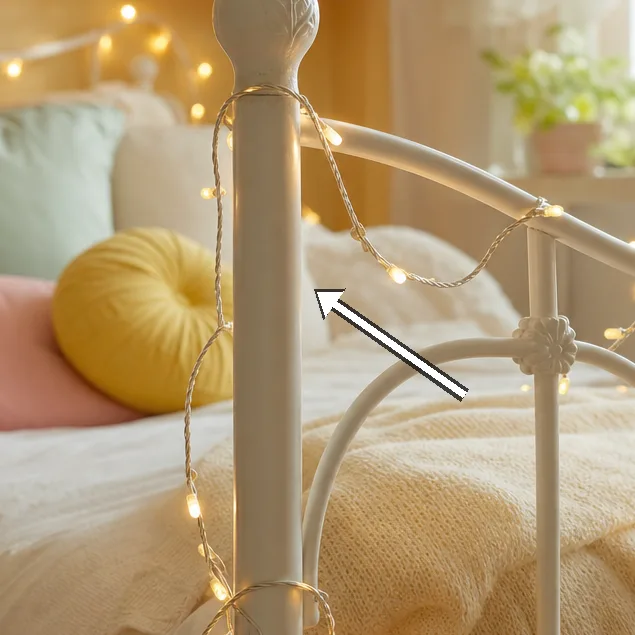
Practicality governs how we install and maintain the display, with safety the foremost consideration. The wire is clipped and tucked behind a shallow ledge so nothing grabs little fingers during play. The power pack sits inside a ceramic jar to protect from knocks while blending with the room's material language. Batteries are kept in a labeled tin and replaced seasonally to avoid sudden outages. Maintenance remains straightforward and affordable, keeping the system reassuringly reliable rather than a source of worry.
Plants as quiet companions: humidity, soil and placement
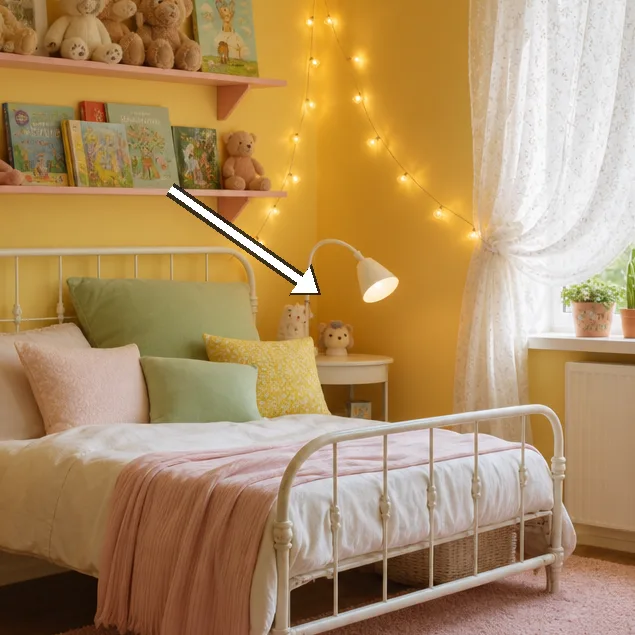
Plants anchor the room with real presence, offering movement and a reference point at different heights. We select a pothos, a peperomia, and a small fern for foliage variety and ease of care. Pots are chosen in gentle terracotta and matte ceramics to sustain the room's soft aesthetic. The scales range from tall floor planters to compact pots on shelves, creating a quiet vertical rhythm. All plants are placed in indirect light and watered according to a simple schedule to avoid overwatering.
 Save
Save
Soil mixes are light and well-draining, with perlite added to promote aeration. We top-dress with a thin layer of bark chips to reduce evaporation and keep roots cool. Watering frequency is calibrated to the season: weekly during warmth, with adjustments during holidays. We monitor leaf colour and moisture through touch and observation rather than relying solely on a timer. A small tray near a plant stand helps catch drips and keeps surfaces clean.
Placement affects acoustics, air movement and visual balance in a tiny room. Tall plants stand on the floor near the desk to frame the window without obstructing light. Trailing varieties trail along a mounted shelf, providing a soft line that guides the eye. Leaves cast gentle shadows that animate the walls during afternoon sun. We implement a weekly simple care routine so children can participate and feel responsible for their space.
“Leaves soften sound and slow time, turning the room into a living corner.” — Mira
Storage that keeps things calm: baskets, crates and screens
Storage is designed to disappear into the room's soft tone, with function prioritised over spectacle. We group toys into shallow baskets made of rattan and painted wood to enable easy handling. A slim wardrobe with frosted doors keeps clothing tidy without closing off light. A desk uses shallow crates that slide beneath the surface when not in use. Decorative boxes with lids hide small items and maintain surfaces for daily use.
Durable materials ensure longevity; birch plywood shelves carry weight without warping. We apply a satin finish and water-based varnish to preserve the soft feel. Baskets have robust stitching and natural tensions that age gracefully. Furniture is modular, allowing gentle reconfiguration as play evolves. Cords stay hidden behind skirting boards to reduce hazards and visual clutter.
 Save
Save
Placement is tuned for cleaning and quick tidiness as part of a daily routine. Hooks near the door catch coats and bags before they migrate into the room. A small wooden bench invites seating for removing shoes and for quick posing of outfits. A shallow tray organises pencils and chargers to keep the desk surface clear. We avoid heavy frames near sleep space to limit distraction and glare.
- Defined zones for sleep, study and play that keep surfaces clear
- Natural materials that age well and resist quick wear
- Baskets and crates that sit beneath eye level for quick access
- Hooks near the door to reduce clutter and aid routine
- Plants positioned to be seen but not disturbed during play
Finishing touches: textiles, art and a daily rhythm
Textiles deliver warmth and tactility without dominating colour. We mix brushed cotton sheets with linen and a duvet cover in pale pink and soft sage. A wool throw at the end of the bed adds depth and a sense of weight to the room. The rug's texture and colour anchor the space and insulate cold mornings. Two cushions echo the main hues while a single accent ties the palette together.
Art and imagery define mood without crowding walls. We frame a large curved-edge print and several small watercolours by a local artist. A small chalkboard invites daily messages and the calendar doubles as a planning tool. A compact mirror on the wall helps bounce light without reflecting excess. We keep sizes modest and light on framing so space remains generous.
Rhythm forms through a simple evening routine that anchors the child to the space. Lights switch on at dusk, followed by stories at the foot of the bed and a gentle wind-down. A predictable sequence reduces friction and supports independence in daily tasks. Plants become part of the ritual, checked and watered as part of a calm evening. The room thus evolves with the child, remaining useful and comfortable rather than fixed to a particular trend.
How to do it
Step 1 Take stock
We measure the room, note window positions, outlets and door swing, and identify quiet zones for reading and sleeping. We document any architectural quirks that influence lighting and storage. We prioritise clear sightlines and accessible reach for children. We also consider future layout changes as the child grows.
Step 2 Define the palette
We test colour swatches in daylight, then narrow to two dominant hues plus one supporting accent, ensuring contrast with the wall colour. We compare the fabric swatches against the rug and curtains to gauge cohesion. We verify lighting scenarios across morning, afternoon and evening to avoid colour fatigue. We finalise a small set of repeat motifs that thread through textiles and accessories.
Step 3 Plan lighting and storage
We place a warm LED fairy-light loop above the bed and select shallow, breathable storage with clear labels. We plan wire management routes to keep cords out of reach and visual clutter minimal. We test the dimmer levels in situ and note how the mood shifts with activity. We ensure the power supply is easily accessible yet discreet.
Step 4 Introduce plants and routines
We choose two to three easy-care plants, position them where they receive indirect light, and establish a gentle watering and cleaning routine. We document soil types and drainage, along with a simple feeding schedule if applicable. We teach children to check moisture at the stem and leaf tips to avoid over-watering. We build a weekly plant-care ritual into the bedtime routine to foster responsibility.
Common mistakes to avoid
Overloading with colour
We saw rooms that lean too far into soft pinks or blue greens, causing visual fatigue. Balance is essential, with one dominant hue and two supporting accents.
Ignoring scale
Incorrect furniture scale narrows the room and competes with light. Choose low-profile pieces and leave expansive wall space to breathe.
Poor plant placement
Place plants where they can thrive, not where they block circulation or catch too much sun. A single plant on a shelf can feel alive without crowding the room.
Frequently asked
What bed size works best in a compact kids' room?
Which textiles are most suitable for a nursery or children's bedroom?
Are fairy lights safe for children?
How many plants are appropriate in a small room?
How can you maintain calm when storage is visible?
What order should I assemble furniture in?
What finishes help keep the space feeling light?
How do you involve children in the design process?
In closing
In the end, the room feels like a careful conversation between light, texture and space. The small choices m gentle hues, uncluttered surfaces, and a few well-placed plants manage to steady activity and invite rest. It is a room that ages with a child, never fixed by fashion. We leave with a clear blueprint for how to create a calm environment that supports play, study and sleep in equal measure. If we could distill the essence of this space into one word, it would be gentle.