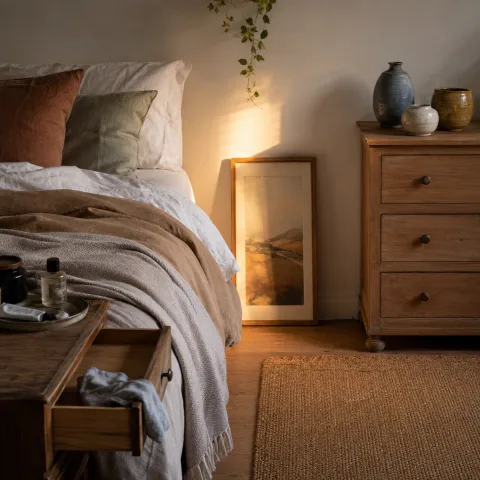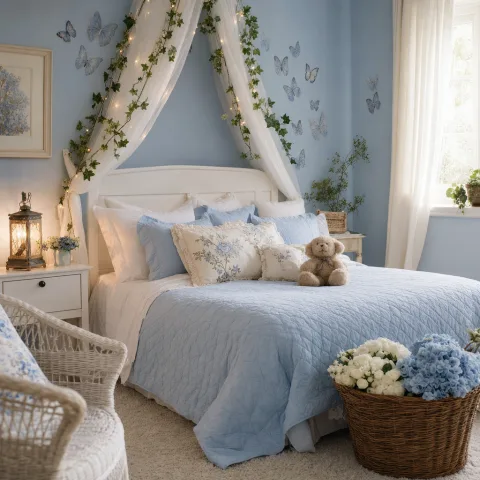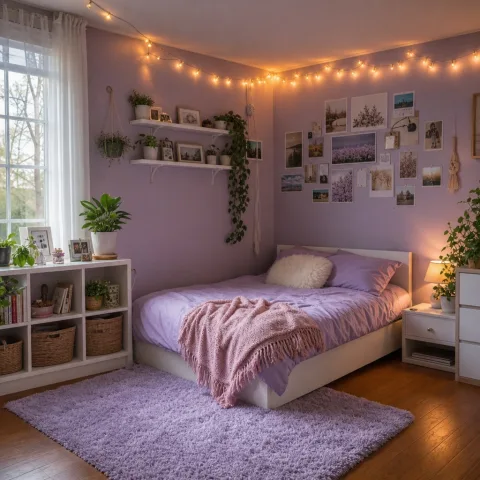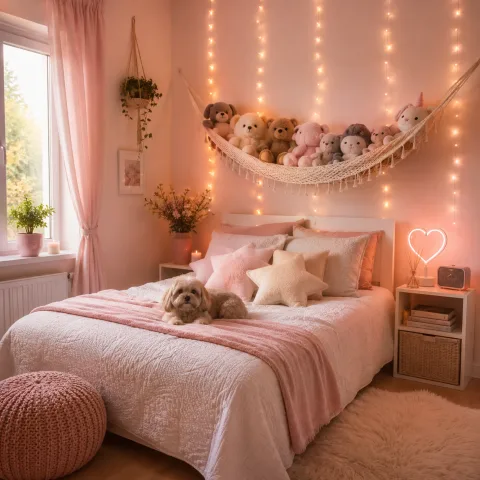
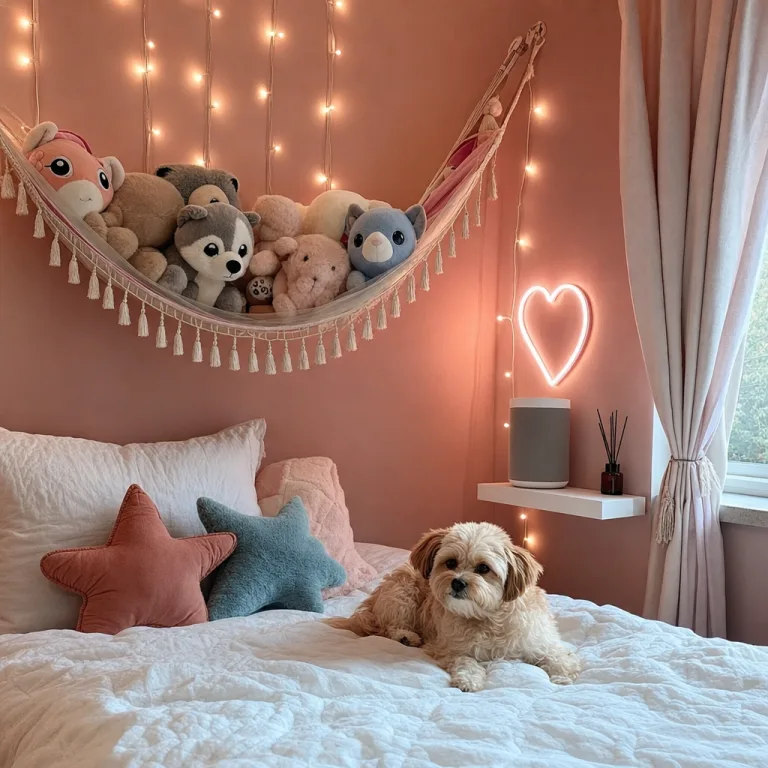
On entry, the pastel pink walls soften the room into a quiet retreat, inviting a slower pace from the outset as if the day itself had paused to listen. Fairy lights arc above the bed like a halo, spreading a gentle glow that makes the space feel intimate rather than cramped, inviting a reader and a dreamer to linger. The bed sits low and calm, dressed in a quilt that mirrors the blossom hue without shouting, creating an anchor for evening routines while enabling whispered conversations before sleep. Toys line the edges with care, not chaos, so the visual field feels friendly rather than frenetic, and we notice how each piece of plush has a memory or a story behind it. The floor remains almost bare, apart from a woven rug that adds warmth underfoot and a subtle boundary between the sleep zone and the play zone. Storage is thoughtful: baskets tuck away the newest arrivals and lids close with a soft click, ensuring the room breathes rather than bells and whistles. Taken together, the space reads as a measured celebration of play and sleep, balanced through texture, light, and an intentional restraint that supports calm, slow evenings.
Soft-palette planning for a calm pink bedroom
We begin with a deliberate tonal ladder, selecting a blush pink that reads warm rather than candy-bright, and testing it against quiet neutrals to avoid any harsh contrasts. The base colour is applied to three walls, while the fourth offers a slightly lighter tint to act as relief without responding to light with glare. Textiles are layered in order, starting with breathable cotton sheeting, a linen duvet, and a velvet cushion whose sheen changes with the room's brightness. We measure scale carefully; the bed footprint is kept small enough to encourage proximity to sleep and conversation without crowding the room's edges. We balance colour with timber tones in furniture and keep trimwork crisp in a cool white to stop the pink from drifting into sugary territory.
Seating is considered as a companion to the palette rather than as an afterthought, with a low stool or chair carved from pale ash placed near the window to invite a quiet corner for contemplation. Storage is tucked behind closed fronts, favouring lidded baskets that keep the surface pristine while accommodating soft toys. Vertical shelving is slim and finished in satin white, designed to disappear when the toys are not in use. The aim is to preserve the floor's openness, so movement through the room remains unimpeded by visible clutter. We test the balance by moving around the space and noting how easy it is to navigate without bumping into toy clusters.
We finish with finishing touches that align with the palette and mood, selecting a handful of decorative accents—an embroidered pillow, a single potted plant, and a small brass clock—that echo the colour without repetition. Patterns are restrained; there are no loud prints, only tonal variation that adds depth as the light shifts. We ensure the bed is the room's quiet focal point and that every accessory supports restful intention. Reflective surfaces are kept modest; a compact mirror bounces warmth back toward the seating area rather than amplifying glare. Careful arrangement allows the room to feel both intimate and spacious, as if the pink were a soft mood rather than a physical commodity.
Fairy-light layout and halo glow
Fairy lights arc above the headboard in a gentle crescent, their bulbs spaced to suggest a milky sky rather than a garland of bulbs. The warmth is calibrated at 2700 kelvin to preserve an evening glow that reads as cosy rather than clinical. The stringwork is kept low enough to be within arm's reach when reading, yet high enough to avoid glare during daytime glance. We pair the halo with a single soft desk lamp that can be brightened for textiles or dimmed to just a mood. This layering creates a continuity of light that makes the room appear larger, with the ceiling becoming a warm canvas for the toys' silhouettes.
 Save
Save
We test how light interacts with plush textures, noting the fabric catches the glow, turning the toys into cosy silhouettes rather than bold forms. An adjustable reading lamp provides a practical task light, while the fairy lights carry the mood through the space. Placement is deliberate: a single line above the headboard and a smaller cluster near a window frame to balance brightness. With this arrangement, the room reads as a calm sanctuary during dull afternoons and a warm cradle at night. The glow remains gentle enough to invite bedtime rituals without overpowering the room's quiet character.
We notice the halo effect enhances the perception of space, shrinking the room visually without weight. Texture and light pair to soften edges; the toy pile becomes a soft focal point rather than a trap. Touches of brass in a small mirror reflect gentle warmth back toward the bed, multiplying the glow without adding clutter. All of this is staged to avoid glitter or garish decoration, preserving a bedtime calm. The halo then becomes the room's signature, guiding evenings with predictable comfort and a sense of quiet ceremony.
Storage and nesting for a serene surface
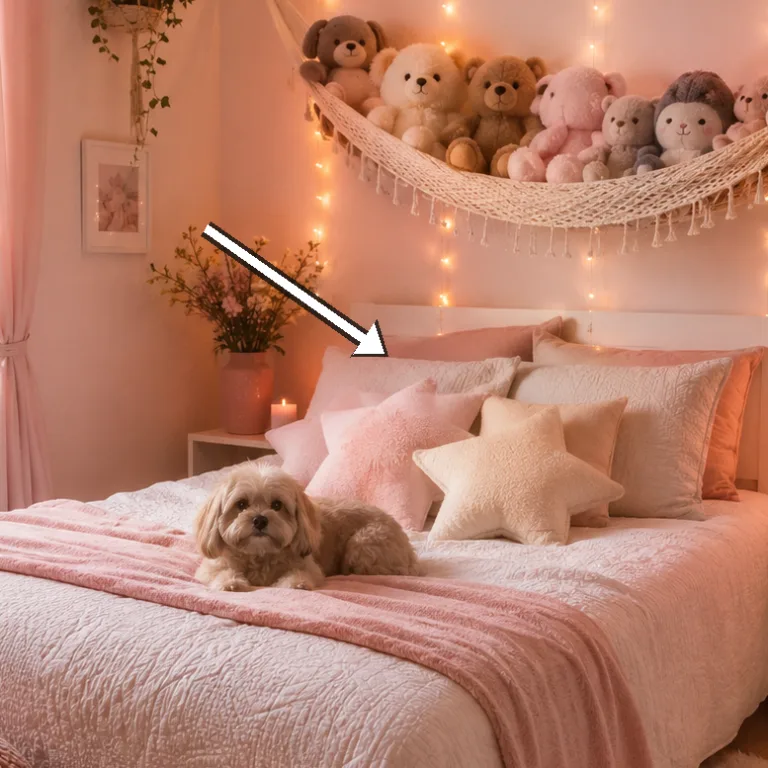
Storage is not an afterthought but a design decision that contributes to the room's silhouette, presenting a calm horizon of surfaces rather than a jumble of edges. We hide clutter behind woven baskets with tight lids and a shallow drawer stack, keeping toys within reach but out of sight when necessary. Vertical shelving is used sparingly, its units finished in a satin white designed to disappear when not in use. We create clear zones: a toy nest near the bed and a separate reading corner so surfaces stay calm and easy to clean. The result is a surface that feels tactilely inviting while remaining ordered and adaptable to daily life.
The nesting concept extends to three levels: bed edge, chair back, and floor cushion. Textural variety anchors the play theme—boucle on cushions, brushed wool on the rug, and smooth pine on the furniture—so the eye moves without fatigue. Toy clustering is intentional, dividing the space into islands of whimsy rather than a single crowded pile. Tidying becomes ritual: returning items to their pockets creates a sense of ownership and calm. Open baskets are lined with cloth to soften the eye and prevent snagging on toys.
 Save
Save
We test colour balance by stepping back to look for stray pink notes that might disrupt unity. A gentle white base on furniture helps the pink breathe; the overall effect is a refined pastel rather than a candy-store scene. Closing lids on storage after play allows air to move more freely through the room. We adjust shelf heights so they do not encroach on the bed, ensuring a sense of safe enclosure while maintaining openness. The objective remains simple: a serene border between play and rest achieved through thoughtful layout and concealed storage.
“This is a space that breathes with restraint and gentle wonder.” — Mira
Decorative toys and textiles that complement the pale pink
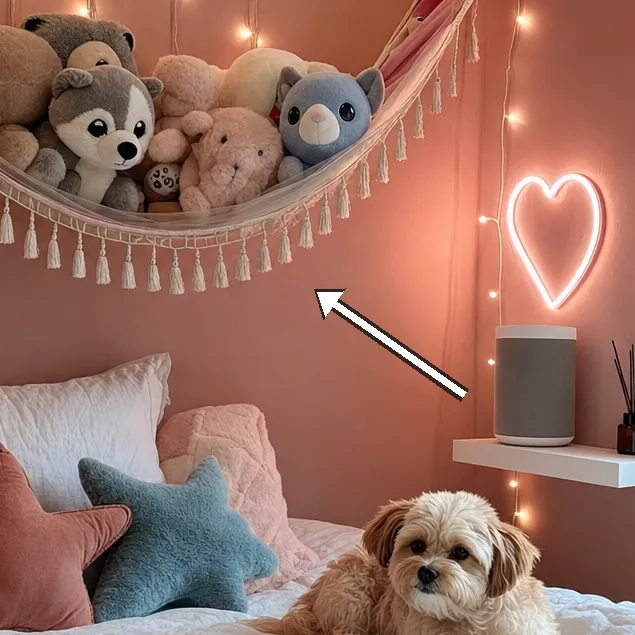
The plush landscape is curated, not random; each piece earns its place by warmth of form and familiarity, not sheer quantity. Toy silhouettes vary in height so the eye travels up and down beds and shelves without stalling on a single focal point. Fabrics are chosen for quiet textures rather than loud prints; brushed cotton, velvet, and wool read softly, inviting touch. Patterns are restrained, with tonal variations that deepen depth as the light shifts. The arrangement uses repetition to knit disparate pieces into a cohesive scene.
We test the reading of the cluster as circles of light and shade move with the day, letting the plushes play against the glow rather than against distraction. The textures interact with the glow, creating surprising depth as the hour changes. Throws are layered with care, avoiding a flat pancake of fabric and instead forming gentle pockets that cradle the eye. A small tapestry or patchwork is allowed if it echoes the palette and the room's mood. Space between items becomes a design principle, so the toys remain playful without crowding the headboard.
We zoom in on detail: a stitched edge on a cushion, a knotted fringe on a blanket, a small badge on a toy; these micro-details sustain the room’s calm, giving it memory and presence. The visual tempo holds steady even as new pieces are introduced. The textures—cotton, velvet, wool—offer a tactile chorus that makes the pink feel approachable and lived-in. We resist novelty items that glare or blink; instead, we curate pieces with memory and shelter. The final effect is a gallery of plush that reads as soft architecture rather than clutter.
 Save
Save
- Rotate plush to keep the display fresh.
- Use a shallow box shelf to keep small toys accessible yet tucked away.
- Pair textiles with lights to emphasise texture, not pattern.
- Check door and window gaps to avoid drafts that disrupt the calm.
- Label storage to maintain order after playtime.
Lighting and acoustics: soft ambience and quiet soundscapes
The interplay of light, texture, and acoustic balance shapes the final mood of the room; each element supports a slow, restorative routine. A thick, warm rug underfoot dampens footsteps and invites barefoot exploration without noise. A discreet ceiling reflector can bounce warmth back toward the bed, softening shadows and maintaining an even glow across the space. The fairy lights carry mood, while a secondary lamp provides practical reading illumination without overpowering the halo. Overall, the room remains gentle, with sound and light acting in concert rather than at odds.
We test speaking at conversational volume to ensure intimacy remains after dusk, and we find that soft textiles absorb echo, making conversations feel private and soothing. Natural materials hold light longer than synthetics, contributing to a grounded and timeless feel. Drapes soften glare while preserving daylight privacy, and the room evolves with the hours, keeping its calm regardless of activity. The design encourages a slow routine: a book, a blanket, a single beverage, and a moment before sleep. The result is a space that invites listening as much as looking, a rare balance in a child-friendly room.
The overall rhythm of light, texture, and alignment supports morning wakefulness and evening wind-down, with lighting layers tuned to a subtle gradient where the brightest point remains the reading lamp rather than the ceiling. A small mirror is angled to reflect warmth without multiplying brightness, ensuring a sense of depth rather than glare. With careful balance, the room reads as a country garden at dusk—soft, practical, forgiving, and always ready for the next quiet moment. The space proves that slow interior practice can accommodate play without compromising sleep or order. In short, it is a room that grows calmer as you stay in it.
Note how the halo light harmonises with soft surfaces to create a continuous envelope of warmth, so the space feels like a protective cocoon rather than a toy-lined cage. The acoustics are forgiving, and every sound becomes part of the room’s bedtime ritual, not a disruption to its peace. We leave with a clear understanding that light, texture, and placement can transform a simple playroom into a sanctuary for slow evenings and conscious mornings. The design strategy relies on restraint and thoughtful repetition, not on abundance. The result is a room that welcomes both quiet reading and quiet sleep with equal grace.
How to do it
Survey the space
Measure wall lengths and note natural light patterns at different times; mark anchor points for bed, storage, and seating, making a quick sketch to visualise proximity and flow.
Select core palette
Choose a base pink and two neutrals; test fabric swatches in the room to observe how they read with the existing light, ensuring there is subtle contrast rather than saturation.
Layer lighting
Install fairy lights, fit a dimmable main light, and place a reading lamp within reach of the bed; test at multiple times to confirm the glow maintains mood without glare.
Refine storage
Add discreet baskets, test toy groupings, and adjust shelving so the surface remains calm; aim for a practical system that can be updated with seasonal pieces.
Common mistakes to avoid
Overloading with colour
Text: When pastel pink dominates, other hues fail to anchor the space. We learned to reserve stronger neutrals for larger surfaces and use small accent pieces to avoid a seas of pink. Be mindful of ceiling and floor balance to keep depth.
Underestimating storage
Text: A room filled with soft toys looks charming until surfaces become chaotic. We recommend discreet bins, under-bed drawers, or vertical shelving to preserve calm and keep the floor clear for movement.
Lighting without rhythm
Text: Lights should serve function and mood. When we relied on fairy lights alone, dusk felt undifferentiated and fragile; introduce a reading lamp or layered ambient glow to keep the room legible as day moves to night.
Frequently asked
How do you keep a pastel pink bedroom from feeling juvenile?
What role do plush toys play in the design?
Which lighting ratio works best?
How can storage stay invisible?
How often should you refresh the display?
What fabrics suit a pastel pink room?
How to balance whimsy with sleep?
What is the role of texture in mood?
In closing
Leaving the room, we feel the slow-living logic in place: restraint sustains wonder, ritual anchors routine, and the gentlest palette becomes a shelter that grows more welcoming the longer it stays. The fairy-light glow softens corners, the textiles invite touch, and the storage system keeps the surface honest and easy to clean. It is a reminder that good interior practice is not about more, but about thoughtful, repeatable steps that make daily life feel kinder.