
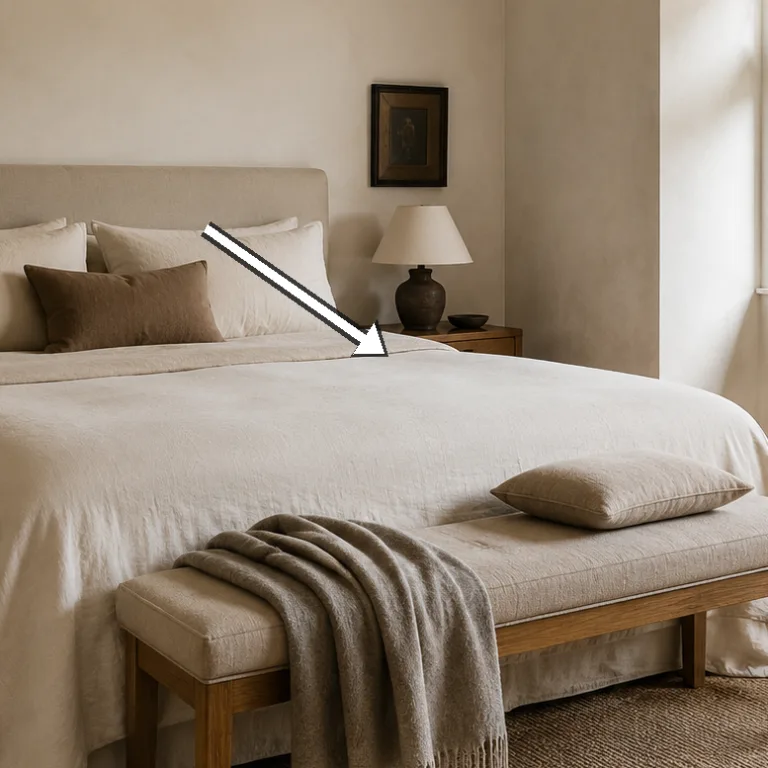
Across the room we test the bench's quiet presence against the bed's line. The linen fabric breathes with a faint, natural texture that catches daylight softly. We note how the bench's height aligns with the mattress edge, creating a low, uninterrupted plane. We observe how small items like cards and books settle on the bench surface, while the dresser remains bare, emphasising negative space. The palette stays pale stone and whisper-blue, flexible enough to accommodate seasonal light shifts. We test cushions and throws, seeking tactile balance rather than loud colour, and we remind ourselves that calm can be manufactured with restraint and patience. In slow-lit moments the bench becomes a pivot: a place to pause before dressing, a place to lay a sweater, a place to gather thoughts.
Choosing a linen bench that breathes calm
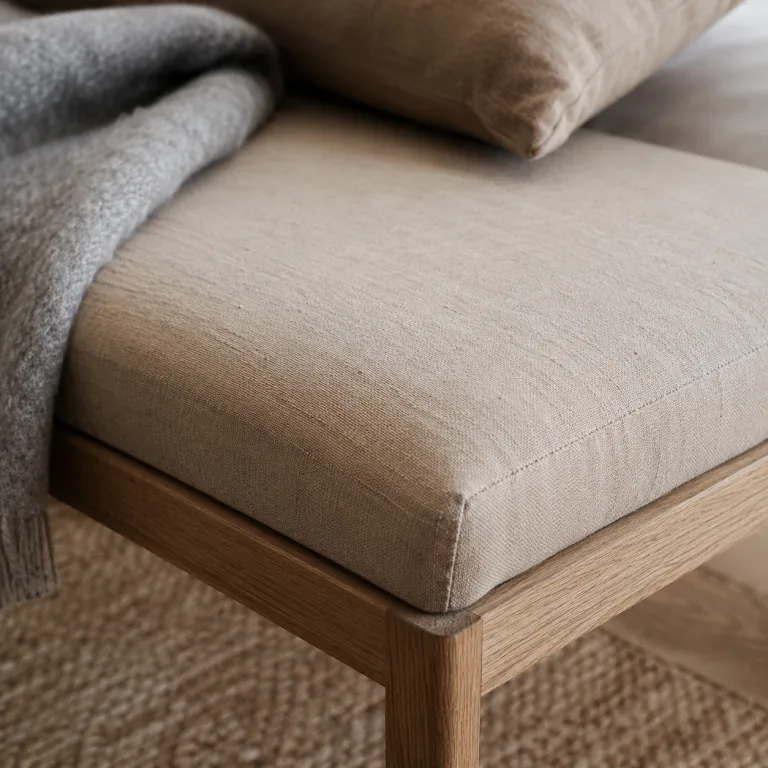
We start by choosing a bench with clean lines and a low profile, ideally 40 cm high to sit flush with the mattress edge. The bench is upholstered in washed linen, a natural off-white that quietly warms the space. Its legs are solid ash, rounded at the feet to reduce sharp corners and offer a stable base. We check the cushion fill: a feather-and-down core wrapped in linen, with just enough give to remain supportive after hours of postural shifts. The overall proportion matters: 110 cm in length by 40 cm deep keeps the bed's line uninterrupted and encourages a restful silhouette.
Texture takes priority as much as silhouette in a quiet bedroom. The linen should wear gracefully, showing only gentle creases rather than obvious wear. We test the fabric by running a finger along the weave to feel its tightness and resilience. When selecting, we prefer a plain weave with a tight 260 threads-per-inch score, not a slippery satin. A finish that shrugs off light staining and accepts a soft patina over time keeps the piece honest.
Height alignment with the bed set the room's rhythm; a bench that sits just below the mattress edge reads as an extension of the bed itself. We place it evenly at about 5 cm from the headboard edge to maintain a clear transition between zones. The bench acts as a staging area for daily ritual: dressing, bagging, or a recently worn sweater. We position a small tray on its surface for remotes and a row of books, but avoid clutter that competes with the bed's calm lines. The outcome is a quiet anchor rather than a focal point.
Placement at the foot of the bed and daily rituals
 Save
Save
At the foot of the bed, the bench should contribute to a sense of depth rather than visually shorten the room. We ensure it does not block the nightstand lamps or the door to the ensuite, keeping traffic clear. The 110 cm length allows two small cushions to sit when needed, while still leaving a generous surface when not in use. We test with a folded throw and a small ceramic dish to hold keys or spectacle cords. Lighting from the window softens its linen hue, so we choose a wall-lamp that casts a gentle glow rather than a stark beam.
Daily rituals begin here: a soft focus as we sit, shoes slipped off, a sweater folded with intention. We test how the surface supports small items without tipping into the space between bed and wall. The bench invites a slower approach to putting away laundry, a habit that reduces friction during the morning shuffle. Cushions are plump enough to support forearms yet firm enough to avoid sagging into the seat. The result is a small, practical pause that mirrors our slow-living philosophy.
Practical considerations include easy cleaning and durable texture. We avoid elaborate fringes or flouncy skirts that trap dust and disrupt the clean line. A washable linen cover makes laundry straightforward when life gets busy. We choose a cushion with a wipe-clean underside so slippers and rain boots hidden near the bed do not soil the bench. A simple throw can be swapped with the seasons to refresh the mood without major redecoration.
Texture, colour, and the tactile habit
Texture defines the room's tempo; linen's natural slubs and weave respond to daylight as a soft, living surface. We compare bench fabrics in daylight and late afternoon, noting how off-white shades warm and cool with the sun's angle. We pair the bench with bed linens stone, oat, and marine blues that echo its muted tone. The goal is a cohesive tactile narrative, not a clash of finishes. We test with a small sample tucked under the bench edge to simulate the effect of foot traffic.
 Save
Save
Colour choices influence mood more than we expect; pale neutrals can anchor a busy wall, while a touch of ink keeps the palette grounded. We avoid strong chroma near the bed to prevent visual fatigue. The linen's subtle shade shifts slightly with time, a reminder of the room's slow pace. We observe how the bench's texture catches dust motes in the morning sun, a gentle cue to dusting routines. These observations help us plan seasonal adjustments without altering the core scheme.
The bench's silhouette should remain calm when the room off-gasses at night or during a busy day. We consider accessories: a simple ceramic vase, a small plant, a book, all placed to maintain white space. The linen stays the star, with the other elements acting as quiet punctuation. Function follows form here: every item on the bench has a defined place, leaving room to breathe.
“This bench makes the room breathe when you pause.” — Mira
Maintenance and longevity of linen in a quiet room
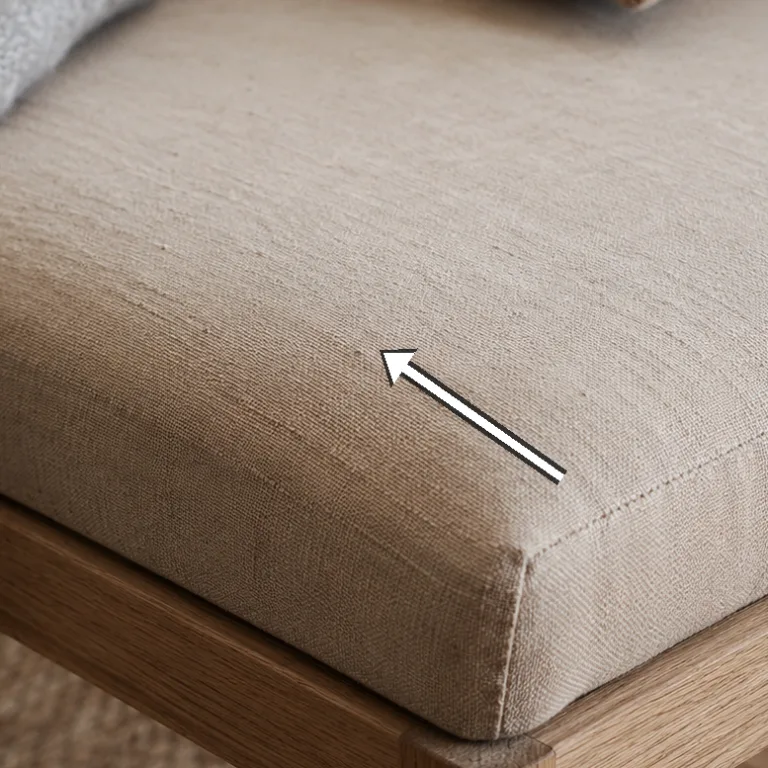
Maintenance is part of the design's longevity; linen should endure daily life without becoming dull. We recommend washing at 40C on a gentle cycle, using a mild detergent and avoiding chlorine. Line-drying preserves the fabric's natural loft and prevents shrinkage. Once dry, a light press with a warm iron helps restore the smooth surface.
Occasional refreshes keep it looking calm: rotate the cushions, brush away dust, and air the fabric to prevent musty smells. Avoid heavy cleaners; a damp cloth should lift most marks, followed by air-drying. If a stubborn stain appears, treat it with a small amount of fabric-safe solvent on a hidden edge and blot rather than rub. A gentle routine over time preserves the linen's texture and colour.
 Save
Save
We also consider the bench's base: check joints every six months to ensure legs remain tight and square. The ash legs are finish-coated; when chips occur, refill with matching wood filler and reseal to prolong life. If you opt to reupholster, choose a similar linen and order professional stitching to keep the seam line clean. The result is a bench that remains quiet across years, not a display item that must be handled delicately.
- Choose a low-profile design that echoes the bed's scale
- Select a natural linen in a shade that shifts with light
- Keep cushions removable and machine-washable
- Place the bench where it won't obstruct doors or nightstands
- Treat linen gently and air regularly to preserve texture
A routine that honours slow-living design
Finally, we outline a daily routine that respects pace and space. The bench becomes a quiet launchpad for morning steps, a place to set aside the day before entering it. We begin with a five-minute pause, gliding through tasks like dressing and sorting mail while keeping the surface free of clutter. We refill one tiny glass jar with air-dried essential items, then return it to the bench's edge. The discipline is small but cumulative, shaping a room's atmosphere as effectively as a larger redesign.
Evening routines mirror the morning: we clear stray items, swap linen, then wash and fold before bed. The bench remains inviting but never crowded, its surface a reminder to slow down. We practise mindful placing: items find their home, not the floor or bed frame. We end with a final glance to ensure the room breathes, then switch off the last light.
Through the season's changes, the linen bench helps maintain a cohesive look. The light fixture, the rug's fibres, and the bed textiles all speak the same soft language. We leave space around the bench so it can be used for sitting, laying, or a brief stretch after a long day. The ritual remains simple, and that simplicity is the design's strength.
How to do it
Measure and select
Measure bed width and room clearance, then choose a bench length in the range of 100120 cm to maintain scale.
Position and align
Place the bench so its front edge sits approximately 5 cm from the mattress edge, aligning with the bed's longest line.
Dress and test
Add a single cushion and a light throw, then test daily access to the surface during dressing and undressing.
Maintain and refresh
Wash and brush linen regularly, check joints every six months, and keep the surface free of clutter for calm visuals.
Common mistakes to avoid
Overloading the surface
We see benches loaded with cushions, trays, and clutter; the result is visual busy-ness that defeats the calm. To avoid this, keep the surface simple: one small tray, one cushion, and a single seasonal throw. We arrange items with clear negative space and a deliberate default stance of emptiness.
Ignoring height alignment
If the bench sits too high or too low, the beds line becomes interrupted. We aim for a seat height around 40 cm to sit flush with the mattress edge. When misaligned, the eye travels awkwardly and the room loses its quiet rhythm.
Harsh cleaning routines
Heavier chemicals or aggressive scrubbing can distort linens soft hand and shorten life. We keep to gentle cleaners, damp cloths, and air-drying; regular brushing helps remove dust without compressing the weave. Small, consistent care beats large, infrequent interventions.
Frequently asked
What size bench should I choose for a standard bed?
Should the bench be upholstered in linen?
How do I care for linen bench fabric?
What colours work best with a pale linen bench?
Can I use a bench with storage?
How can a bench influence sleep quality?
What maintenance schedule is ideal?
Is a bench at the foot of the bed appropriate in smaller rooms?
In closing
In this quiet test, the linen bench proves its value as a calm-maker rather than a loud statement. It remains practical, tactile, and forgiving, inviting slower mornings and orderly evenings without demanding attention. The result is a room that breathes more easily, where every item seems to have earned its place. The bench teaches us that restraint can be a design move as powerful as colour or texture. It is a small addition with a steady, enduring presence.