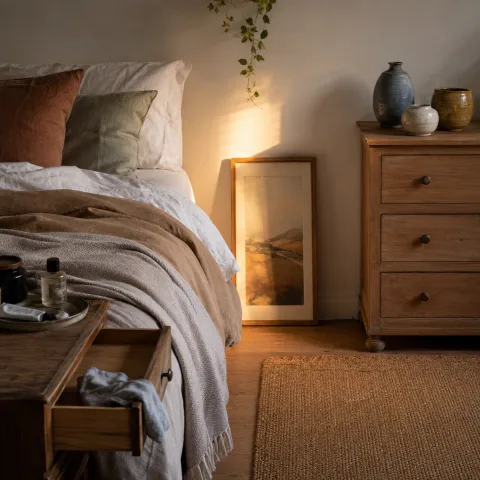
We began the project with a practical goal and finished with a calmer room. The old heavy drapes had long dictated the bedroom's tempo, absorbing light and shaping shadows in ways that felt almost ceremonial. Our intention was modest: to trade bulk for breath, to see whether linen could carry daylight without demanding attention. We took measurements, spec'd a brass rod, and positioned the fabric to catch the morning glow just so. The process became a study in restraint, and a small exercise in patient decision-making. We wanted the space to speak plainly, not shout from weighty swags. This field report captures not just the swap, but the moment the room began to breathe again.
Why one-panel makes sense in a calm bedroom
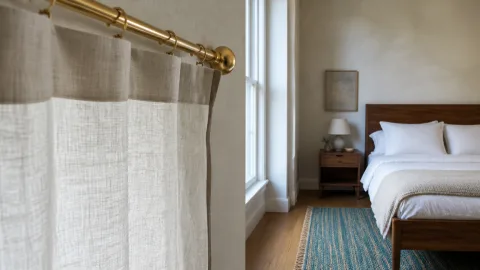
Choosing a single linen panel allowed us to preserve the window's honesty while reducing visual weight. The fabric's natural texture brings warmth without bulk, and linen's telltale slubs catch light in a way that feels intentional. We calculated the panel width to skim the window edge and to drop into gentle folds that stay legible as the day shifts. The plan avoided doubling the fabric to keep movement clear and readable. Our aim was a modest intervention that nourishes the room's rhythm rather than competing with it.
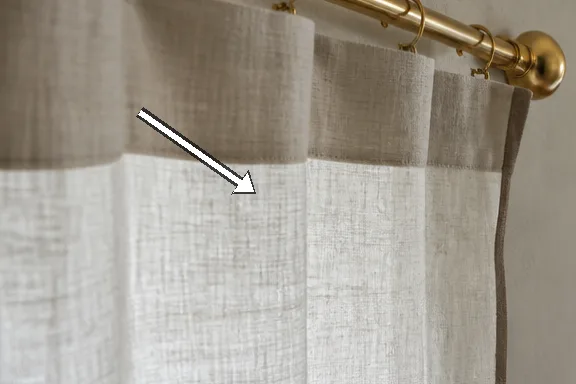
We considered a brass rod as the thread that ties the room together. A 180 cm length gives enough overhang to allow soft splaying when the panel is drawn. Weight, privacy and the rod's rigidity guided our measuring and mounting choices. We wanted a line that felt architectural but not aggressive, so the hardware remained slender and discreet. The decision to use a single, broad panel emphasised air rather than enclosure.
With the fabrics and hardware chosen, we rehearsed their interaction with the bed's proportions. The panel's stance relative to the mattress and nightstand created a calm frame rather than a veiled barrier. When the panel sits correctly, daylight pools in a quiet, even wash across the duvet. We tested various positions, confirming the room's corners stayed open and the ceiling kept its breathing space.
Weight, light and the feel of linen
 Save
Save
The linen's surface holds a restrained sheen under morning light, enough to register texture without glare. The translucency allows a warm, soft glow to pass through, so the room remains legible even when the sun is high. We watched how light travels through the weave, turning dry linen into a living material. The fabric's weight matters: linen that is too light slips and reads as movement rather than fabric; too heavy and it dulls the air. We settled on a mid-weight that breathes with the air but keeps intimate privacy.
Weather tests mattered; we observed over several days how sun, humidity and breeze altered tone and fall. On a bright morning, daylight skims the edge and softens the room's wood and paint. In the afternoon, the panel gathers a warmer cast, the weave catching and releasing light with a patient rhythm. The result is a texture you can feel: calm, not clinical. Linen's natural irregularity adds character rather than contradiction.
Movement through the room becomes a feature rather than a nuisance. A light draft lifts the panel's edge and creates a gentle ripple that reads as intentional pause. The room's air remains available, not pressed down by cloth. We learn to welcome the fabric's life as a quiet partner in the everyday.
Installation discipline and measurement
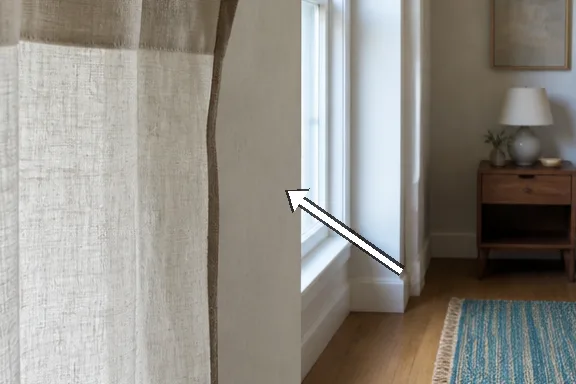
Precise planning anchored the installation phase. We mapped the window reveal, the wall space above, and the ceiling line, noting where crown moulding would interact with hardware. Our aim was a clean ascent for the rod that wouldn't trap heat or light near the glass. We created a simple checklist to confirm the panel would open without obstruction. The process demanded patience and a calm, sequential approach.
 Save
Save
Height mattered as much as width. Too high, and the panel reduces the bed's perceived height; too low, it competes with the lamp. We used a level and a tape to set the rod at an even plane above the frame. The chosen elevation allowed the linen to fall with a natural crease, holding air but not crowding the bed. Details like those make the difference between a tweak and a reform.
We learned to work with hardware limitations and the room's architecture. Choices remained practical—no extra layers, no decorative draughts—yet they carried personality. The final arrangement let the linen texture be the star, with the brass rod providing a minimal, durable scaffold. If anything felt fragile, it was the confidence in the measured steps, not the fabric. The result was a reliable, repeatable setup that could be adapted later if needed.
Careful use of light and colour
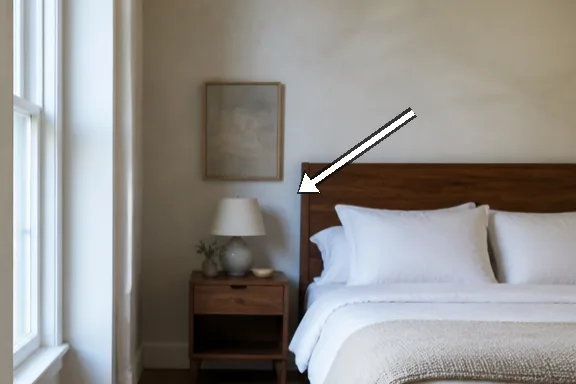
We considered how the panel sits alongside bed linens and the nightstand's wood. The linen's ivory tone worked with the room's neutral palette, while warmer lamp light brought the fabric to life. The panel's translucency preserved daylight without washing the room in brightness. It allowed the view to remain visible yet softened, like a painting backlit by the sun. Linen's presence adds tactile warmth without adding bulk.
Colour transitions were deliberate, not accidental. We avoided heavy, contrasting drapes that shouted when the sun shifted. Instead, linen offered a gentle presence that pairs with muted tones and natural fibres elsewhere in the room. The brass accent ties the hardware to other metal details, creating a cohesive, calm aesthetic. The combination of linen and brass keeps the mood purposely restrained.
 Save
Save
Evening light presented a new reward. The panel catches the last rays, turning the room into a quiet theatre of soft golds. Its weave yields a crisp edge that feels deliberate, not accidental. We appreciated how linen shapes the air rather than crowding it. The result remains a calm backdrop for reading or conversation.
Living with a lighter window moment
Living with a lighter window moment invites a subtle, daily recalibration. The panel's presence is modest enough not to compete with wall art, yet it frames the bed like a softly composed photograph. Guests notice how the room feels brighter without feeling louder; the transition is gentle. We came to trust that window dressing can be a quiet partner, not a central feature. The brass accent reads as part of the room's quiet architecture.
This is not a dramatic reversal but a thoughtful refinement. We reduced complexity and kept intention at the front of the room's story. Linen texture adds touch and warmth without weight. It is a practical aesthetic—unflashy, resilient, and refreshing in its restraint. The panel's benefit grows as we live with it, day after day.
In the end, the swap reads as a small adjustment that honours the room's mood. Light changes, fabric breathes, brass frames. We've traded bulk for clarity, depth for air, and found a rhythm that aligns with slow-living values. The simple upgrade feels durable and quiet, a testament to careful, human-scale design.
How to do it
Survey and plan
We survey the window, note mounting options, and establish a goal for weight, privacy, and daylight, then select the brass rod and the linen panel.
Assemble hardware
We mount the rod at a height that feels balanced with the bed and lamp; we secure brackets and test the movement of rings before hanging.
Hang and adjust
We hang the linen panel, adjust folds for even distribution, and check the lights quality at different times of day.
Caring and routine
We record a simple care routine for linen and brass, and plan occasional refreshes aligned with seasonal light changes.
Common mistakes to avoid
Over-tightening the rod
Over-tightening clamped joints can warp the bracket and create uneven tension on the fabric. It also makes the system noisy in the night as the rod shifts with movement. We learned to leave a small allowance for seasonal shifts.
Choosing too heavy fabric
We started with a heavier drape before realising linen's natural breathability matters most here. A dense fabric reduces daylight and muffles the room’s air. Linen’s presence remains calm and tactile without bulk.
Mismatch between rod length and window
If the rod is shorter than the window, the panel clumps and shortens the visual width. Take precise measurements and order longer than seen on site to avoid unnecessary returns. Measure twice, cut never.
Frequently asked
What size should the linen panel be for a standard window?
Is linen hard to maintain in a bedroom setting?
Should I use a brass rod in a damp environment?
How long did the project take from start to finish?
What about privacy concerns with a single panel?
What if the window is larger than the panel width?
Can this work with other fabrics besides linen?
How do you restore the brass if it dulls?
In closing
In swapping to a single linen panel, we found a quiet, durable change that honours the room's existing character while inviting a gentler day-to-day rhythm. The exercise reminded us that good design is often about what we omit, not what we accumulate, and that simplicity can deepen daily comfort.