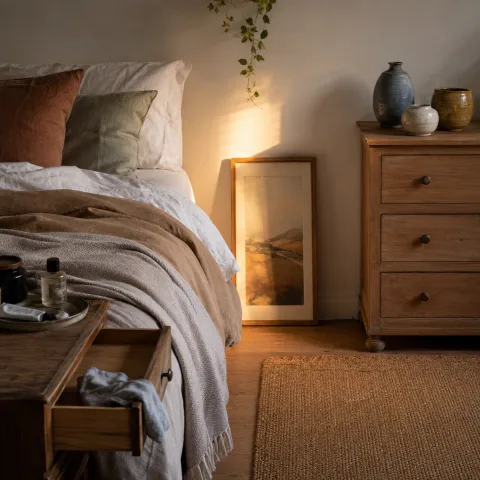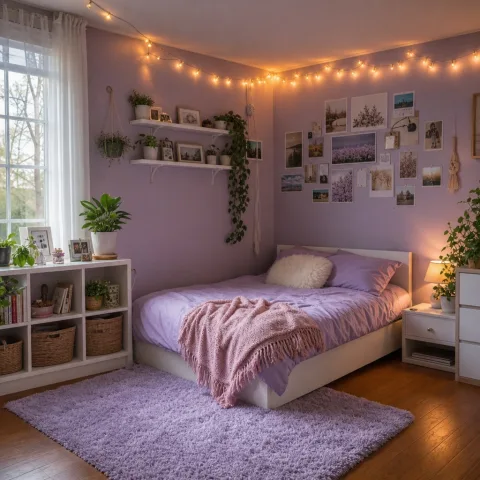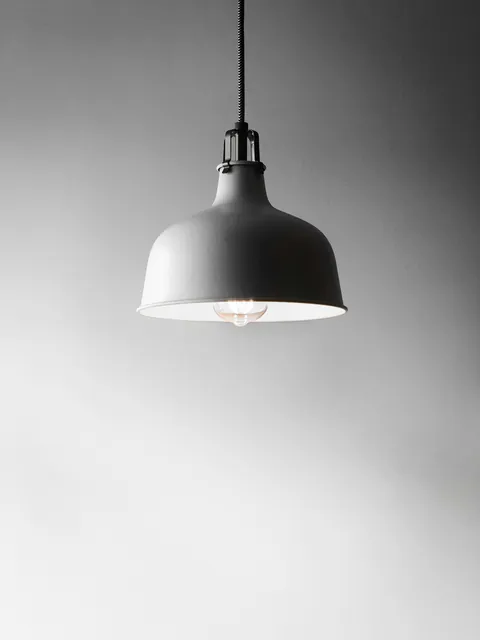
The bedside table is the smallest flat surface in the house and the one we ask the most of: a glass of water, a book, reading glasses, a phone charging, the lamp. The lamp always wins the territory war, planting a base in the middle and leaving a ring of awkward space around it. Swapping ours for a wall-mounted swing-arm sconce ended the war. The light now reaches over the pillow on a jointed arm, the glow lands on the page instead of the table edge, and the entire top of the nightstand came back to us.
Why the wall, not the table
A table lamp solves lighting by sacrificing surface. Its base occupies the prime central spot, its height fixes where the light falls, and you read in the spill rather than under the beam. A wall sconce inverts all of that: the surface stays clear, the arm carries the light out to wherever you actually hold the book, and the joint lets you aim it at the page tonight and at the ceiling tomorrow when someone else wants to sleep.
It also lifts the cord and the clutter off the table. No base, no trailing flex across the surface, no knocking the shade when you reach for water in the dark. The nightstand becomes a calm, clear ledge again.
 Save
Save
Plug-in for renters, wired for keeps
Plug-in swing-arm sconces need no electrician: you fix the back-plate to the wall and run the flex down to a socket, tidied with a slim cord-cover or a couple of clips. It is the renter-friendly route and entirely reversible — two fillable holes at move-out. A hard-wired sconce hides the cable in the wall and looks cleaner, but it is a job for an electrician and a commitment to the spot.
We went plug-in, because we rent and because the freedom to move it later is worth a visible flex run down to the skirting. Tidied with a cord-cover painted the wall colour, it all but disappears.
 Save
Save
“The light now lands on the page instead of the table edge.” — Mira
The bulb makes the mood
A bedroom is an evening room, so the bulb matters as much as the fitting. A 2700 K warm bulb gives the soft amber light that signals wind-down to the body; a cool white bulb feels like a hotel corridor and keeps you alert. Dimmable is the small upgrade that earns its keep — bright enough to read a dense novel, low enough to read yourself to sleep without a jarring switch-off.
Angle the shade so the light spills down onto the page and not into your partner's eyes. The whole point of a swing arm is that this is a setting you can change in a second, not a fixed compromise baked into where a lamp base happens to sit.
- A wall sconce frees the entire nightstand a lamp would take.
- Mount the back-plate just above seated shoulder height.
- Plug-in for renters and reversibility; hard-wired for the cleanest look.
- 2700 K dimmable bulb, shade angled down at the page.
How to do it
Choose plug-in or wired.
Plug-in for rentals and flexibility; hard-wired for a hidden cable. Pick a swing arm long enough to reach the middle of the pillow.

Mark the height.
Sit up against the headboard as you read and mark just above shoulder height. Check the arm can reach where you actually hold a book.
Fix the back-plate.
Into a stud or with proper plasterboard anchors — a sconce is tugged on nightly. Level it before the final screws.
Bulb and tidy the cord.
Fit a 2700 K dimmable bulb. For plug-in, run the flex down behind the nightstand in a cord-cover painted the wall colour.
Common mistakes to avoid
Mounting it too high
A sconce set at standing eye level looks tidy on the wall and is useless in bed — the arm cannot bring the light down to the page. Mark the height while actually sitting up against the headboard, not while standing back to admire it.
Skimping on the fixing
A swing-arm sconce is pulled and pushed every night as you adjust it. A single weak plasterboard plug works loose within weeks. Reach a stud, or use anchors rated well above the fitting's weight.
A cool-white bulb
Cool light keeps you alert exactly when you are trying to wind down. A 2700 K warm, dimmable bulb is the difference between a reading light and an interrogation lamp at the bedside.
Frequently asked
Do I need an electrician?
Will it pull out of plasterboard?
What arm length should I choose?
Can both sides of the bed have one?
Is a plug-in flex ugly?
What wattage for reading in bed?
Does it really free much space?
In closing
The light is better and the nightstand is clear, which is the whole trade: move the lamp to the wall and the most-used surface in the bedroom returns to you. A swing-arm sconce, a warm dimmable bulb, and a tidy cord — and the nightly territory war is simply over.