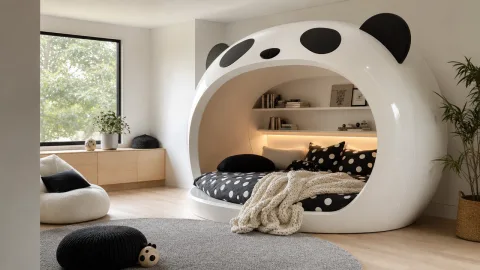
We arrived at the panda pod bedroom on a quiet Sunday morning, moving slowly as light stretched across pale surfaces. The pod occupies a central, breath-like axis; the surrounding room is stripped of clutter, every surface chosen for tactility rather than display. The exterior is a soft white faux fur that reads as a quiet snowdrift, while the interior reveals a compact sleeping zone framed by a low bed and a curved shelf behind it. The design language leans into play without sacrificing scale or our sense of order. We measured, touched, and reflected on how a single form can alter a room's rhythm, encouraging slower decision-making and more meaningful daily rituals. This is not merely a whimsical piece; it is a thoughtful response to small spaces, a demonstration of how light, texture, and proportion can cooperate to create a sanctuary in which one can inhabit more mindfully.
The room as a sculptural cocoon
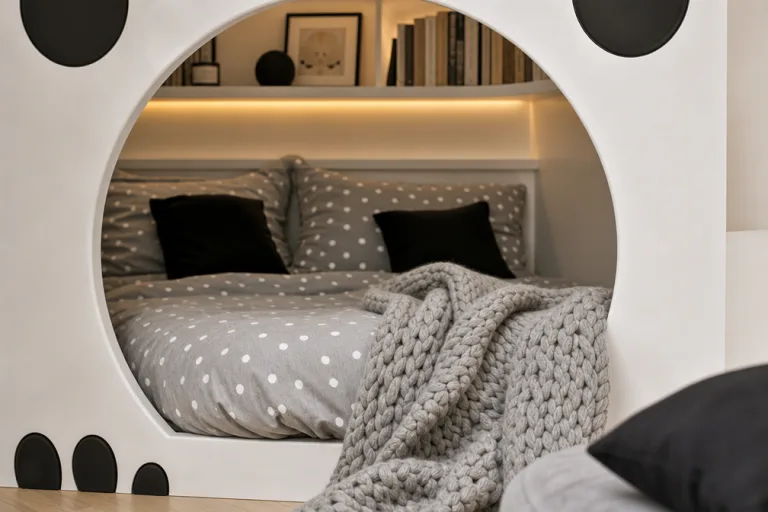
The space unfolds around a single, dominant form that anchors the composition without suffocation. The panda pod is both sculpture and shelter, its exterior rendered in a soft faux fur that reads like a quiet snowdrift. The skin of the pod contrasts with the built-in shelving behind the headboard, forming a gentle embrace around the bed. Inside, the bed sits low on a pale timber platform, its frame almost floating above the floor, and the bedding uses charcoal and white in a crisp geometry that remains comforting in low light.
The palette is purposely restrained to maximise calm: white walls brighten the space, with black accents in cushions and the pod's paws providing a visual anchor that prevents the room from appearing clinical. The oak flooring adds warmth, its grain catching the glow from the LED backlight and bedside lamp. Art on the back wall circles the headboard area, with frames in black echoing the pod's silhouette. The overall result is a clear, legible composition where every element earns its place and nothing competes with the panda pod's central drama.
 Save
Save
Nesting and function in a playful corner
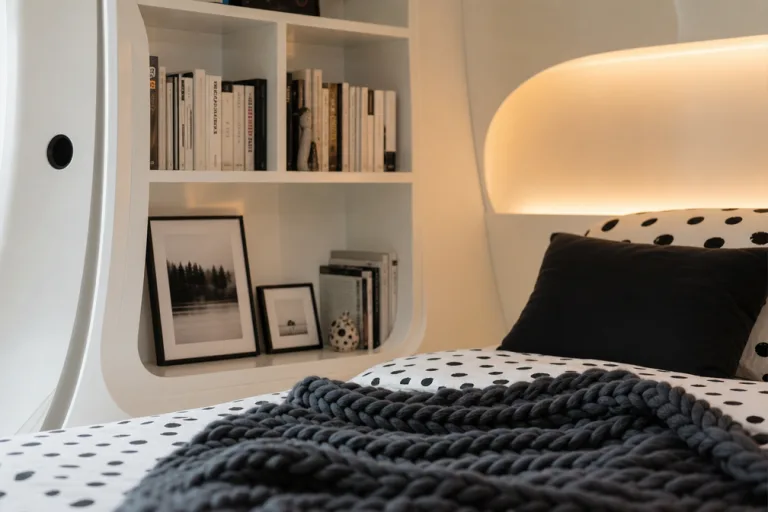
The pod doubles as sleeping nook and quiet reading corner, a small arena where length, line and light collaborate to create comfort. Shelving behind the headboard is curated for reach and delight: a mix of storybooks, design volumes, and keepsakes stacked with intention. Daylight from a side window joins the amber glow of the hidden LED strip, so the space feels softly lit at dusk and with a gentle brightness during the day. The bed becomes a stage for small rituals: a thoughtful stretch, a hot cup of tea, a few pages of a favourite book before sleep.
Textiles are essential to the room's warmth and acoustic quality. A chunky knit throw gates the foot of the bed with forgiving weight, while cushions in varying textures—wool, velvet, and linen—provide visual interest without overpowering the scene. The scale of the pod relative to a reader on the edge of the bed is designed for intimate, relaxed posture; even the cushions are set to invite a seated, leaning pose rather than an upright, formal one. The result is a space where lingering feels natural, and stillness is a choice rather than an accident.
“We move slowly, letting the space breathe, and the panda pod becomes a ritual rather than décor.” — Mira
 Save
Save
Texture, light and the quiet palette
Texture is king here; it binds the room's visual language as light shifts through the day. A generous wool rug underfoot adds warmth and a sense of distance from the cool tile; the timber floor remains visible at the margins to remind the eye of the room's grounded nature. Linen drapes filter daylight into a creamy glow, while the cottons and wools in the bedding tilt toward ivory, ash and taupe. The aim is tactile rather than decorative, inviting touch and linger.
The lighting plan is restrained to preserve the panda pod's sculptural impact. A warm LED strip behind the headboard creates a halo that rounds the space, while a small, unobtrusive table lamp offers just enough glow for reading without glare. Artwork on the back wall remains understated and carefully cropped, ensuring the pod remains centre stage. The overall mood is one of quiet, confident restraint that invites slow, deliberate living rather than rapid activity.
- A wool rug for warmth underfoot
- Linen bedding in ivory and grey
- A soft throw knitted by hand
- Rounded accessories in black to punctuate the calm
 Save
Save
Slow living with whimsy in daily life
Daily life here unfolds with a gentle cadence, balancing play and rest in meaningful ways. The panda pod becomes a ritual space: a morning stretch that flows into a slow breakfast, a few pages opened beside a cup of tea, and a quiet moment of reflection before stepping into the day.
The room supports a calm routine rather than demanding attention; it invites a pause, a breath, and a deliberate choice to keep the day unhurried.
In this rhythm, wonder is not forced but discovered in everyday details: a print on a shelf edge, the way light travels across the white fur, or the soft chirp of a cat from the window.
How to do it
Measure space and plan the footprint
Record the pod diameter, bed dimensions, and clearance around the opening; check door and window alignments; note any built-in features that could impact access or cleaning.
Select textiles to tie the palette
Choose bedding and throws in white, ivory, and charcoal to echo the pod's contrast; source natural fibres for durability and a tactile finish; consider a handmade knit for warmth.
Install layered lighting
Position a warm LED strip behind the headboard to create depth; add a dimmable table lamp on the bedside table; ensure switch control is convenient for night-time transitions.
Establish a maintenance routine
Schedule regular brushing of faux fur, vacuuming of textiles with a gentle attachment, and rotation of cushions; review the lighting plan twice a year to adapt to daylight shifts.
Frequently asked
What is the key to making a panda pod feel calm rather than gimmicky?
How do you maintain the faux fur upholstery in a high-traffic bedroom?
Which fabrics pair best with the white and black palette?
How can this space serve both children and adults?
What lighting creates the coziest atmosphere at night?
How important is scale when introducing a statement piece?
What materials are best for a sustainable look?
In closing
We close the field report by noting how a single, well-considered form can reshape a room's behaviour. The panda pod is not merely a playful feature; it anchors the space, sets a rhythm for day and night, and acts as a catalyst for slower living. By prioritising scale, texture, and gentle light, we’ve created a room that invites pause while still offering warmth and character. The result is a sanctuary that feels both cared-for and alive, a reminder that design can be playful and purposeful in equal measure. In embracing restraint, we discover a room that remains legible as the minutes pass—an environment that breathes more slowly, yet loves more deeply.