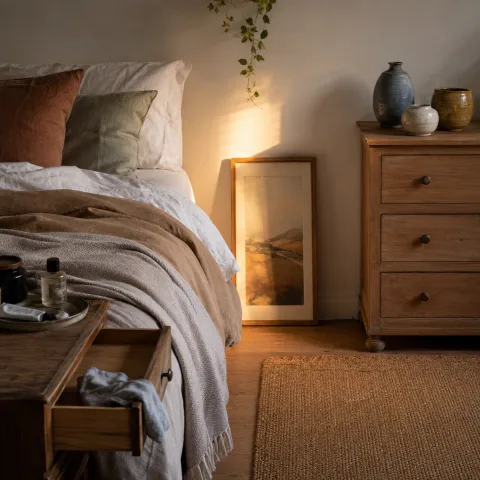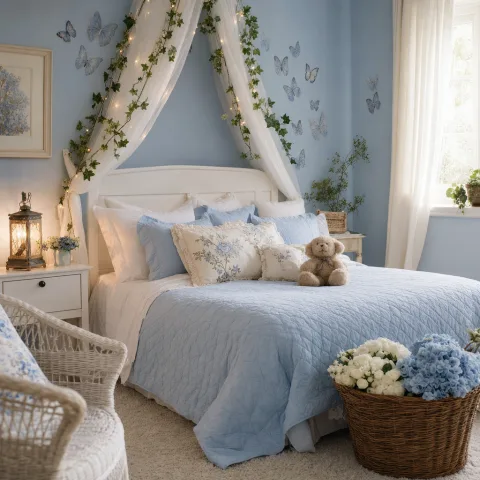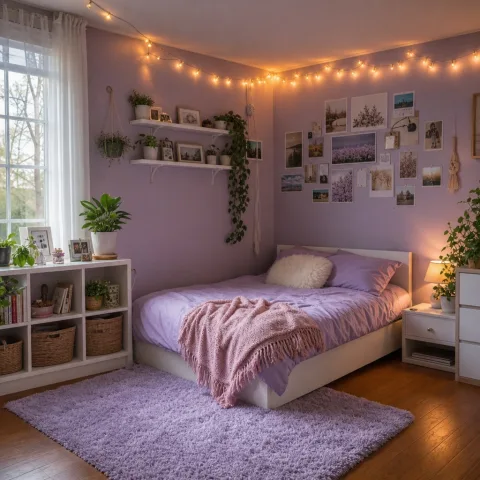
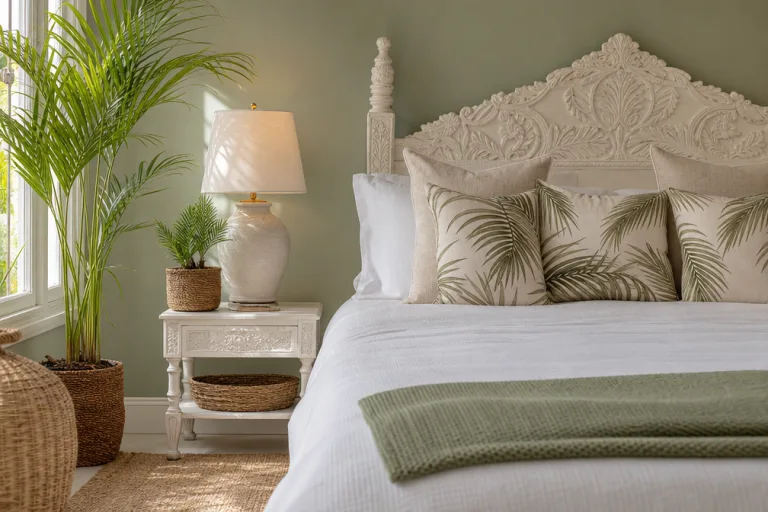
From the threshold we step into a room that asks for deliberate pace. We notice the garden energy settling into the surfaces: a pale sage field behind a white bed, a texture ladder of linen, wool, and rattan. The bed sits central, its headboard softly carved and painted in a matte white that has aged to a touch of buttered bone. We feel the air shift as the linen curtains drift and the room's light becomes a soft tutor, guiding our thoughts rather than shouting them down. The throw at the foot is generous, a knitted panel in sage, its fringe catching the daylight and tossing tiny shadows across the duvet. A single bedside book lies open at the margin, a quiet anchor for the morning read; a ceramic lamp glows with a calm, constant warmth. The surfaces are intentionally sparse: one stack of magazines, a small pot with a plant, a bowl for keys, all arranged to invite touch but not clutter. The plants, Areca palms and a few trailing ferns, rise from ceramic pots and echo the palm motifs in the wall art above the headboard. The result is a sanctuary that speaks slowly: a place to listen to your breath, to choose a pace, and to reset the day before it begins. In winter light the room takes on a warm, honeyed tone; in high summer it glows cooler, almost breathably minty. We test each item's place for purpose, every surface coaxed to serve a daily ritual rather than to display wealth. This is a room that earns calm through restraint, not by refusing life but by choosing to curate it with care.
A restrained palette that lets nature speak
We begin by acknowledging the room's quiet colour. White cotton sheets and a pale sage headboard set the stage, while a knitted throw in the same hue adds texture without shouting. The bed's creases tell stories of restful nights and slow mornings, not hurried ones. We choose a handful of cushions—two with palm motifs, two plain white—to balance pattern and rest. The pillow slots are generous and inviting, not crowded, and they encourage a posture of relaxation rather than alertness. The arrangement feels intentional: each cushion a note in a subtle composition, never a loud chord.
The space feels framed by light rather than overwhelmed by it. A woven rug runs beneath, its earthy fibres grounding the airiness above. We notice how the palm leaves in the artwork echo the real plants nearby, tying the room to the garden beyond the glass. The room uses negative space on the walls and surfaces; nothing competes with the bed. The light warms the wood trim along the bed's rails and chest; the finish reveals brush strokes, proof of hand with time. All of this creates a reading nook embedded in the room's footprint and encourages slow reading in evenings.
 Save
Save
To the eye, restraint becomes a language. Each object is chosen for a reason, each surface cleaned and curated to preserve calm. A single basket on the bedside table carries magazines, while a ceramic bottle holds a few stems, so the eye travels softly rather than stops abruptly.
Light, air and the rhythm of the windows
Morning light spills through the French doors, lifting the textiles and painting the walls with soft, shifting greens. Curtain fabric, crisp linen in off-white, absorbs the sun steadily, avoiding glare while inviting a gentle glow. We open them wide to listen to the room breathe, the plants answering with a quiet shuffle of leaves.
The rug, woven from natural fibres, catches specks of sunlight and distributes them across the floor. From this vantage, the room feels longer, calmer, and more opena sanctuary where a moment can stretch. The chestnut tones of wood trim the edges with a soft warmth. The bedboard's pale finish reveals fine brush strokes, proof of careful craft. We dwell on the geometry of the space, noting how negative space supports the arrangement rather than cluttering it.
“We learned to listen to quiet corners; they hold the room's honesty.” — Mira
 Save
Save
The light sculpts the room softly, and the wood breathes with it. The blue-green shadows along the chair legs shift as the sun moves, while the linen curtains maintain a calm, even glow that never blinds. We feel the life of the space anchored by the edges: the moulding, the headboard, the tiny recesses where a book or a plant might rest.
Texture at heart: fibre, fringe and palm
A sage-green throw with chunky fringe drapes the foot of the bed, inviting touch and a sense of comfort. Each fringe catches the light differently, giving the bed a subtle shimmer as we move. Cushions in palm leaf print add a botanical rhythm without overwhelming the eye.
Substantial yet soft materials define the rest of the room: a white-washed timber headboard, ceramic lamps, and a jute rug that creaks pleasantly underfoot. We note how every fibre is honest, from the loom to the finish, shaping a calmer everyday ritual. The four essential textiles: bedding, cushions, throw, and a light blanket for cooler evenings, coordinate across a narrow colour spectrum.
 Save
Save
- Choose natural fibres for bedding and cushions
- Let greens travel through the room in art and plants
- Invest in a sturdy, timeless bed frame
- Care for textures with light cleaning to preserve finish
Rituals of care: daily slow living
Morning tea on the bedside stool becomes a small ceremony: the kettle singing, the room waking in measured breaths. We fold the day into light, not noise, as we remove or replace items with intention. Plants are watered by hand in the cool of the evening, their leaves catching the last of the sun.
Evening routines stay rooted in restraint: dust the moulding, air the curtains, and tuck the bed with the same care we apply to a loved book. The room teaches us to slow down by rewarding effort that remains unseen to others but felt deeply by us.
A final practice gathers the space into a soft conclusion: we dry a plant leaf with care, check the rug edge for loose fibres, and run a fingertip along the bed frame's carved corners to recall the day's quiet progress.
How to do it
Survey the room's quiet corners
Walk the space with a notebook, marking light paths, textures, and any clutter that interrupts calm; adjust layout to improve flow.
Test a restrained colour swatch
Apply a small swatch of sage to a section of the wall or textile to confirm the harmony before larger changes.
Layer textiles with intention
Choose 2-3 textiles (bedding, throws, cushions) that share a colour family and vary texture.
Maintain daily slow-living rituals
Schedule short, consistent rituals (opening curtains, watering plants) to reinforce calm habits.
Frequently asked
What defines this room's style?
Which colours dominate?
What are essential textiles?
How is light managed?
How do you keep the room feeling spacious?
What plants suit this space?
How often should you refresh look?
In closing
In a busy world, this room remains a deliberate pause. We return here to reset, to breathe with the diffuse daylight, and to remind ourselves that slow living lives in the details: the texture of a throw, the weight of a cushion, the quiet of a plant taking in morning sun. It is not about showcasing abundance but about a continual recalibration toward calm, a daily ritual of tidying, listening, and choosing only what serves us. When the door closes, we hear our own pace ease, our shoulders drop, and the mind settle into a small, attentive space. We leave with an impression not of a room finished but of a life made more readable: simple lines, honest materials, and a sense that the best design is the absence of noise.