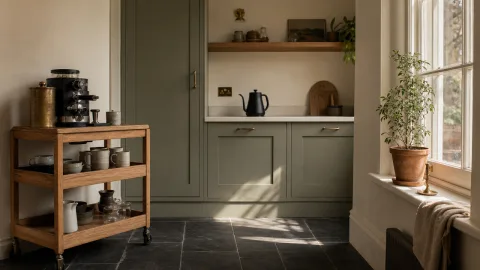
We had an underused strip of floor beside the south-facing window that caught the best light for mornings but seemed impossible to use without more worktop. Rather than commission bespoke joinery we tested a narrow three-tier trolley as a provisional coffee station and found the approach immediate and affordable. Over a single weekend we measured the gap, purchased a powder-coated metal cart with lockable rubber castors and organised it so that daily tools live on the top shelf. The cart needed to be stable enough for a filled kettle, narrow enough to leave a 23 cm margin and visually light to sit with the window reveal. We used simple, airtight canisters, a small teak tray and non-slip liners to define zones and reduce maintenance. The result is a movable, efficient corner for morning rituals that we can adapt as our needs change.
Choosing the right trolley
Our starting point was measurement: we recorded the clear width between the cabinet edge and the wall, the height of the windowsill and any obstructions such as radiator pipes or a low window handle. For our kitchen the usable width was 75 centimetres and we chose a 40-centimetre-wide cart to leave a comfortable margin for movement and cleaning. Consider material too: a powder-coated metal frame resists kitchen humidity and wipes down easily, while wooden trays soften the look and can be replaced if stained. Weight capacity matters; kettles, grinders and jars add up, so select shelves rated to hold the items you plan to store rather than guessing.
Castors determine mobility and safety: we preferred lockable rubber wheels because they roll smoothly on lino and protect paintwork, while cheaper plastic castors can squeak or jam when exposed to crumbs. Check individual wheel load ratings a rating of 1015 kg per wheel gives comfortable headroom for a loaded trolley. Removable shelves are useful if you need to store taller bottles or move the cart through narrow doorways, and steel frames with welded joints feel more durable than folded sheet metal. Finally, inspect customer reviews for sagging shelves or wobbly frames; these are signs the trolley may not last under daily use.
Colour and finish are aesthetic but also practical: a neutral powder-coat in soft grey or matte black reduces visual noise and sits well with timber windowsills, while glossy chrome reflects light and can read as an appliance. If the back of the cart will be visible from the living area, check how the frame looks from all angles; a tidy back is as important as a styled top. The small investment in a well-made cart pays off in longevity and reduces the temptation to replace it quickly, which aligns with our slow-living values.
Positioning by the window
 Save
Save
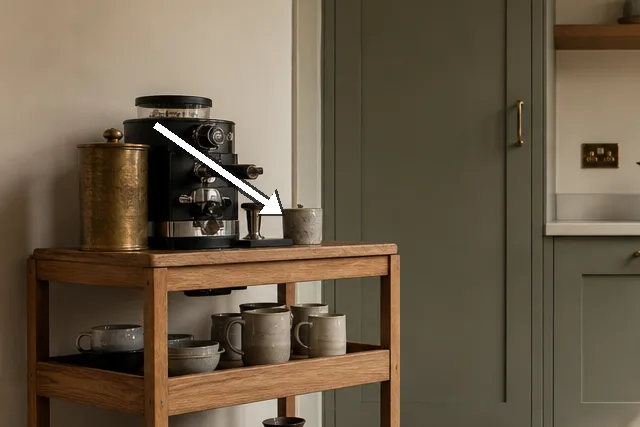
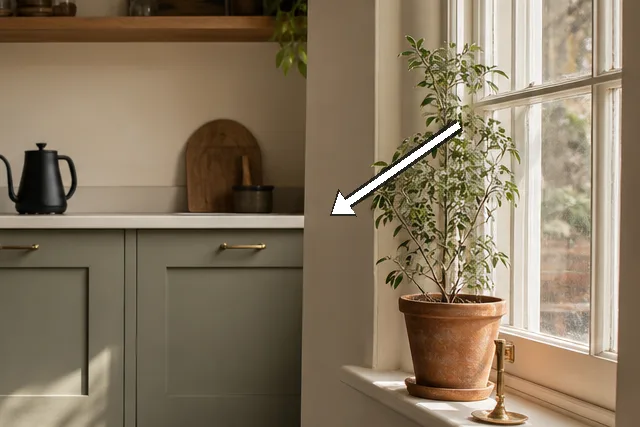
We positioned the cart so the top tier sits slightly below the lower window sash, making the whole arrangement feel integrated with the windowsill rather than an afterthought. Allow at least 5 centimetres from the window frame to prevent scraping painted wood and to give room for opening the sash if necessary. Consider airflow and sunlight: a south-facing spot offers bright mornings but also heats jars fast, so keep beans in opaque containers to avoid flavour degradation. If a radiator sits nearby check for heat transfer to jars and tins; direct heat shortens the life of coffee and can affect equipment.
Electric items need careful cord planning; we routed the kettle cable down the back of the cart and used a small adhesive hook on the window reveal to hold the excess cable. Avoid running cords across worktops or sink areas and, if necessary, use a short, properly rated extension on the same wall socket. Lockable castors keep the cart stable when in use so it cannot creep forward while you pour, and a thin rubber mat under the wheels protects the sill from abrasion. We also kept at least 75 centimetres of clear walkway alongside so the cart does not impede movement in the kitchen.
If your window opens inward ensure the sash will not trap the cart or press against the handle of a kettle; in older houses windows and floors can shift slightly over seasons, so leave a small margin for movement. A slight angle rather than a flush fit can make the lower shelf more accessible and create a gentle, deliberate pause point in the kitchen route. Think about sightlines from the dining area: a neat cart reads as a considered corner rather than ad-hoc storage when placed with attention to light, scale and clearance.
Organising the three tiers
We organised the cart by frequency: the top tier holds the kettle, a cafetie8re and two everyday mugs so everything used each morning is at hand. The middle tier is for beans in an airtight jar, a small grinder and a spoon tray, making scooping and weighing quick and tidy. The bottom shelf stores spare filters, a compact compost tin for grounds and a small box for descaler and spare labels. This vertical zoning keeps weight low and access logical, preventing the top tier from becoming an overloaded staging area.
 Save
Save
Shelf liners are small but effective: non-slip liners stop crockery sliding and capture stray grounds for easy removal, while a teak tray under hot items protects the metal shelf and creates a defined working area. We used labelled canisters of 250 grams capacity which suit our weekly consumption and avoid prolonged air exposure. Keep only what you use every day on the top shelf and move duplicates to the bottom so the surface is always ready for action. A tidy, deliberate layout reduces decision fatigue in the morning and speeds up the ritual.
Small additions improve function without clutter: a slim magnetic tin on the window frame holds spare teaspoons, a loop hooked to the back holds a linen cloth for quick spills and a tiny plant softens the metal. Reserve space for a small waste bowl to collect used grounds and empty it each morning to avoid smells. Avoid storing large mugs or non-daily crockery on the top tier; it should remain clear to keep the ritual efficient. Over time we adjusted container sizes and moved items between tiers to match how we actually use the station.
“Keeping daily tools on the top tier turned simple acts into a gentle ritual.” — Theo
Daily use and maintenance
The maintenance routine is deliberately small: a daily wipe-down with a microfibre cloth keeps grounds and dust at bay, while liners are washed weekly to remove oils and stains. For mugs and the cafetie8re we rinse immediately after use and dry items on a small tray so the cart remains presentable between brews. Monthly checks of castors and shelf fixings prevent wobble; a quick inspection to clear trapped crumbs and a light lubrication of wheels if they squeak prolongs smooth movement. These small, regular steps avoid heavy cleaning sessions and keep the trolley feeling calm.
Descaling electrical items follows manufacturer guidance and depends on water hardness; for our moderately hard water we descale the kettle every two months and check the grinder hopper for oil build-up. For persistent stains on powder-coated frames a gentle, pH-neutral cleaner and soft cloth remove marks without damaging the finish. For metal shelves with stubborn coffee oils a small amount of vegetable oil on a cloth followed by a soft buff restores appearance without harsh chemicals. The maintenance routine becomes part of the ritual, a small, mindful act at the end of the morning.
 Save
Save
Spill management is straightforward if you keep a small compost tin and a damp cloth to hand: empty grounds each day and wipe spills immediately to prevent staining. Replace liners promptly when stained to maintain a neat look and keep spare filters and descaler accessible on the bottom shelf for quick restocking. If castors pick up grit, clean them under running water and dry thoroughly before returning the cart to the kitchen floor. The simplicity of these tasks is part of the point: a little care preserves the calm of the corner.
Styling for slow mornings
Styling the cart is an exercise in restraint: we limit decorative items to one small ceramic vase with a seasonal sprig and a folded linen coaster to soften the metal and add texture. A palette of two or three muted tones clay, soft grey and black keeps the look cohesive and prevents visual clutter. Choose natural materials for containers where possible; ceramic and glass age well and show fewer fingerprints than polished metal. The overall aim is a calm, functional corner that invites a slow start rather than competing for attention.
Lighting changes the mood: a warm LED puck under the top shelf or a small clip lamp gives enough light for measuring coffee without harsh overhead glare. Aim for a 27003000 K bulb to keep mornings soft and comfortable, and use a short timer or a manual switch so the light does not stay on unnecessarily. Small plants or a tiny herb pot add scent and seasonal interest without taking much space; rotate or replace as needed to keep the corner feeling fresh. Styling in this way complements the ritual rather than complicating it.
Over time, adopt small tweaks rather than wholesale restyling: swap a canister size, change a tray or replace liners to refresh the look without disrupting function. If you entertain, keep a small stash of extra mugs on the bottom shelf to bring out as needed, then return the top to its everyday layout. The key is to preserve the surface area for the ritual and allow occasional decorative flourishes that are easy to remove. A well-styled cart supports slow, considered mornings and stays useful as your routine changes.
- Top tier: daily tools only kettle, cafetie8re, two mugs.
- Middle tier: beans, grinder, spoon tray and filters in use.
- Bottom tier: spare filters, compost tin and restocking items.
- Daily microfibre wipe; weekly liner wash; monthly castor check.
- One small decorative object to soften the look.
How to do it
Measure your space
Measure width, depth and height of the gap beside the window and note any obstructions such as radiator pipes, handles or sockets; allow 23 cm clearance for movement and paint irregularities.
Choose a cart
Select a three-tier metal cart roughly 4045 cm wide with lockable rubber castors and removable shelves if you need taller storage; check load ratings before purchase.
Zone the tiers
Top tier for daily-use items, middle for beans and grinder, bottom for overflow storage; use liners and a heat-resistant tray to protect surfaces and define each zone.
Finalise placement
Route cords neatly with a small hook, place a thin mat under the wheels to protect the sill and leave clear circulation space so the cart does not obstruct kitchen flow.
Common mistakes to avoid
Buying the wrong width
A cart that is even a few centimetres too wide will catch paint and feel awkward when moved; measure carefully and allow for plug sockets and handles. We returned a model once because we had not allowed for the window reveal and radiator pipe.
Ignoring castor quality
Cheap indoor castors can seize with kitchen moisture and grit, making the cart hard to roll and risky under load; choose rubber or polyurethane wheels rated for at least 15 kg each. Upgrading castors later is possible but adds cost and time.
Overcrowding the top tier
Placing too many cups, tins and tools on the top shelf quickly turns function into clutter and increases spill risk; keep only daily essentials on the top and relegate extras to the lower tiers. A restrained layout reads calmer and is simpler to maintain.
Frequently asked
Will the cart block my window?
Is it safe to put an electric kettle on the cart?
How do we prevent coffee smells?
Can the cart handle a heavy grinder?
How do we clean spills on the cart?
What if we need extra storage?
How to keep the look calm and not cluttered?
Will the cart scratch my windowsill or floor?
In closing
A three-tier rolling cart made a small, affordable, and adaptable coffee station by the window that suits a slow routine; with modest care and thoughtful organisation it provides surface, storage and a moment of calm every morning without permanent alterations.