There is no design budget low enough that an entryway will fail to absorb. Our flat had a corridor between the front door and the living room — two metres long, less than a metre wide, with no architectural features and no obvious purpose. For six months it accumulated keys, post, shoes, coats, the cat's leash, two umbrellas, and the slow guilt of not designing the place where you actually arrive. One Saturday afternoon and three small purchases solved it.
Why an entryway needs a floor edge
An entryway with no rug or mat is a continuation of the next room's floor. The eye does not register arrival. A small jute mat — sixty by ninety centimetres, not larger — places a frame around the act of stepping in. Shoes come off on the mat. Bags land on the mat. The mat is the doorstep moved indoors, and a doorstep that is named tends to do its job.
 Save
Save
The dimensions matter. A larger mat reads as a runner and the entryway becomes a corridor again. A smaller mat reads as a wipe-your-feet welcome and the act of arrival becomes apologetic. Sixty by ninety is exactly enough to land both feet on, drop a bag beside, and feel that you have entered.
Hooks and a bench
Three brass hooks at shoulder height. Not five. Not seven. Three. Five hooks gets filled and then stays filled with whatever was hung there in February. Three hooks forces rotation. Coat A goes on, coat B goes off, coat A's pocket gets emptied. The bench, twelve euros from the Feira da Ladra, sits below the hooks and is the place where shoes land in the evening and bags land in the morning. Without the bench, both items lived on the floor. With it, both have a place.
 Save
Save
“Five hooks fills and stays filled. Three forces rotation.” — Mira
- 60×90 jute mat at the threshold. Floor edge defined; arrival named.
- Three hooks, not five. Forced rotation beats forced storage.
- A bench, not a console. Sitting to put shoes on changes the energy of leaving.
- One bowl on the bench, for keys. Two bowls and the second one becomes a slot for receipts forever.
How to do it
Roll out the mat first.
Live with the mat in place for two days before buying anything else. The mat tells you where the bench wants to go and how tall it should be.
Hang three hooks at shoulder height.
Mark the centre of the wall above the bench. Two hooks at twenty centimetres either side, one in the middle. Pencil first, drill second. Use brass screws, not silver.
Find a bench at a flea market.
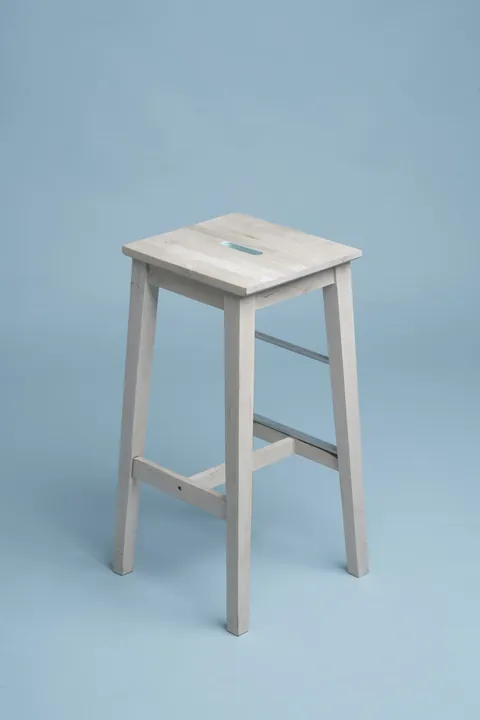
Twelve to thirty euros. Pine or oak; nothing painted, nothing veneered. Eighty to a hundred centimetres long. The bench should look slightly older than the rest of the flat.
Put one bowl on it.
Pottery, ten centimetres across, for keys only. A second bowl is a temptation; the temptation is debris. Keys, only keys, on the bench.
Frequently asked
What if my entryway is shorter?
Do I need a mirror?
Why brass hooks specifically?
Where do shoes go?
In closing
The entryway is now the place where we arrive and leave, instead of the place where the flat slowly digested us each evening. The mat, the bench, the three brass hooks. Three small interventions, one Saturday afternoon, fifty euros all in. The hardest part of designing an entryway is admitting you have one.