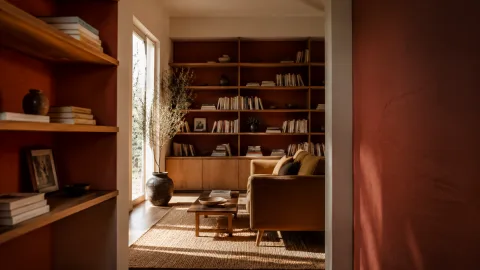
Deep greens are the most light-dependent colour we have ever painted. The same tin reads as a rich forest on a south wall at noon, a flat sludge on a north wall at dusk, and a moody near-black under a warm bulb at night. The snug we wanted to paint faces two ways and is mostly used after dark, so a paint chart was useless. We bought one tester pot, painted a generous square on three different walls, and watched it for two days before opening a single full tin.
Why green is the hardest colour to test
Greens sit between blue and yellow, and the balance between those two shifts with every change in light. Cool north light pulls a green toward grey-blue and can turn a handsome forest into something cold and institutional. Warm evening light and tungsten bulbs pull the same green toward yellow and depth, which is usually where it looks its best. A chart printed under shop lighting tells you none of this.
The undertone is the trap. Two greens that look identical on the chart can diverge wildly on the wall, one going olive, the other going teal, entirely because of how your room's light lands on them. The only honest test is a big square of the actual paint in the actual room across the actual day.
 Save
Save
Three walls, two coats
We painted the same green on the darkest wall (north, away from the window), the brightest wall (beside the window), and the wall we would actually sit facing. Three squares, two coats each, labelled in pencil below. The difference between the north square and the window square at four in the afternoon was startling — almost two different colours from one pot — and it is exactly the difference you would otherwise discover only after painting the whole room.
Two coats matter because one coat of a deep colour is patchy and reads lighter and blotchier than the finished wall ever will. Judge a deep green on one thin coat and you will reject the colour you actually want.
 Save
Save
“Almost two different colours from one pot — exactly what you would otherwise discover after painting the whole room.” — Mira
Watching it after dark
The snug is an evening room, so the decisive test was at night under our own bulbs, not in daylight. A green that looked slightly drab at five in the afternoon came alive at nine under warm lamplight — deep, enveloping, exactly the mood we wanted. Had we judged it only by day we would have rejected the right colour for being too quiet, when quiet by day and rich by night was the whole point.
So the rule we now follow: test where you will sit, in the light you will use, at the time you will use it. A bedroom green should be judged at night; a kitchen green at breakfast; a home-office green under the working daylight you actually sit in. The room's real life decides the colour, not the showroom's.
- Paint a 60 cm square, two coats, never a chart chip.
- Test the darkest and brightest walls of the same room.
- Judge a deep green at the time of day you actually use the room.
- See it under your own bulbs at night before buying a full tin.
How to do it
Buy one tester, not four.
A single 100 ml pot covers three generous squares with two coats. One well-watched green beats four chips you glance at.
Paint three squares, two coats.
Darkest wall, brightest wall, and the wall you face. Pencil the name below each. Let the first coat dry before the second.
Watch for two days.
Morning, midday, late afternoon, and crucially at night under your own bulbs. Note which time the room is actually used.
Commit to the survivor.
Buy the full tin only after the green looks right at the hour you live in the room. Matt emulsion for a snug; it swallows light beautifully.
Frequently asked
Why does the green look grey on my north wall?
Matt or eggshell for a deep green?
How many testers is too many?
Does the ceiling colour change the green?
Should the woodwork match?
Will a dark green make the room feel smaller?
Can I test on paper instead of the wall?
In closing
We opened one full tin instead of repainting a room twice, because two days of watching one tester told us what the chart never could. The snug is the right green now — quiet in the afternoon, deep and warm at night — and the only thing we wasted was a little patience, which is the cheapest material in any paint job.