The first night we tried it I measured exactly thirty centimetres with a piece of painter’s tape and wiped the rectangle with a dishcloth that used to be Mira’s grandfather’s hand towel. It felt absurdly precise — and oddly consoling. The rest of the counter remained the usual tangle: a jar of cooking spoons, a stack of mail, the breadboard, a coffee mug still smelling faintly of the morning. The cleared patch, by contrast, had a smallness to it that read like furniture — intentional, available, set aside. Over the next ninety evenings that little rectangle became a practice, a way to close the kitchen with an act that cost ten seconds and gave back a calm that lasted until the next morning.
Beginning with a rectangle
We began by choosing thirty centimetres because it felt, at once, ridiculous and right: small enough to be achievable every night, large enough to rest a plate or a mug. The first week I watched how hands behaved in the kitchen — where they reached at breakfast, the corner where dirty plates tended to collect, the strip of counter that caught crumbs from the toaster’s crumb tray. That specific rectangle sat beside the sink and toaster, a practical location where cleaning twice a day made sense. Choosing a fixed patch turned an amorphous habit — “I’ll tidy later” — into a decision with clear edges. There is power in constraint: the rectangle set boundaries so attention could be practiced rather than squandered.
The rectangle also changed the meaning of the countertop. Instead of a single surface that needed attention all at once, the counter became a collage of zones: the sink for washing, the cutting corner for prep, and the thirty-centimetre patch that served as a nightly calm. On busy nights we did nothing else; the cleared square was the night's single honest tidy. On quiet evenings we let the rest of the counter follow. That prioritisation produced a different kind of order — brittle perfection gave way to a reliable rhythm. The small, intentional empty space read as design because it was cared for nightly.
We tracked the ritual in a tiny, undemonstrative way: a tick on the fridge calendar for the first two weeks, then nothing. The mark mattered less than the repeated motion — the cloth pulled in one deliberate pass across the grain of the counter, a small accordion fold, a tidy tuck under the toaster. Those motions are useful because they are repeatable; anyone can learn them, and they become the script you enact at the end of the day. Ritual in the kitchen needn't be ceremonial — it can be pragmatic, small, and stubbornly private.
Why small constraints work
Psychologists call this the ‘small wins’ effect: tiny, completed tasks reinforce a sense of progress. But beyond theory, the thirty-centimetre rule was useful because it was forgiving. If the rest of the counter remained cluttered, it did not erase the calm provided by the cleared patch. The patch was honest — it did exactly what it promised: a space to set down a cup or to fold a tea towel. Design that asks for perfection often fails us; design that asks for maintenance asks less but gives more.
How we measured, badly and then better
At first we used tape. Then we stopped marking anything and relied on the eye. The lesson was practical: systems that require tools tend to fail; those that fit daily motion succeed. Measuring taught us, though, to look — to notice the fall of light on that strip in the evening, the way flour from the cutting board travelled in a predictable arc. Attention, once trained, turns the ordinary into useful data about your habits.
The cloth we used
Cleaning cloths are usually an afterthought, but in this project one rag became a small protagonist. We tried dishcloths, old T-shirts, a Swedish cellulose cloth, and a linen tea towel that used to belong to my grandmother. The linen won because it tolerated both grease and a quick wring, dried fast, and folded into a neat square that felt like a tool rather than trash. Cost mattered — the linen cost about twelve euros — but so did the feel in the hand; a cloth you want to touch is a cloth you will use.
We hand-washed the cloth nightly in a small basin, rinsing and wringing until the water ran clear, then hung it over the sink. On laundry day it joined a small toast of kitchen linens in the washing machine at thirty degrees. That maintenance cycle is part of why the ritual stuck: it’s not merely performative — it demands care. A cloth left to rot on the counter defeats the intention; a cared-for cloth signals that the ritual is alive. There is a material honesty here: good things need tending.
We learned practical rules about cloths: avoid synthetic terry if you want a tidy fold, prefer natural fibres for absorbency and smell, and have a second cloth for greasy spills so the ritual cloth doesn’t become a mop. Cost and sustainability were considerations: older linens can be mended; cheap microfibre wears out and sheds. The cloth is not decorative in a literal sense, but because it lives folded on the patch each night it accrues a small visual language. It signals order the way a well-chosen vase does on a coffee table.
Mending and longevity
When the linen developed a small hole we stitched it rather than tossing it. The mending act reinforced the ritual: it was a small, visible commitment to keeping things. A patched cloth reads like a book with annotations — it tells a story. We found that the effort to repair cost less time than buying, and the patched linen felt warmer to use. Mending also slowed us down: a repair requires attention, and attention is the whole point.
What to avoid buying
We learnt to avoid single-use convenience: disposable wipes, flamboyant novelty tea towels and anything with printed slogans that age badly. These items interrupt the quiet logic of a ritual. A cloth should invite reuse. If a cloth resists folding or smells quickly, it is not fit for nightly service. The right object is not extravagant: it is the one that survives repeated use and can be washed without fuss.
 Save
Save
Where the toaster lives
One of the smallest, most surprising changes was the toaster’s relocation — a consistent two-centimetre nudge toward the wall every night. The motion was absurdly tiny but it mattered visually and practically: it opened a sliver of counter where crumbs had been trapped, and it allowed the eye a place to rest. This small rearrangement taught us that objects in a kitchen are not fixed; they are actors in a scene. To change a kitchen’s feeling often requires moving things only the width of a thumb.
We tried more dramatic moves — clearing the kettle’s space, moving the herb pot — but the toaster was the affordance that mattered. Toasters are visually heavy in a small kitchen; they sit at countertop height and have an anonymous boxiness that dominates a small vista. A two-centimetre shift changed the rhythm of the counter’s silhouette. The gesture is useful because it’s reversible: a tiny change that you can undo without effort is easier to keep than a commitment that feels permanent.
We resisted the temptation to buy a smaller toaster. The smaller object might have solved the silhouette problem, but that approach misses the design we were practising: small adjustments signal attention more than new things do. The toaster nudge is less about removing and more about accommodation — choosing where an object best sits so the cleared patch retains its purpose and dignity. That kind of thinking keeps a rental kitchen flexible and avoids the clutter of 'fixing' with purchases.
Objects as landscape
Seeing the counter as a landscape — where each object is a stone, a shrub, or a clearing — changed our approach. Instead of scolding ourselves for clutter, we treated items as elements to be curated. The toaster is a rock that anchors the left side; the plant is a soft shrub; utensils are a small patch of grass. Curating this miniature landscape nightly makes the kitchen legible without demanding more storage or cosmetic changes.
When moving feels like admitting defeat
There is a strange pride in resigning to clutter as 'character' — but we found moving things nightly is not defeat; it is practice. Small adjustments keep the space adaptable and honest. They also communicate care to anyone who cooks there: these gestures are not for guests but for residents. They are the private grammar of living well in a small kitchen.
 Save
Save
The nightly rhythm
Evening in the kitchen became a small choreography: wash the cup, wipe the board, fold the cloth, nudge the toaster. The sequence took less than a minute once established, but those sixty seconds changed the tone of the apartment. The rhythm is important because it stakes a claim on the end of the day. Without an ending, the kitchen remains perpetually mid-task; the nightly sweep gives it closure. That closure is not decorative in a superficial sense but architectural — it shapes how the space feels when the day is done.
We discovered variations to the rhythm depending on the day: after a dinner for two the ritual stretched into clearing plates and wiping splashed sauce; after a long workday, the patch alone sufficed as an act of mercy. The flexibility made the practice sustainable. Rituals that demand a fixed performance collapse when life is irregular. The thirty-centimetre rule survived because it is elastic: sometimes it’s enough, sometimes it’s a first step toward a deeper tidy.
Part of the rhythm’s appeal is that it interrupts the scroll. Many evenings the temptation is to sit with a phone and let dishes pile. The act of wiping creates a space to place the phone — often charging it there — and the motion signals the day’s end. There is nothing moralistic about this; the point is behavioral economics: a small nudge toward a different habit can change how the evening unfolds without requiring willpower. Over time the body remembers what the mind sometimes forgets.
Timing and the light
We found the ritual easiest when timed with a predictable light: the half-hour after dinner when the light softens and the kitchen cools. The same motion at midnight feels different; it is an errand. Anchoring the habit to a sensory cue — the shift of light, the clink of plates finishing — made it less of a chore and more of a small domestic practice. Your city, household schedule and seasons will change the cue, but the principle remains: attach the habit to a reliable signal.
What to do when you miss a night
We missed nights. Travel, late guests, exhaustion — life intrudes. The rule’s usefulness revealed itself in forgiveness: a missed night did not ruin the practice; it highlighted it. Missing made the next night sweeter. A ritual that collapses after one failure was never a ritual at all. Resist the urge to make absence a moral failing; instead, treat the cadence as a long arc with gentleness. That attitude sustains more than rigid rules ever could.
Counter as memory and map
A cleared patch functions like a kind of map: it records the way we move and the objects we prefer. Marks remain — a faint ring from a mug, a lighter stripe where oil rarely reaches — and those traces accumulate meaning. They are not flaws but a record of use, like a well-lived paperback with a softened spine. The patch also becomes a memory anchor: when we both look at that strip we remember the argument that ended by midnight and the soup that soothed the next evening. Small domestic surfaces hold surprising amounts of life.
Keeping a patch clear turned the surface into a conversational object. Guests ask about the patch, about the cloth, about why the toaster moved. Those questions open gentle conversations about habits and attention rather than decoration that shouts. The patch invites stories: thrifty choices, mended linens, the small rituals of a rented life. It becomes less about aesthetics and more about narrative coherence: the kitchen tells a tidy, true story about its residents rather than a staged fiction.
There is also a humane geography to the map: one cleared corner becomes the place where keys are set in a hurry, where a child’s drawing might be examined, where a recipe is checked. It creates a home-place within the kitchen that is not permanent in the commodity sense but stable enough to be useful. That micro-stability is underrated in décor advice, which often prioritises objects over human routines.
The patch as narrative
Narrative is what makes objects meaningful. The patch’s value increased not because it was empty, but because it accumulated stories. We told ourselves why the patch existed — to rest a mug, to fold a cloth — and that story stopped the patch from being merely negative space. A living room’s coffee table reads as furniture because people use it; a cleared kitchen spot reads as design because it is used consistently.
Keeping the map legible
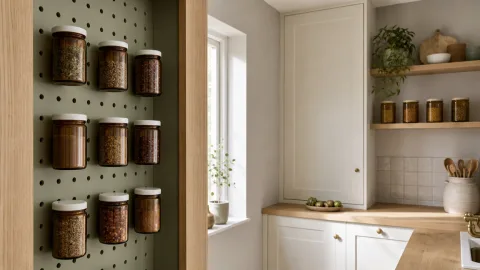
A map that becomes cluttered is useless. We kept the map legible by resisting storage experiments on top of the counter. A small shelf for spices lived on the wall; utensils lived in a jar but not in front of the patch. The discipline was not about austerity but about legibility: each zone should serve one clear function, and objects should not cross into the cleared patch’s territory. That kind of fidelity to a small rule clarifies how the whole room functions.
 Save
Save
Guests, hospitality and boundaries
Guests force you to articulate the logic of your home. Early on we worried that a cleared patch would read as self-important or precious. Instead, it read as hospitable. A clear spot beside the kettle is useful when someone wants a place to set down plates or to perch a wine glass. The patch is not a performance for guests; it is a gift to them. That is the gentlest form of hospitality — offering a small, usable calm in an otherwise busy moment.
There were awkward moments — friends who asked why we had a folded cloth on the counter, or who insisted on leaving their bag there. Those moments were opportunities to explain the practice rather than to sensibly reclaim territory. More often than not guests appreciated the clarity. The patch also became a small hospitality prop: when serving tea or snacks, we’d clear an additional strip, and the logic scaled simply. Hospitality is easier when the terrain is legible.
Boundaries matter, too. The rule clarified what belonged on the counter and what did not. Mail, shopping lists, and keys found other homes on a small wall shelf. That relocation felt like a relief rather than sacrifice. Defining where things live — literally mapping them off the cleared patch — is a kindness to future-you. Boundaries reduce decision fatigue and keep the kitchen functional without removing its warmth.
Inviting help without losing the rule
When others cook in your space, rules can feel authoritarian. We found it helps to say the rule plainly: 'We like this tiny cleared patch — could you avoid setting things there?' People usually respect a clear request. The key is framing: the rule is a practical habit, not a diktat. Making small appeals for cooperation fosters respect for the space and keeps the ritual alive without policing.
When guests ignore it
If the rule is breached, we respond with mildness — a towel draped over a bag, a friendly nudge, or simply clearing the spot after they leave. The point is not to shame but to maintain the practice. Over time guests learn the kitchen’s rhythm, and those tiny social negotiations become part of the apartment’s story.
 Save
Save
Practicalities: surfaces, cleaners and storage
A rule about a cleared patch quickly becomes a rule about preferences: which surfaces we trust, which cleaners we allow, and where we store tools. In our rental the counter is a veneered laminate with a visible seam. Harsh abrasives scarred it; citrus-based cleaners left a faint film. We settled on warm water, a few drops of mild soap, and the linen cloth used in the ritual. That combination cleaned well without risk, and because the cloth was used nightly it never required aggressive chemicals.
Storage solutions followed: a tiny magnetic knife strip on the wall, a ceramic jar for spoons, and a shallow basket for incoming mail hung on a peg. The point was not to hide everything but to give each object a home that respected the cleared patch’s function. In a small kitchen storage is often about negotiating for vertical space and choosing where your hands will most often reach. Keep frequently used items at arm’s length, and store the rest away.
On cleaners: we avoided strong scented detergents that lingered on linen. A clean scent mattered less than a clean surface; the ritual cloth smells of soap and lemon only rarely. The goal is not antiseptic sterility but a neutral backdrop for daily living. Allowing the surface to show use — a faint ring, a bread crumb here and there — keeps the kitchen honest and reduces the futility of chasing spotless counters.
A short shopping list
When surfaces are unforgiving
If your countertop stains easily, widen the patch slightly or place a small chopping board on it to protect the finish. We experimented with a thin beech board that fit the thirty-centimetre rule and found it useful for hot mugs and drizzle-prone tasks. The board can be lifted when not needed; it maintains the visual clarity while protecting the surface. Practical adaptations like these make the rule durable across different materials.
Design, decoration and the ethics of smallness
Most design advice insists on objects: buy a lamp, get a rug, choose a statement vase. The thirty-centimetre patch suggests another route: design by maintenance. The ethical argument is simple — in a world of overconsumption, choosing to rearrange and care is quieter and lighter. This approach is not ascetic; it is selective. We kept a few things because they earned their place through use and care, not because they were the right trend. Decoration, here, means tending.
There is a craft ethic at work. Caring for a cloth, mending it, choosing where an object sits — these are small acts of craft that bond you to your things. They discourage the cycle of buying and discarding. In our rental this ethic has practical benefits: less clutter means less to move when the lease ends, and mended items cost less than replacements. The small rule reduces friction between aesthetics and economy.
Decoration that asks for upkeep is different from decoration that begs to be photographed. The patch is not a prop; it is a maintenance commitment. That subtle difference keeps the kitchen honest — it resists spectacle and rewards the repetitive, quiet labour of care. If one must choose a single kitchen rule, choose the one that makes the room more useful and kinder to the objects you already own.
Smallness as design principle
Design that scales down respects limited budgets and limited square metres. The patch is a democratic idea — it does not require a big renovation, only attention. In cities where space is a premium, making a tiny area legible solves many visual problems. If the kitchen feels calmer for having one cleared patch, then design has done its job without demanding excess.
A gentle refusal of trend
The thirty-centimetre rule resists trend cycles. It is not a purchased look; it is a practiced look. Its quiet stubbornness is the point. For those tempted by stylistic updates, the patch offers an ongoing canvas: change the cloth if you really want, but let the habit carry the character rather than the other way around. Habits outlast trends.
“We wanted less spectacle and more staying power — the patch gave us a small, steady architecture.” — Mira
When the rule grows
The rule sometimes grows organically. On slow weekends we extend the patch into a small breakfast zone with a narrow breadboard and the herb pot. Growth feels natural because it is based on use, not on a desire to show. When a practice expands because it is genuinely helpful it keeps the spirit of the original rule. Conversely, if the rule tempts one to use it as a badge for a tidy life, it has missed its purpose. The rule’s integrity depends on how it serves daily needs.
Sometimes growth is external: friends adopt the patch or a neighbour asks about the cloth. Those small ripples are the least surprising reward. We did not set out to evangelise; we wanted a place to rest at night. That modest desire has a contagious quality precisely because it is so small. People respond to things they can imagine doing themselves, not to dramatic, expensive gestures.
Growth can also be practical: the patch suggested a need for a small tray to catch crumbs, and later a low-profile magnet for shopping lists. These additions arrived because of the practice, not as a starting point. That is the key design lesson here: let function suggest objects instead of objects insisting you invent function.
Save
When to resist expansion
Resist expansion when additions are performative rather than useful. A tray bought because it looks good in a photograph will not help you fold a cloth at night. Additions should answer a real friction: snagging crumbs, wet mugs, or a shared charging station. If an object does not solve a small daily problem, it risks becoming clutter.
Scaling the rule to different kitchens
In a larger kitchen the patch can be wider or multiplied into several small cleared islands. In a studio apartment the patch might double as a bedside table. The principle is scaleable because it is about intention, not size. Choose the smallest, most reliable area where a nightly two-minute practice is possible and begin there. The point is to create a habit that fits the rhythms of your life, not to impose an arbitrary standard.
- Decide where the thirty-centimetre patch should sit — near sink or toaster.
- Choose a primary cloth and a backup for greasy spills.
- Make a nightly habit of wiping the patch and folding the cloth.
- Adjust object placement minimally — a two-centimetre nudge often suffices.
How to do it
Choose your thirty-centimetre patch
Stand at the counter and pick a small area near the sink or a frequently used appliance; mark it mentally or with a tiny piece of tape for the first week.
Pick and prepare a ritual cloth
Select a linen or cotton cloth that folds neatly; launder it and keep a second cloth for greasy spills to protect the ritual cloth.
Establish the nightly motion
After your last dish or cup of the evening, wipe the patch in one deliberate pass, fold the cloth and nudge nearby objects slightly to keep the area clear.
Maintain and mend
Rinse the cloth, hang it to dry, and mend small holes when they appear so the cloth remains useful and cherished.
Frequently asked
Do I need to measure exactly thirty centimetres?
What if my counter material is delicate or easily stained?
Will this rule make my whole kitchen look tidy?
How do I keep the ritual from feeling like extra work?
In closing
After ninety days the patch is no longer an experiment; it is a modest rule. We do not keep this because it looks Instagram-perfect — it never will in a rental kitchen with a scuffed counter and mismatched tiles — but because it teaches attention at the scale of a hand. The rule is small enough to be humane: clear a spare thirty centimetres, fold the cloth, nudge whatever prevents the eye from resting. When guests ask why the toaster moved by a thumb’s width, we say it ‘lives better there.’ That answer is honest: the patch asks for nothing dramatic and gives back the quiet architecture of a life lived in small habits. Keep one square of kindness, and the rest of the room tends to follow.